


 Chinese
 Spanish
 Russian
 Portuguese
 French
 German
 Indonesian
 Thai
 Vietnamese
 Arabic
 Italian
 Turkish
 Polish
 Japanese

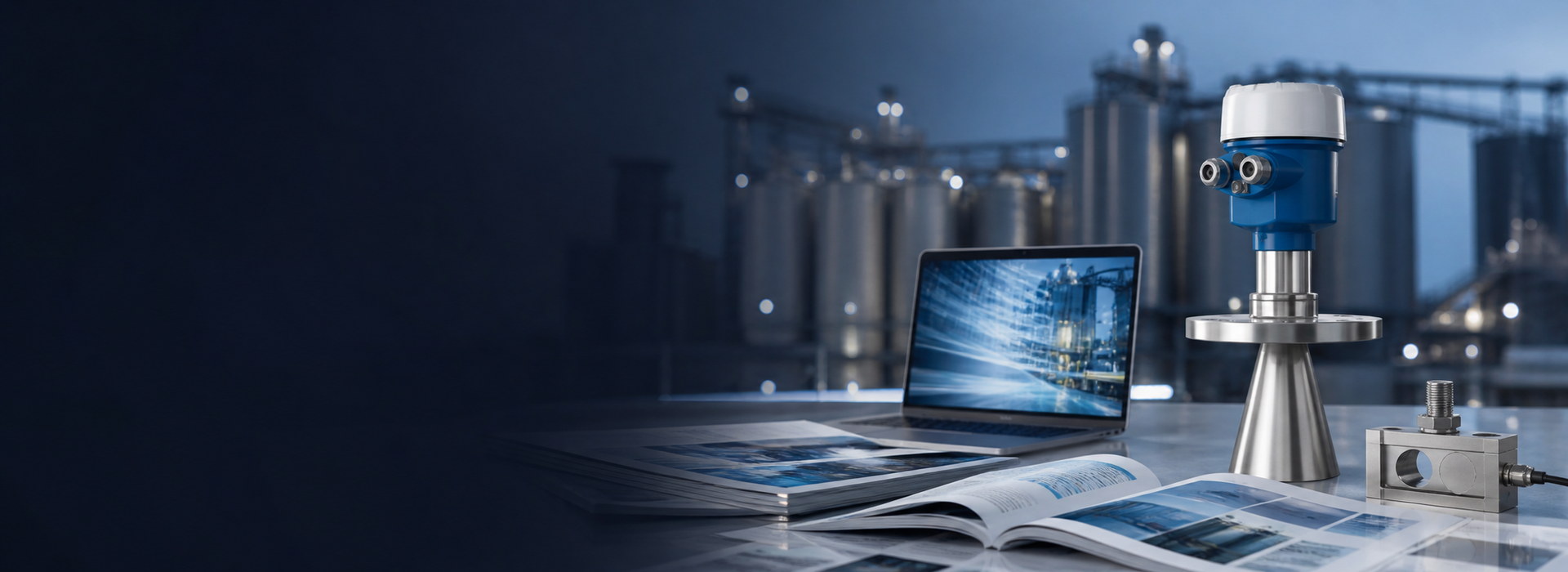
80 GHz vs 26 GHz Radar Level Transmitter: The Decision, Not the Datasheet
Choose between 80 GHz and 26 GHz radar by comparing the actual antenna, usable measuring range and process conditions. An 80 GHz design can provide a narrow beam in a compact connection, but frequency alone does not establish range, accuracy, blocking distance or performance in foam. Both technologies need a clear measuring path and an application assessment.
What changes when the frequency changes?
At approximately 26 GHz the free-space wavelength is 11.5 mm; at 80 GHz it is 3.75 mm. For comparable antenna designs and aperture sizes, the shorter wavelength allows a narrower main beam. This is useful when a small vessel contains baffles, dip tubes or an agitator.
Actual beam patterns also depend on the antenna and process connection. Use the manufacturer's stated beam angle and installation drawing rather than calculating a guaranteed specification from frequency alone. Energy outside the nominal beam can still produce unwanted echoes.
| Comparison | What frequency helps explain | What still needs model-specific evidence |
|---|---|---|
| Beam width | Higher frequency can narrow the beam for a comparable aperture | Published beam pattern and antenna dimensions |
| Connection size | A compact antenna can simplify some installations | Permitted nozzle bore, length and antenna position |
| Maximum distance | Frequency is one design factor | Rated range for the product and operating conditions |
| Near-end performance | Antenna and signal processing affect it | Blocking distance and any reduced-accuracy region |
| Dust, foam and deposits | Their interaction with microwaves can vary | Echo margin under the actual worst operating condition |
| Measurement accuracy | Frequency does not set it by itself | Specification, reference conditions and installation uncertainty |
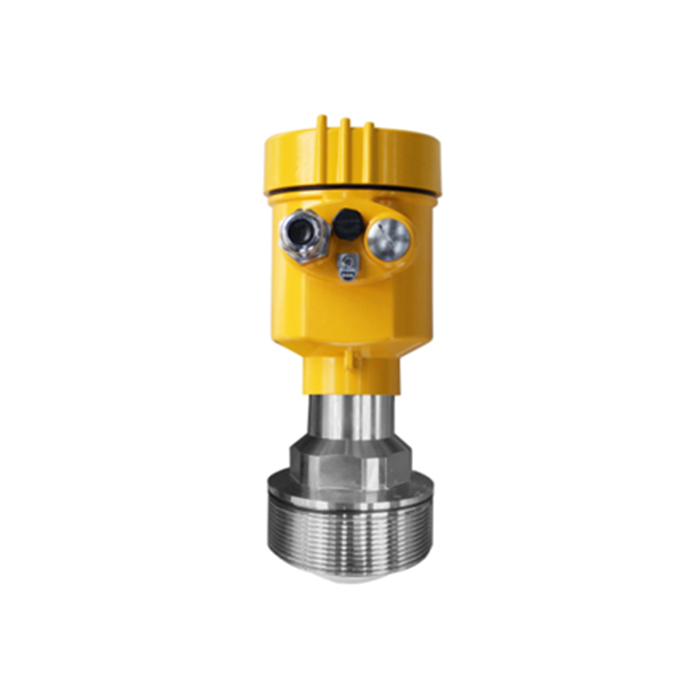
How do you compare the beam footprints?
For an ideal cone, footprint diameter is approximately 2d tan(theta/2), where d is antenna-to-surface distance and theta is the full beam angle. At a distance of 10 m, a 10-degree beam gives about 1.75 m diameter, while a 3.5-degree beam gives about 0.61 m. These are geometric examples, not ratings for every 26 GHz or 80 GHz antenna.
Check the footprint at the lowest required level, where the distance and footprint are normally greatest. Then check the highest level against the near-end limit. Compare the beam with the actual clear space around the measuring axis, not simply with the tank diameter; an off-centre mounting position changes the available clearance.
The nominal cone is a planning aid, not a hard boundary. Nozzle reflections, sidelobes and moving internals still require commissioning checks. Keep the inlet stream and persistent buildup out of the measuring path where practical.
Is 80 GHz limited to short tanks?
No. Suitable 80 GHz instruments are available for long-range liquid and bulk-solids applications, including measuring distances well beyond 20-30 m. A blanket rule excluding 80 GHz from a tall cement silo is incorrect.
Read the range for the exact antenna, medium and configuration. A strong water return does not prove the same margin in dusty powder or a weak-reflection solvent. Ask for evidence during filling and discharge, not only a maximum-distance value from a product overview.
For an existing large-aperture 26 GHz installation that already works reliably, a change of frequency may offer little benefit. Retain the existing design when its ratings, condition and performance meet the requirement. A frequency upgrade is not a substitute for identifying the cause of an unstable reading.
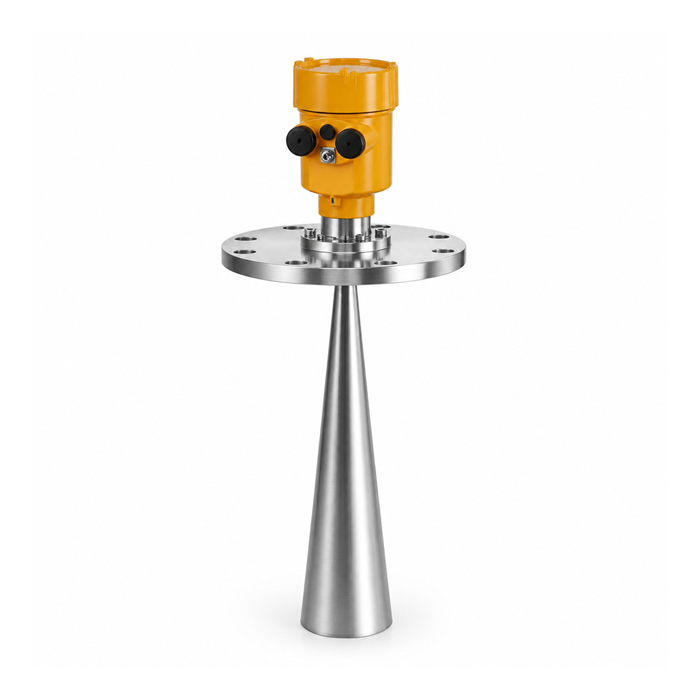
Which process conditions need a trial or application review?
Foam can reflect, absorb or transmit the signal. Neither frequency always penetrates it, and guided-wave radar is not immune to every foam or coating problem. Define whether the required result is liquid level below the foam or the foam surface.
Dust concentration, moisture, antenna deposits and the moving material surface affect a silo measurement. Modern 80 GHz bulk-solids designs can work in heavy dust; lower frequency is not an automatic guarantee of better performance. Compare the selected instruments and cleaning arrangements.
Weak-reflection liquids also need a model-specific check. There is no universal relative-permittivity threshold of 2.5 below which all free-space radar must be rejected. Guided-wave radar, a suitable stilling arrangement or another technology may help, but each has its own limits.
What should the selection decision contain?
| Site condition | Evidence to request |
|---|---|
| Small or obstructed tank | Beam-clearance drawing over the full operating range |
| Tall silo | Rated bulk-solids range and filling-condition echo performance |
| Long or narrow nozzle | Approved nozzle dimensions and antenna location |
| Foam or condensation | Defined measured surface and worst-condition tracking evidence |
| Hygienic process | Complete connection and cleaning documentation, not frequency alone |
| Existing reliable installation | A reasoned comparison of benefit, modification cost and acceptance risk |
Blocking distance is normally near the antenna at high level. It must not be confused with tank-bottom interference at low level. A smaller near-end restriction does not prove that the last few centimetres at the bottom are measurable.
Send METRAVON the vessel dimensions, nozzle drawing, medium, operating limits and internals. A useful recommendation identifies an actual model and antenna, explains the mounting arrangement and defines how the result will be accepted.
FAQ
Is 80 GHz always more accurate than 26 GHz?
No. Compare the specified measurement deviation, reference conditions and installed uncertainty. A narrower beam can reduce interference without changing the underlying accuracy specification.
Can 80 GHz radar measure a tall cement silo?
Suitable bulk-solids models can. Verify rated distance, dust conditions, antenna deposits and tracking during filling rather than applying a universal 20-30 m limit.
Does a narrow beam remove the need for a stilling well?
It can avoid some obstructions, but does not automatically solve foam, vortexing or roof interference. Use a stilling arrangement only when the application and instrument design justify it.
Does frequency determine the blocking distance?
Not alone. Antenna design, processing and installation matter. Obtain the near-end and any reduced-accuracy limits for the exact ordered configuration.
Should low-dielectric liquids always use guided-wave radar?
No. Assess the selected free-space and guided-wave instruments against the actual liquid, measuring distance, coating and installation constraints.
Is one frequency always cheaper?
No. Compare current like-for-like quotations with the same materials, connection, approvals, output and support scope. A fixed market-wide price premium is not a reliable buying rule.
Related applications
Radar Level Antenna Types: Horn, Lens, Encapsulated and Guided Wave | How to Specify a Radar Level Transmitter: The 14 Fields That Decide the Quote
