


 Chinese
 Spanish
 Russian
 Portuguese
 French
 German
 Indonesian
 Thai
 Vietnamese
 Arabic
 Italian
 Turkish
 Polish
 Japanese


Radar Level Antenna Types: Horn, Lens, Encapsulated and Guided Wave
Radar antenna selection is a choice of measuring path, process-facing materials and installation geometry. Horn, lens and encapsulated designs are free-space arrangements; guided-wave radar uses a contacting probe. The electronics, signal processing and antenna work together, so an antenna name alone cannot establish performance.
Which antenna families should you compare?
| Arrangement | Useful characteristics | Questions to resolve |
|---|---|---|
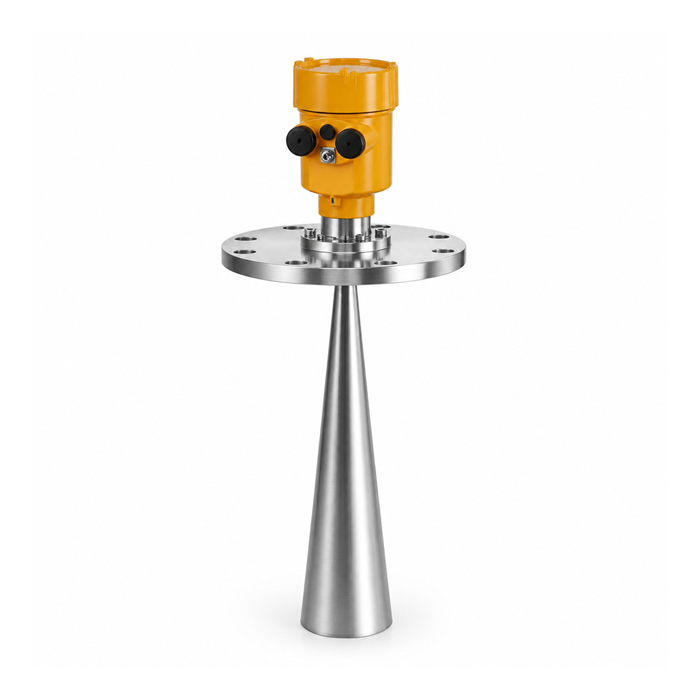
| Metal horn | Available in several apertures and process constructions | Nozzle fit, deposits, corrosion and actual beam angle |
| Lens antenna | Compact or smooth process-facing designs are possible | Lens material, seal ratings, cleaning and buildup |
| Encapsulated antenna | A process barrier can separate the antenna structure from the medium | Barrier integrity, full exposed-material list and process limits |
| Plastic horn | Can suit selected atmospheric or chemically demanding applications | Actual polymer compatibility, construction and ratings |
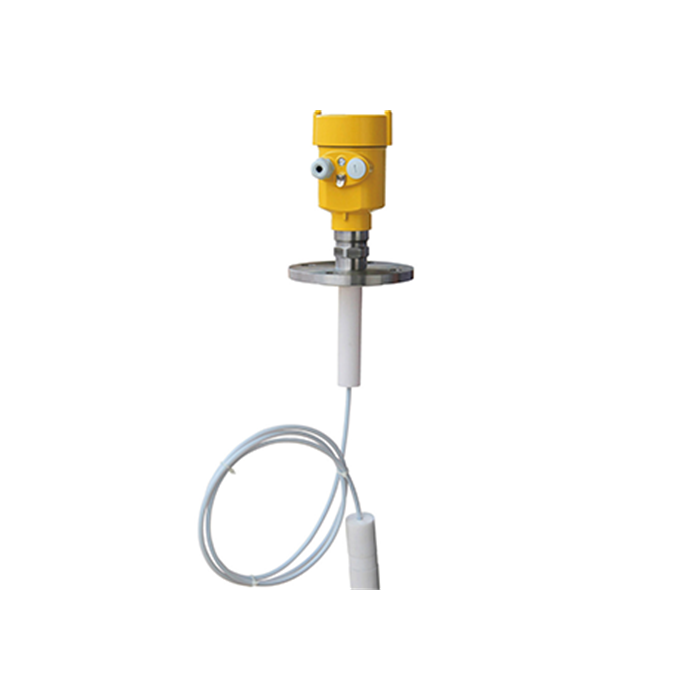
| Guided-wave probe | Guides the signal along a rod, cable or coaxial arrangement | Contact compatibility, probe loads, coating and measuring zones |
A flush or convex face may reduce retained product, but does not prove hygienic certification or self-cleaning behaviour. A metal horn is not automatically suitable for every service. Compare the actual construction and maintenance access.
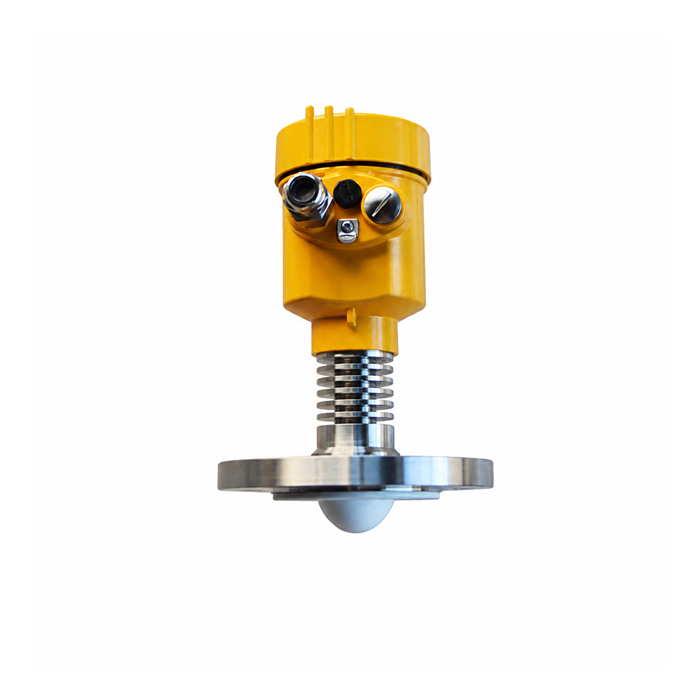
How do aperture and nozzle dimensions affect the choice?
For comparable antenna designs, a larger aperture can narrow the main beam and improve the available signal. Higher frequency can achieve a narrow beam with a smaller aperture. Published performance still depends on the complete antenna and transmitter, not just diameter.
Provide the nozzle's clear bore, length, flange or thread details, internal steps and antenna position. A nominal DN50 flange does not tell the supplier the usable bore. Some designs are intended to protrude below the nozzle; others are approved for a recessed arrangement within stated limits.
Do not shorten, enlarge or add an extension to a pressure connection solely to fit an antenna. Mechanical changes need the responsible vessel or piping review. A mounting arrangement that fits physically can still create a strong near-end echo or restrict cleaning.
When does a horn make sense?
A horn can be suitable for liquids or bulk solids when the aperture, materials and ratings match the duty. A larger horn may be useful where signal margin and beam geometry favour it, but there is no universal horn diameter that guarantees a particular measuring distance.
Investigate whether condensation, crystals or sticky product can accumulate on the antenna. Purging or washing may be available for particular assemblies, but the medium, pressure and cleaning method must be approved for the process. Do not assume a horn is unsuitable for every hygienic installation or appropriate for every hot process.
What should you check on a lens or encapsulated design?
Lens materials and process barriers can include different polymers or other materials. Chemical compatibility depends on concentration, temperature, contaminants and cleaning agents. The suitability of the face does not establish the suitability of the gasket, flange or secondary seal.
The temperature limit belongs to the complete ordered assembly. A general statement that all lens antennas stop at 150 degrees Celsius, or that an extension upgrades them beyond that limit, is not valid. Request the pressure-temperature envelope and installation requirements.
For food or pharmaceutical service, assess drainage, crevices and the whole cleaning path. Where certification is required, verify the exact connection and seal options. A smooth lens or clamp connection is not a substitute for that evidence.
When should you consider guided-wave radar?
Guided-wave radar can help with selected weak-reflection liquids, narrow vessels and interface duties. The signal travels along the probe and reflects at changes in the surrounding medium. Rod, cable and coaxial probes present different mechanical and maintenance constraints.
| Probe arrangement | What to assess before ordering |
|---|---|
| Rigid rod | Length, mechanical support, bending loads and clearances |
| Flexible cable | Tensile loads, movement, anchoring requirements and bottom clearance |
| Coaxial | Product exchange through openings and the risk of plugging or bridging |
| Insulated probe | Chemical compatibility, coating integrity and the limits of the actual measuring mode |
Probe lengths, anchoring and upper or lower measuring zones are model-specific. A cable does not always need tensioning, and a centring component is not universally required. Follow the approved arrangement rather than fitting a support that creates an unwanted echo or changes probe loading.
Foam, coating, agitators and tank internals can still affect guided-wave radar. Interface measurement requires a suitable upper layer, layer thickness and interface response. A probe is not a universal cure for weak echoes or an undefined emulsion boundary.
Can the antenna be changed later?
Only where the manufacturer supports the proposed combination. An antenna replacement may change reference geometry, configuration, pressure ratings, material compatibility or certified construction. A modular housing does not mean every antenna is interchangeable.
Before ordering a spare, identify the full model code, serial number, firmware and existing process assembly. Confirm the permitted service procedure and the required checks after replacement. Hazardous-area repairs need the applicable competence and certification controls.
For selection, send METRAVON the medium, nozzle drawing, usable range, process limits and cleaning requirements. Ask for the proposed antenna or probe drawing alongside the quotation so its fit can be checked before delivery.
FAQ
Does a larger antenna always measure better?
No. It can improve beam and signal characteristics in a comparable design, but nozzle fit, deposits, materials and the required range still determine suitability.
Is a lens antenna automatically hygienic?
No. Assess the complete connection, seals, cleaning arrangement and any required equipment certification for the exact configuration.
Is an encapsulated antenna chemically universal?
No. Check the barrier material and every exposed component against the actual chemical, concentration, temperature and cleaning cycle.
Can guided-wave radar ignore foam and internals?
Not universally. Validate the intended surface or interface, probe loading, coating, clearances and the effect of the actual process.
Can I replace only the antenna?
Only with a manufacturer-approved combination and procedure. Recheck ratings, certified construction, reference geometry and measurement performance after replacement.
What dimensions belong in an antenna enquiry?
Include the clear nozzle bore and length, process connection, internal steps, available space, vessel drawing and the minimum and maximum antenna-to-product distances.
Related applications
80 GHz vs 26 GHz Radar Level Transmitter: The Decision, Not the Datasheet | Radar Level Transmitter Retrofit on an Existing Tank: What Can Be Reused
