


 Chinese
 Spanish
 Russian
 Portuguese
 French
 German
 Indonesian
 Thai
 Vietnamese
 Arabic
 Italian
 Turkish
 Polish
 Japanese


How to Specify a Radar Level Transmitter: The 14 Fields That Decide the Quote
A useful radar specification tells the supplier what must be measured, under which conditions and how acceptance will be demonstrated. A range and an accuracy number are not enough. Supply the tank and nozzle geometry, process envelope and required function, then ask the supplier to justify a complete configuration.
Which 14 fields belong in the RFQ?
| Number | Field | Information to provide |
|---|---|---|
| 1 | Medium and composition | Product, concentration, impurities, solids and cleaning agents |
| 2 | Reflection characteristics | Known dielectric or conductivity information with conditions; identify uncertainty rather than guessing |
| 3 | Density, viscosity and behaviour | Coating, crystallisation, foam and any density input needed for inventory |
| 4 | Process temperature | Minimum, normal and maximum values, including duration and cleaning cycles |
| 5 | Process pressure | Minimum, normal, design and vacuum conditions as applicable |
| 6 | Vessel geometry | Height, diameter, bottom and roof shape, datum and usable capacity |
| 7 | Nozzle and connection | Clear bore, length, flange or thread, internal steps and antenna position |
| 8 | Required operating range | Highest and lowest levels, corresponding distances and alarm limits |
| 9 | Internals and flow | Agitators, baffles, coils, dip tubes, inlet and discharge conditions |
| 10 | Measuring atmosphere | Vapour, dust, foam, condensation and their worst credible conditions |
| 11 | Area and protection requirements | Site classification, gas or dust group, required approvals and any safety-function role |
| 12 | Supply and output | Available power, receiving card, protocol, diagnostics and cable arrangement |
| 13 | Performance and acceptance | Required uncertainty, repeatability, response, reference method and documentation |
| 14 | Ambient and maintenance conditions | Temperature, sunlight, washdown, corrosion, access and inspection constraints |
These fields organise an enquiry; they do not replace a process datasheet, electrical design or hazard assessment. Where an item is unknown, mark it as an open question and agree how it will be resolved before purchase.
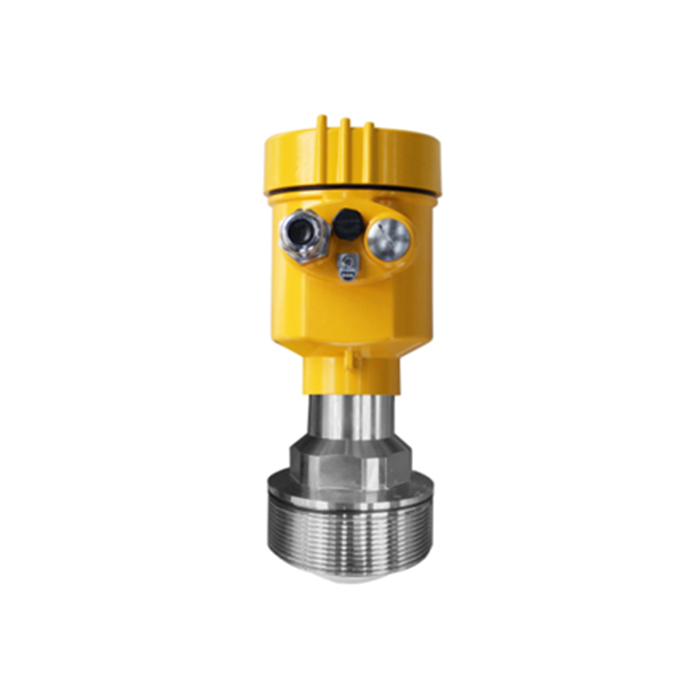
How should you describe the medium?
Use the actual product and composition, not just 'solvent' or 'chemical'. Material compatibility and signal performance are separate questions. A conductive solution may give a strong return while still attacking an unsuitable connection or seal.
Dielectric data should state the conditions and source where known. A value for a pure substance at another temperature or frequency may not represent the process mixture. Do not invent an adjusted value or impose a universal 2.5 cutoff; ask for an application assessment, testing or evidence covering the credible range.
Density is not normally the direct input to a radar distance measurement. It becomes important when level is converted to mass, and viscosity or solids can influence coating and surface behaviour. Explain the intended calculation so the supplier does not confuse level accuracy with inventory accuracy.
Why are both ends of the range important?
Specify the minimum antenna-to-surface distance at maximum level, and the maximum distance at minimum level. Near-end blocking distance normally affects the high-level end. Bottom echoes, sloping bottoms and probe end effects are different low-level limitations.
A nozzle drawing should show the reference plane, antenna position and any adapter. Nozzle length does not automatically subtract the same length from maximum range. Its effect depends on the assembly and geometry; verify near-end operation and structural reflections using the manufacturer's instructions.
What makes an accuracy requirement testable?
State the measured variable and purpose: level control, volume inventory, mass calculation, interface duty or commercial measurement. Define the error or uncertainty accepted over the working range, the operating states to include and the reference method.
Do not assign universal tolerances such as 20 mm for every pump or 2 mm for all custody transfers. Alarm design also needs sufficient margin for uncertainty, response time and the process rise rate. A protection function cannot be specified by repeatability alone.
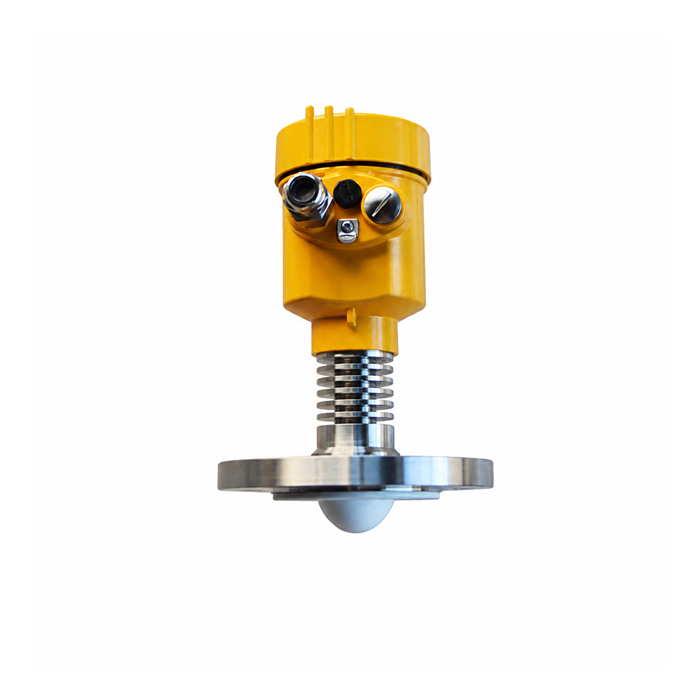
What can a concise RFQ example look like?
The following is an illustrative information set, not a recommendation for a particular chemical or installation.
| Item | Example of a clear entry |
|---|---|
| Tag and duty | LT-1201, water inventory and transfer control |
| Vessel | Vertical vessel; drawing supplied with datum, roof and bottom dimensions |
| Nozzle | Measured clear bore and length; flange and seal details attached |
| Product | Water with the stated operating and cleaning composition |
| Operating limits | Normal and peak temperature-pressure conditions listed separately |
| Measuring range | Minimum and maximum distances from the defined sensor reference |
| Performance | Site acceptance limits, reference method and filling conditions attached |
| Electrical | Receiving analogue or digital card identified; supply and cable data attached |
| Protection | Site classification drawing and required approval list attached |
| Delivery evidence | Configuration, material list, calibration requirements and commissioning scope agreed |
An area classification must come from the site assessment. It should not be invented as part of an example chemical-tank specification. Similarly, an illustrative RFQ must not imply that a particular certificate or alloy is already supplied.
What should the supplier return?
Request the full ordering code, antenna or probe drawing, exposed-material list, process ratings, usable measuring zones and proposed mounting. Ask for the applicable certificates and their conditions, not a general statement that approvals are available.
Confirm the output option and which diagnostics the receiving system can use. HART does not create a new hazardous-area barrier requirement by itself, but an existing barrier must support both the approved circuit and the communication. Include load, voltage and cable checks in the integration review.
Attach the tank drawing, relevant P&ID, connection photographs, existing instrument details and reason for replacement. Record deviations from the enquiry explicitly. A clear deviation list is more useful than a quotation that appears compliant while leaving assumptions unstated.
Send the RFQ and open questions to METRAVON for review before the purchase order fixes the configuration. Include the documents and acceptance evidence required at delivery.
FAQ
Is dielectric constant the single most important RFQ field?
There is no universal priority. An incompatible seal, unsuitable process rating, obstructed beam or wrong protection approval can each make the proposed instrument unacceptable.
Can the supplier select the instrument for me?
The supplier can propose a configuration from the information and evidence supplied. The site must still confirm process conditions, classification, intended function and acceptance requirements.
How should I specify accuracy?
Define the variable, operating range, process states, required uncertainty and reference method. Avoid copying a tolerance from another duty without checking its purpose.
Must I choose the frequency before requesting a quote?
Not always. Provide geometry and process conditions, then ask the supplier to justify the model, antenna and frequency. State mandatory site constraints explicitly.
Should I specify HART for every analogue loop?
Specify it where configuration, diagnostics or the asset system needs it. Check that the receiving path supports communication and that the complete loop meets its power and protection requirements.
What if process data are missing?
List the unknowns and agree on evidence, testing or a conservative design basis before ordering. Do not replace missing data with an unsupported material, dielectric or certification assumption.
Related applications
Radar Level Transmitter Price: What Actually Drives the Number | Explosion Proof Radar Level Transmitter: Reading the Certificate, Not the Brochure
