


 Chinese
 Spanish
 Russian
 Portuguese
 French
 German
 Indonesian
 Thai
 Vietnamese
 Arabic
 Italian
 Turkish
 Polish
 Japanese


Explosion Proof Radar Level Transmitter: Reading the Certificate, Not the Brochure
An 'explosion proof' radar enquiry must identify the site's classification and the protection required for every part of the installation. ATEX or IECEx wording in a brochure is not enough. Verify the exact equipment configuration, certificate, installation conditions and complete circuit before ordering.
Is the tank interior automatically Zone 0?
No. Classification is a documented site assessment of the hazardous atmosphere and its occurrence, not a property assigned solely from the words 'flammable liquid tank'. The tank interior, connection, vent and external housing can have different classifications.
Use the current classification drawing and supporting assessment. Do not assume a fixed zone radius around every vent or that every control room is unclassified. For combustible dust, use the applicable dust classification rather than copying gas-area requirements.
Where equipment crosses a boundary, check which parts the approval permits in each classified region. A split marking can describe a boundary arrangement, but a particular 1/2G or Ga/Gb string is not a universal marking for every radar installation.
What must match the certificate?
| Item | Evidence to compare |
|---|---|
| Product identity | Manufacturer, model, option code and relevant hardware or firmware scope |
| Protection concept | Full Ex marking and its permitted application |
| Gas or dust group | Suitability for the site's actual atmosphere |
| Temperature limits | Temperature class or maximum surface temperature and all process/ambient conditions |
| Equipment protection | Category or EPL appropriate to the assessed location and jurisdiction |
| Special conditions | Any certificate conditions, suffixes, approved accessories and installation restrictions |
| Document status | Current certificate issue and declaration or approval documents required for the market |
Verify IECEx certificate details through the official scheme's records. A certificate for a related family member does not establish coverage of the quoted ordering code. An Ex component certificate is not automatically approval of a finished instrument.
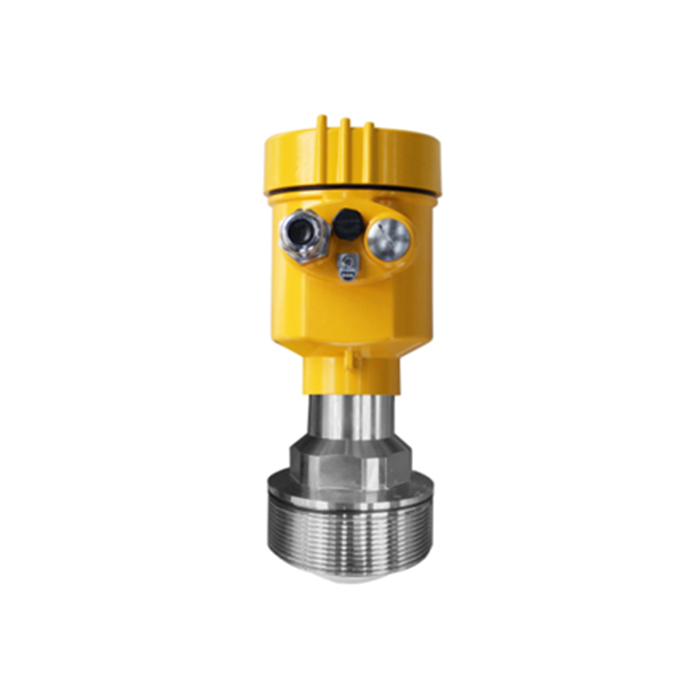
Are all radar transmitters intrinsically safe?
No. Radar equipment can use different protection concepts or combinations, including flameproof enclosures for suitable assemblies. Microwave emission does not force the whole product family to use intrinsic safety. Follow the certified design rather than reasoning from the antenna's appearance.
Intrinsic safety limits circuit energy under specified conditions. Flameproof protection uses a different approach to containing an internal ignition and preventing propagation. Neither concept can be selected independently of the equipment certificate and approved installation.
Gas and dust approvals are also distinct. The protection required for a combustible-dust location must be evaluated for the actual equipment and zone; protection by enclosure is one approach, not the only concept permitted for every instrument.
What must an intrinsically safe loop calculation include?
For a simple entity-parameter assessment, the associated apparatus output voltage, current and power must not exceed the field equipment's permitted input values. Cable and equipment capacitance and inductance must be within the allowed circuit limits.
Common checks are Uo <= Ui, Io <= Ii and Po <= Pi, with Ci + cable capacitance <= Co and Li + cable inductance <= Lo. These checks are only part of the assessment: certificate conditions, combined inductance/capacitance restrictions, multiple sources and the specific circuit arrangement may require additional treatment.
Use the values for the actual gas group and configuration. The label on a transmitter does not by itself require a barrier with the same group wording if the complete circuit is being assessed for a different permitted site group. The approved system design must establish compatibility.
Check communication compatibility, voltage margin, segregation and the required grounding or bonding. Do not apply a universal shield-grounding rule or assume an uncertified generic isolator makes an RS-485 or current-loop circuit intrinsically safe.
How do process and ambient temperature affect the approval?
A temperature class concerns permitted surface temperature under the certified conditions; it is not a standalone process-temperature rating. The maximum process temperature, ambient range and installation arrangement may interact. Read the certificate schedule and instructions together.
Solar radiation, insulation and deposits can affect the installed thermal condition. A manufacturer's thermal extension or remote housing may have specific limitations. It does not upgrade the process boundary beyond its rated envelope.
Dust layers can create thermal concerns distinct from gas temperature classes. Include the material, expected layer and cleaning strategy in the competent review instead of using a generic gas-class table for a silo.
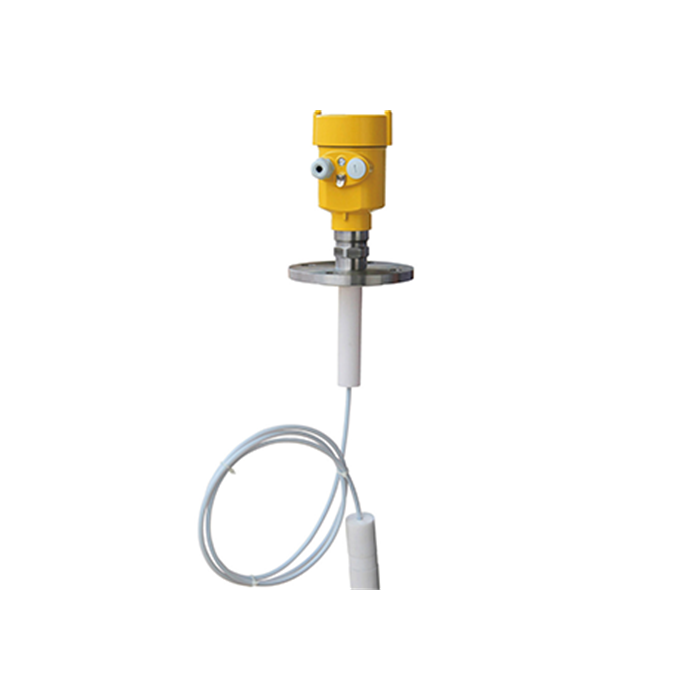
Are ATEX and IECEx interchangeable in every market?
No. ATEX is part of the EU conformity framework; IECEx is an international certification scheme. Destination-market acceptance and installation requirements must be checked separately. An international certificate is not a blanket import or operating permission.
Great Britain currently recognises qualifying CE-marked equipment as well as the UKCA route under its applicable rules. Northern Ireland has separate arrangements. Do not repeat an outdated statement that every UK installation necessarily requires a separate UKCA-only product.
Is SIL another explosion-protection certificate?
No. Functional safety concerns the behaviour and integrity of a safety function; explosion protection addresses ignition hazards. Assess the required function and architecture separately, including any applicable safety manual, failure data and proof-testing requirements.
A device described as 'SIL capable' does not establish the achieved integrity of a complete loop. The result depends on the function, architecture, operating assumptions, test coverage and interval. Do not claim that every overfill alarm automatically needs the same SIL target.
What should the purchase and maintenance file contain?
Retain the classification basis, full model code, certificate and conditions, circuit assessment, wiring and installation drawings, inspection requirements and relevant manuals. Confirm glands, adapters and seals as part of the assembly rather than treating them as generic accessories.
Opening, inspection and repair must follow the protection concept, manufacturer instructions and local procedures by competent personnel. A blanket statement that every cover can be opened once power is off, or that every certified part is field-replaceable, is unsafe.
Send METRAVON the classification drawing, substances, required temperature limits, destination and circuit design for a configuration and documentation review. The site's competent responsible team must approve the installed protection.
FAQ
Does every flammable-liquid tank require the same Zone 0 radar?
No. Use the documented classification and identify the locations occupied by each part of the device. Select equipment and any boundary arrangement from that assessment.
Does an ATEX claim prove the quoted model is suitable?
No. Check the actual configuration, required documents, marking, ratings and conditions of use against the project and destination requirements.
Must every radar use Ex ia protection?
No. Different approved protection concepts and combinations exist. Use the complete certified design and installation instructions for the selected instrument.
Is matching the barrier's voltage enough?
No. Current, power, capacitance, inductance and all applicable circuit conditions must also be assessed, together with installation and communication requirements.
Is UKCA the only accepted marking route in Great Britain?
No. Qualifying CE-marked equipment remains recognised under the applicable GB rules. Check current requirements and distinguish Great Britain from Northern Ireland.
Does a SIL-capable transmitter make the whole loop SIL compliant?
No. The complete safety function needs its own assessment, design, installation, verification and lifecycle controls using the applicable safety documentation.
Technical references
- HSE: hazardous-area classification
- IECEx: certificate and equipment FAQ
- UK government: equipment for explosive atmospheres
Related applications
Radar Level Transmitter Output Signals: Choosing the Right One | How to Specify a Radar Level Transmitter: The 14 Fields That Decide the Quote
