


 Chinese
 Spanish
 Russian
 Portuguese
 French
 German
 Indonesian
 Thai
 Vietnamese
 Arabic
 Italian
 Turkish
 Polish
 Japanese


High Temperature Level Measurement: What Works from 150 °C to 450 °C
High-temperature level measurement from 150 to 450 degrees Celsius requires a complete rated assembly, not just heat-resistant electronics. The process seal, antenna or probe, flange, gasket and installation all have limits. An extension can reduce heat reaching the housing, but it cannot turn an ordinary transmitter into a device approved for a hotter process.
Separate process temperature from ambient temperature
The process rating applies to the parts exposed to the vessel. The ambient rating applies to the electronics and enclosure, and may depend on process temperature and the hazardous-area approval. Both must be satisfied at the same time.
Include normal operation, startup, shutdown, cleaning, loss of tracing and credible upset conditions. Temperature and pressure ratings often interact; a quoted maximum temperature does not establish the allowable pressure at that temperature.
| Item | Required confirmation |
|---|---|
| Antenna, probe and process barrier | Rated temperature, pressure and chemical exposure |
| Flange, seal and gasket | Complete assembly limits and pressure-temperature derating |
| Extension or heat sink | Manufacturer-approved arrangement and insulation limits |
| Electronics | Ambient temperature, radiant heat and any approval restrictions |
| Nozzle and supports | Expansion, mechanical loads and pressure-boundary design |
| Cleaning or purge system | Process compatibility, approved medium and safe operating limits |
Antenna materials are not whole-device ratings
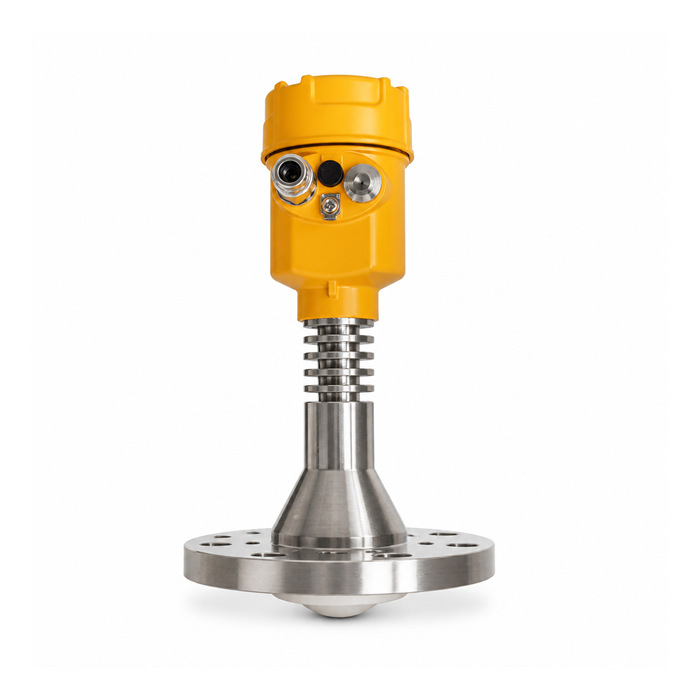
Ceramic, metal, PTFE and PFA have different properties, but a raw-material limit is not the instrument's process rating. A high-temperature antenna can still depend on a lower-rated seal or connection. Specify the complete ordering code and its published envelope.
For corrosive or sour service, material selection also requires the actual chemistry and applicable material requirements. Do not specify hardened steel as a generic solution for wet hydrogen sulphide; qualified materials engineering must address the service conditions and relevant restrictions.
An external heat shield or remote electronics can reduce heat exposure to the housing. Neither changes the allowable temperature of the process-facing assembly. There is no universal nozzle length that guarantees a particular temperature reduction.
Bitumen, sulphur and molten salts
| Product or duty | Measurement concern | Engineering check |
|---|---|---|
| Bitumen or asphalt | Deposits, fumes and a weak or disturbed surface | Rated process assembly, nozzle condition and approved thermal management |
| Molten sulphur | Solidification, deposits and possible hazardous gases | Process-specific temperature control, materials and safe maintenance |
| Molten salts | Freezing, corrosion and potentially very high temperature | Exact composition and a system rated above the full required envelope |
| Hot chemical reactor | Pressure, vapour, reaction and agitation | Combined pressure-temperature rating and usable echo performance |
Do not assume that all bitumen grades or salt mixtures share one freezing point. Heat tracing must follow the process design, including empty-vessel and shutdown conditions. Turning tracing off solely because a level signal is low can create a blockage or a restart hazard.
A process above the instrument's maximum rating is outside its permitted envelope, not merely at the edge of its capability. For example, a device rated to 400 degrees Celsius is not suitable for 450 degrees Celsius on the strength of a cooling standpipe alone.
Steam drums and pressure-based alternatives
Boiler level is governed by the applicable code and approved protective system. DP and suitable guided-wave radar can both be used in particular steam applications. Steam properties, density changes and installation details affect performance; some guided-wave systems use vapour compensation for demanding conditions.
Do not claim that radar is universally prohibited in boilers or that an ordinary process radar is suitable. Confirm the specific instrument's approved application, pressure-temperature limits, compensation and the required independent protections.
For DP systems, distinguish process impulse lines from sealed remote-seal capillaries. Product can freeze or plug in an impulse line. An intact capillary contains its specified fill fluid, whose thermal behaviour affects the measurement. Any heating must follow the instrument and process design rather than treating both systems as the same pipework.
Nozzle geometry and thermal movement
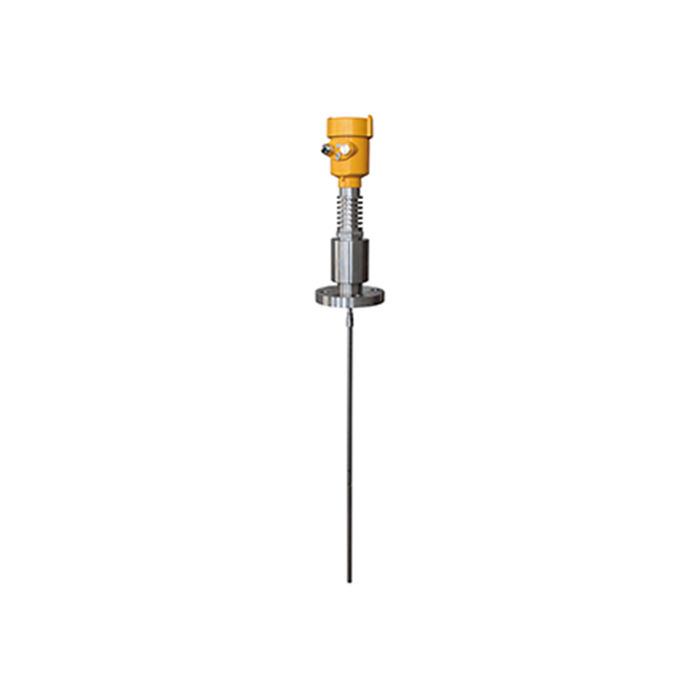
A longer nozzle can create reflections, limit the near-end measuring range or collect deposits. Its diameter, length, antenna position and any isolation valve must match the instrument's installation requirements. A valve does not automatically make removal from a hot vessel safe.
Thermal expansion can move the reference or load the assembly. Account for supports, probe tension and cycling in the mechanical design. Avoid adding a rigid bracket or changing a pressure connection without the required engineering review.
Purging or washing may help in a designed installation, but it can also affect product chemistry, temperature, pressure and hazardous-area conditions. Do not introduce air into a hot flammable process or water into a reactive service as a generic cleaning measure.
Commissioning and maintenance evidence
Check the sensor at the intended operating temperature, not only during a cold workshop test. Compare reference readings, echo curves and system values through startup, normal operation and shutdown where practical. Verify high-level response, signal loss, power failure and the approved protective action.
Retain the model configuration, rating documents, material list, thermal arrangement and parameter backup. Inspection intervals should reflect deposit growth, thermal cycling and the consequence of a failed measurement. Maintenance on hot pressure boundaries requires approved isolation and work procedures, regardless of the level reading.
For a selection review, send METRAVON the full temperature-pressure envelope, medium, nozzle drawing, insulation and tracing arrangement, electrical classification and required measurement role. State explicitly if 450 degrees Celsius or another peak must be measured continuously.
FAQ
Can a standard radar measure a 400-degree process with a long nozzle?
Not unless the complete offered assembly is rated and approved for that duty. A nozzle extension does not upgrade the process boundary's temperature rating.
Does a ceramic antenna mean a transmitter is rated to 450 degrees Celsius?
No. Seals, pressure connections and the rest of the assembly may set a lower limit. Verify the exact configuration and its pressure-temperature envelope.
Is remote electronics enough for high-temperature service?
It may protect the electronics from ambient heat, but the antenna, process seal and connection still need suitable process ratings.
Can guided-wave radar be used in a steam drum?
Suitable systems can be used in particular approved applications, sometimes with vapour compensation. Follow the governing code, equipment limits and required protective architecture.
Should heat tracing stop when a tank becomes empty?
Not by a universal rule. The approved process design must address solidification, overheating, restart and sensor failure before defining the tracing logic.
What should a hot-service acceptance test demonstrate?
It should confirm rated installation, stable tracking at operating conditions, correct scaling, diagnostics and the required alarm or protective response, with retained reference evidence.
Related applications
Level Measurement in Pulp and Paper Mills: Foam, Scale and Consistency | Cryogenic Level Measurement: LNG, Liquid Nitrogen and Liquid Oxygen Tanks
