


 Chinese
 Spanish
 Russian
 Portuguese
 French
 German
 Indonesian
 Thai
 Vietnamese
 Arabic
 Italian
 Turkish
 Polish
 Japanese

Level Measurement in Water Treatment and Wastewater: Four Jobs, Four Sensors
Water and wastewater plants need several different level measurements: pump-well level, open-channel head, digester liquid level and sludge blanket position. A sensor selected for one job may not measure the quantity needed for another. Define the measurement and its control consequence before selecting radar, ultrasonic, hydrostatic or an interface instrument.
Four duties with different acceptance criteria
| Duty | Measurement needed | Main selection questions |
|---|---|---|
| Wet well or lift station | Liquid level for pump control and alarms | Foam, rags, inlet turbulence, pump cycling and fault handling |
| Flume or weir | Head at the calibrated measuring location | Hydraulic geometry, datum, free flow and submergence |
| Digester or covered tank | Liquid or foam level, as defined by the process | Gas classification, pressure, condensation and buildup |
| Clarifier | Sludge blanket interface, not just water surface | Solids profile, bubbles and suitability of the interface technology |
Radar can be useful where access to a submerged sensor is difficult. A hydrostatic device may be suitable where the liquid density is predictable and a compatible diaphragm can be maintained. Ultrasonic performance depends on the acoustic path and gas conditions. None of these principles removes the need for a site assessment.
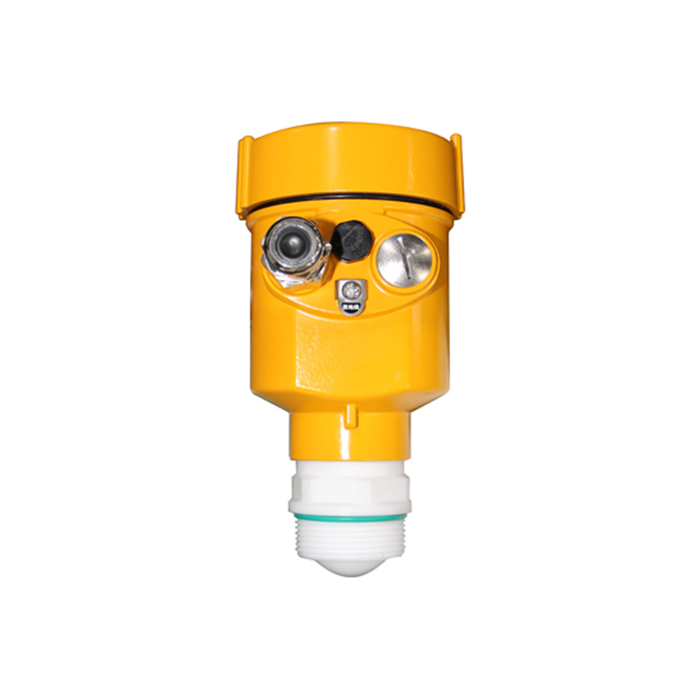
Wet-well pump control: distinguish a fault from high water
Pump start and stop levels depend on storage volume, inflow, pump capacity, permitted starts, minimum submergence and the pump manufacturer's operating limits. A fixed percentage of well depth is not a design rule. Allow enough separation to avoid rapid cycling without losing required reserve capacity.
A transmitter fault must be distinguishable from a genuine high-level reading. An upscale fault current must not automatically be interpreted as a demand to run a pump. Conversely, simply stopping all pumps on signal loss may create a flooding hazard. The response belongs in the station's risk assessment and cause-and-effect logic.
Test low-level and dry-run protection, high-level alarms, duty/standby changeover, power recovery and communication failure. Provide independent protection where the assessed risk requires it. The remote monitoring link should not be the only path for a critical local protective action.
Open-channel flow needs a hydraulic reference
A radar measures distance to the water, not flow directly. A flume or weir converts measured head to flow using its approved rating and specified gauge location. Confirm the structure dimensions, crest or throat datum, approach conditions and permissible submergence before entering a conversion curve.
For a power-law rating Q = C h^n, a small head uncertainty contributes approximately n times the relative head uncertainty to the flow result. As a mathematical example, n = 1.5 and a 5 mm head uncertainty at h = 0.30 m contribute about 2.5% relative flow uncertainty, before other errors. These assumed values are not a calibration for a particular flume.
Backwater, sediment, an incorrect zero or measurement at the wrong location can dominate the error. A properly designed hydraulically connected stilling well can be valid; it is not inherently prohibited. Verify that the level at the sensor represents the head used by the structure's calibration.
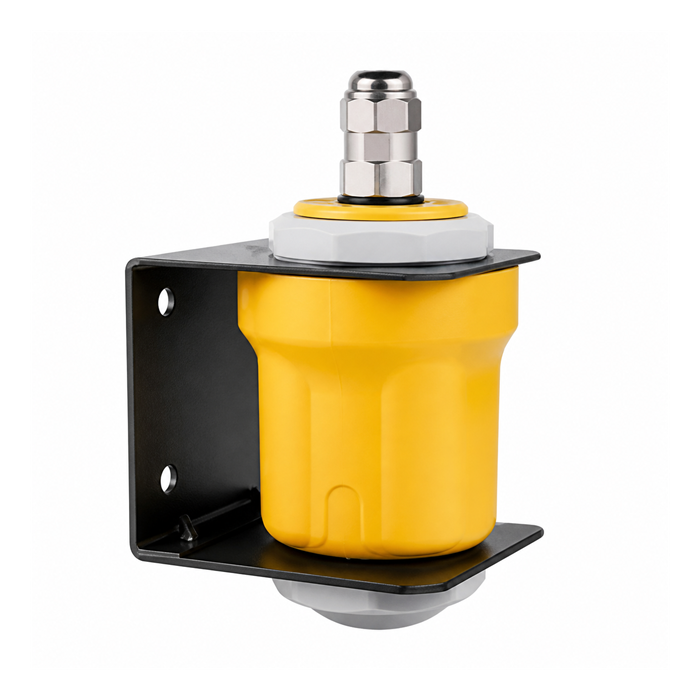
Digester gas, foam and chemical compatibility
Covered digesters can contain flammable or corrosive gases. Use the site's hazardous-area classification to specify the complete instrument and installation. Intrinsic safety and flameproof protection are different protection concepts with their own requirements; the certificate, barriers where applicable, cable entries and temperature limits must match the design.
Condensation and foam can affect radar tracking. Record whether the control system needs the liquid below the foam, the foam surface or both. Do not assume that an ordinary surface radar measures the sludge blanket below a water layer.
For dosing and chemical tanks, obtain the actual chemical concentration and temperature. Stainless steel or one particular polymer cannot be declared suitable for every acid, alkali or oxidiser. Include diaphragm, cable, seal and connection materials in the compatibility check.
Mounting and commissioning
Mount away from the inlet jet and heavy turbulence. Check the beam at the lowest operating level, where its footprint is generally largest, and at the high-level limit near the antenna. Account for rungs, brackets, pump chains and cables that can create competing echoes.
| Commissioning check | Why it matters |
|---|---|
| Surveyed datum and reference distance | Prevents a constant level offset |
| Low, normal and high levels | Confirms usable range and target tracking |
| Pump operation and inlet flow | Reveals turbulence or obstruction effects |
| Signal loss and power interruption | Verifies the intended alarm and control response |
| PLC scaling and flow conversion | Separates sensor errors from calculation errors |
| Post-maintenance comparison | Detects moved brackets, deposits or changed settings |
Route cables and terminate shields according to the approved instrument and EMC design. Set the maintenance interval from the observed buildup rate and consequence of failure, not from a universal quarterly schedule.
Send METRAVON the well or channel drawing, measuring range, control requirements, chemical exposure and electrical classification. For flow duties, include the hydraulic structure type and its calibration data.
FAQ
Is radar always better than ultrasonic in wastewater?
No. Radar avoids acoustic sound-speed effects, but foam, buildup and geometry can still limit it. Compare both technologies against the actual operating conditions and maintenance access.
Should pumps start when the level transmitter fails?
There is no universal answer. The station design must balance flooding and dry-running risks, distinguish faults from valid readings and use the required independent protections.
Can a radar measure flow in a channel?
It can supply water level for an approved flume or weir rating. Correct head location, datum and hydraulic conditions are essential to the flow calculation.
Will surface radar detect the sludge blanket?
An ordinary surface radar generally measures the upper liquid or foam surface. A submerged solids interface requires a technology and installation intended for that measurement.
Does a digester always need the same explosion protection?
No. The site classification and applicable jurisdiction determine the required protection, gas group, temperature limits and installation conditions.
How should a replacement sensor be accepted?
Check the physical datum, full operating range, system scaling, pump sequence, alarm functions and fault behaviour. Keep the settings and reference readings as the commissioning baseline.
Related applications
Radar Level Transmitter for Chemical Tanks: Materials, Dielectrics and Traps | Level Measurement in Mining and Mineral Processing: When the Product Destroys the Sensor
