


 Chinese
 Spanish
 Russian
 Portuguese
 French
 German
 Indonesian
 Thai
 Vietnamese
 Arabic
 Italian
 Turkish
 Polish
 Japanese

Level Measurement in Mining and Mineral Processing: When the Product Destroys the Sensor
Mining level instruments face abrasion, impact, slurry coating and rapidly changing surfaces. The first decision is what must be measured: liquid in a sump, pulp beneath flotation froth, material in a bin or the settling bed in a thickener. These are different measurements even when the operator sees them all on one screen.
Match the sensor to the measured quantity
| Application | Required measurement | Main limitation to investigate |
|---|---|---|
| Slurry sump | Usable liquid level for pump control | Waves, deposits, inlet impact and low-level protection |
| Flotation cell | Pulp level, froth top or froth depth | Foam behaviour and the ability to resolve the intended boundary |
| Ore bin | Local solids level or inventory | Surface slope, impact, dust and structural echoes |
| Thickener | Liquid surface, bed interface or solids profile | Surface radar is not a substitute for a bed-level instrument |
| Tailings facility | Water level or other specified process variable | Level data alone do not assess geotechnical stability |
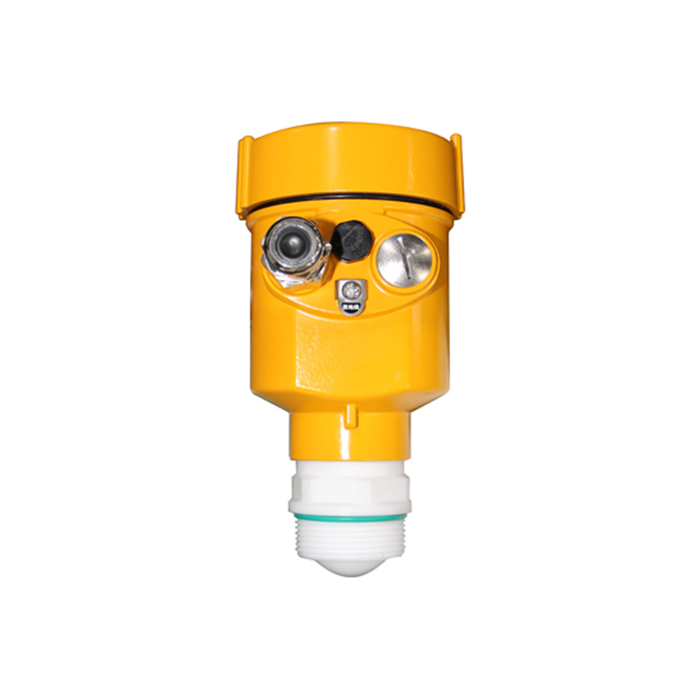
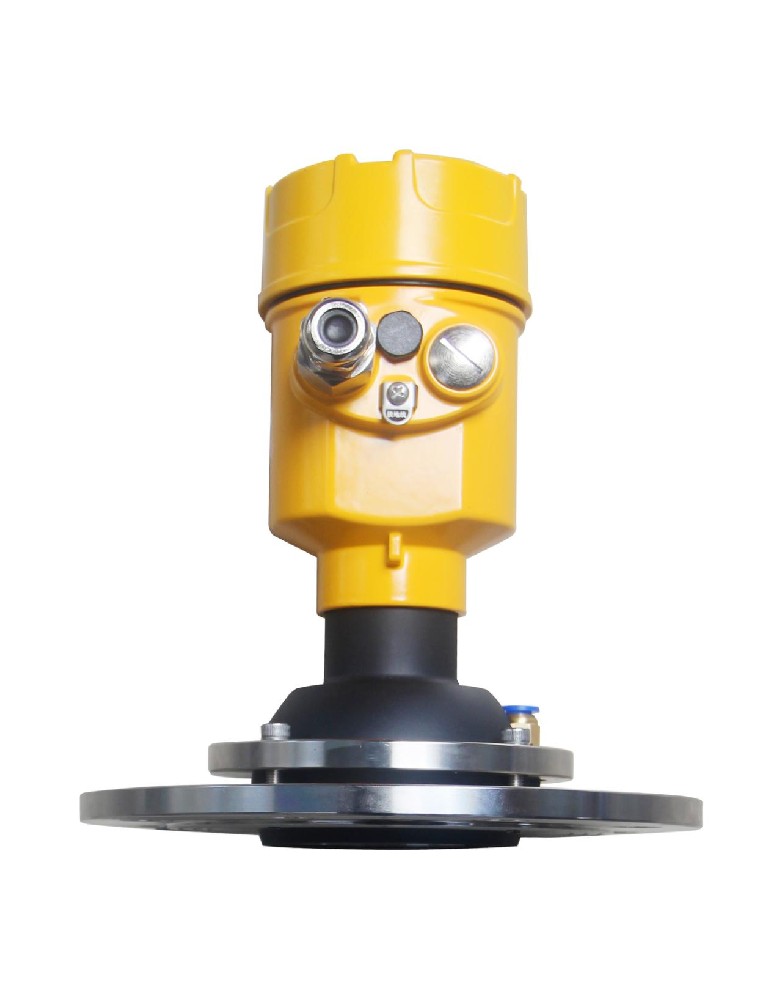
Non-contact radar removes an immersed probe from the slurry, which can reduce direct wear. Its antenna face and mounting can still be hit by splashes, stones or falling material. Protecting the sensing path mechanically is as important as selecting the measuring principle.
Slurry sumps and pump protection
Place the measuring point away from the incoming jet, pump suction disturbance and structures that collect material. Evaluate echo quality with the pumps running and at minimum operating level. A quiet-water demonstration is not enough for an aerated or coating slurry.
Start and stop levels depend on sump volume, inflow, pump capacity, permitted starts and minimum submergence. Do not use a fixed start percentage or a generic minimum run time for every pump. The controller must distinguish a valid high-level value from transmitter failure.
The fault response must address both flooding and dry-running hazards. An upscale fault current should not automatically start a pump, and loss of a network connection should not remove a required local protective function. Test independent low-level or high-level protection where the risk assessment requires it.
Flotation: identify the boundary before tuning the sensor
Froth top, pulp-froth interface and froth depth are not interchangeable. Radar may track the foam top, penetrate part of the froth or lose a usable return as the froth changes. A stable-looking reading does not prove that it represents pulp level.
Choose a method intended for the required boundary and compare it with an agreed reference over the expected changes in air rate, reagent addition and feed. Some plants use combinations of level, interface and froth monitoring. A probe or displacement device also needs assessment for buildup and the physical forces on its installation.
Do not mask a changing interface with heavy filtering merely to produce a smooth trend. Specify both accuracy for the intended boundary and the response time needed by the flotation control loop.
Ore bins: point level is not stockpile volume
Coarse ore presents an uneven surface, and impact can damage an instrument placed in the feed path. Check the beam at low and high stock, antenna aiming, empty-bin reflections and the likely accumulation pattern. Frequency choice must consider the antenna and signal performance; a wide beam is not automatically preferable in a large bin.
One distance measurement can support bin filling control without accurately describing the entire stockpile. Volume or mass reporting requires a suitable geometry model, surface representation and, for mass, bulk density. Verify the result against independent quantities if inventory is part of the requirement.
Abrasion, chemistry and maintenance access
| Design item | What to check |
|---|---|
| Antenna face or process barrier | Abrasion, chemical compatibility and rated temperature |
| Mounting structure | Vibration, impact protection and secure alignment |
| Cable route | Mechanical damage, water entry and separation from drive wiring |
| Cleaning provision | An approved method compatible with the process and materials |
| Access | Safe inspection and removal without reaching into an operating vessel |
| Replacement arrangement | Configuration backup and a defined recommissioning check |
A ceramic material name does not establish a whole instrument's temperature rating or guarantee years of service. Similarly, a water wash can affect process chemistry, containment or thermal stress. Any cleaning or purging arrangement needs plant approval and the manufacturer's instructions.
Plan access before installation. Inspection should not require climbing over rotating equipment or approaching an unprotected opening. For thickeners and tailings operations, keep the role of the level instrument separate from the wider process and facility safety systems.
Acceptance under operating conditions
Record reference distances, echo curves and controller values during filling, pumping and discharge. Challenge the alarm and fault paths with approved test methods. Confirm that the displayed variable, units and scaling match the process requirement, especially where level is converted to volume.
Send METRAVON the application drawing, slurry or ore properties, temperature, abrasion history, control requirements and available maintenance access. Existing failure photographs and trends are useful evidence when replacing a damaged instrument.
FAQ
Will non-contact radar eliminate slurry maintenance?
No. It avoids an immersed measuring element, but splashes, deposits, impact and mounting movement can still affect the installation. Set inspection intervals from actual conditions.
Should a failed sump transmitter start the pumps?
Not automatically. Define the response through the station risk assessment, with fault recognition and the required dry-run, flooding and independent protection measures.
Does radar always measure the top of flotation froth?
No. Its response depends on the froth. Validate which boundary it tracks and use a measurement arrangement suitable for the control objective.
Can a surface radar measure thickener bed level?
An ordinary surface radar generally measures the upper surface. The submerged settling bed requires an interface or profiling method intended for that duty.
Does a ceramic antenna guarantee abrasion resistance?
No guarantee follows from the material name alone. Check the actual construction, impact exposure, chemistry and maintenance evidence for the application.
Is one ore-bin level enough for accurate inventory?
It may be adequate for filling control, but inventory also depends on surface shape, geometry and density. Define and validate the inventory uncertainty separately.
Related applications
Radar Level Sensor for Cement Silos and Fly Ash Silos: Dust, Repose and Inventory | Level Measurement in Water Treatment and Wastewater: Four Jobs, Four Sensors
