


 Chinese
 Spanish
 Russian
 Portuguese
 French
 German
 Indonesian
 Thai
 Vietnamese
 Arabic
 Italian
 Turkish
 Polish
 Japanese


Radar Level Transmitter for Chemical Tanks: Materials, Dielectrics and Traps
Chemical tank level measurement starts with the actual chemical and the complete process conditions. A radar can avoid an immersed probe, but its antenna barrier, connection and seals may still encounter corrosive vapour, condensate and splashes. Review material compatibility, signal quality and installation geometry together; none of them can be inferred from the product name alone.
Specify the whole process envelope
| Input | Details needed | Selection consequence |
|---|---|---|
| Chemical identity | Composition, concentration, impurities and cleaning agents | Compatibility of every exposed material |
| Temperature | Normal, startup, cleaning and upset conditions | Process rating, seal life and condensation |
| Pressure | Operating, design and vacuum conditions | Complete pressure-boundary rating |
| Product behaviour | Foam, coating, crystallisation and polymerisation | Antenna design and maintenance provision |
| Tank construction | Metal, HDPE, PP or FRP; nozzle dimensions | Mechanical support and unwanted reflection checks |
| Electrical classification | Site zone or division and applicable approvals | Certified equipment and installation requirements |
Do not assign a hazardous-area classification simply because a tank contains a flammable liquid. The site's assessment determines the classification and the required protection. Check the certificate for the process-facing part as well as the housing and all conditions of use.
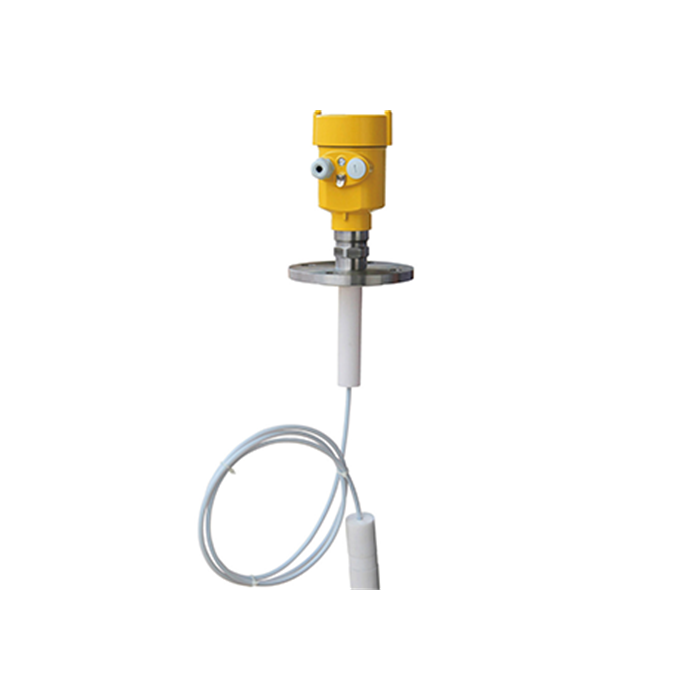
Materials: avoid a universal compatibility table
PTFE, PFA, PVDF, stainless steels and nickel alloys have different limitations. Concentration, temperature, contaminants, stress and exposure time can change the result. The suitability of an alloy for one acid solution does not establish suitability for another concentration or for a cleaning mixture.
Obtain written compatibility information for the antenna barrier, flange, gasket, probe where fitted and any secondary process seal. Distinguish a raw material's temperature capability from the rated temperature-pressure envelope of the instrument assembly. No polymer or alloy name makes a seal universally resistant.
For oxidisers or reactive chemicals, cleanliness and contamination control can be as important as corrosion resistance. Keep the review tied to the exact service rather than selecting a gasket from a generic acid-versus-solvent list.
Low-reflection solvents and echo margin
Some non-conductive organic liquids produce weak radar returns. A static dielectric-constant value is only a screening input; frequency, temperature, composition and conductivity also matter. There is no universal dielectric threshold that forces all applications below it to use guided-wave radar.
Free-space radar may work well with an appropriate antenna and installation. Guided-wave radar can be useful where energy concentrated along a compatible probe improves performance, but coating, probe geometry and minimum measuring zones must also be checked.
For layered liquids, distinguish total liquid level from the oil-water or solvent-water interface. An interface-capable guided-wave instrument needs suitable transmission through the upper layer, sufficient layer thickness and a usable interface response. Emulsions may require a different measurement method or an explicitly defined profile measurement.
Plastic tanks do not automatically require a metal ground plate
Free-space radar can be used on many plastic tanks without adding a universal metal plate. Requirements depend on the sensor and antenna design. Some guided-wave probe arrangements have their own grounding or reference requirements, which must not be confused with all non-contact radar installations.
Plastic walls or roofs may transmit microwave energy, allowing reflections from external structures. Review the actual beam, surrounding steelwork and mounting stiffness. Adding an arbitrary metal plate can introduce corrosion, mechanical loading or a new false echo; use the manufacturer's arrangement.
Blanketing, vacuum and buildup
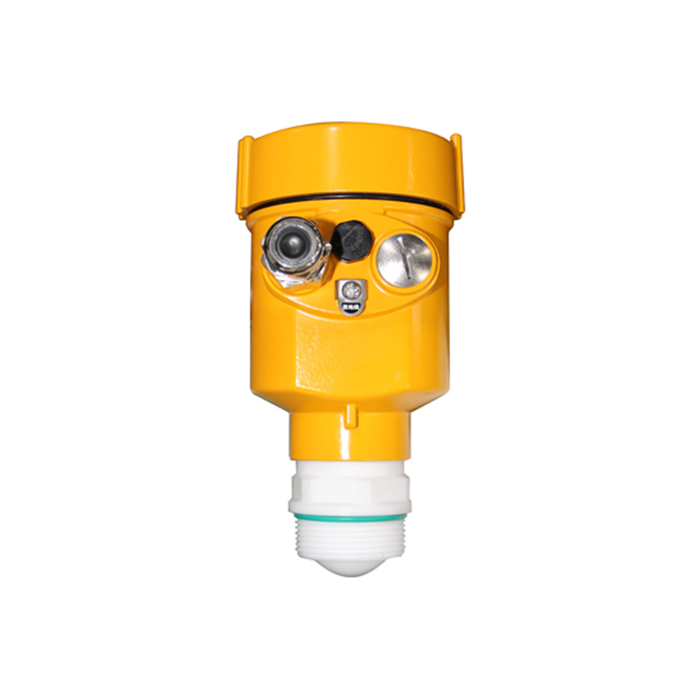
A nitrogen blanket does not remove the need to rate the pressure boundary. Check positive pressure, vacuum and temperature together. Radar is often less affected by ordinary gas-composition changes than an acoustic sensor, but dense vapour, condensation and antenna deposits can still affect it. A DP system can compensate for tank pressure through a correctly designed pressure reference.
Crystallising or polymerising products need a nozzle and connection that limit retained material. A flush arrangement may help, but heating or purging must be approved for the chemistry, reaction risk and hazardous area. Do not prescribe heating for every polymerising liquid or gas injection into every chemical tank.
Acceptance and inventory calculations
| Task | Acceptance evidence |
|---|---|
| Continuous level control | Comparison at representative levels and during filling |
| Foam or coating duty | Echo tracking through the expected worst conditions |
| Volume reporting | Level reference and validated tank capacity table |
| Mass reporting | Volume result plus representative density and temperature data |
| Alarm or protective function | Documented response, diagnostics and required independence |
| Mechanical integrity | Correct materials, seals, ratings and installation records |
Level alone does not establish mass or leakage. A density error transfers directly into a mass calculation when volume is fixed, and operational movements can obscure a small inventory loss. Specify a separate leak-detection or mass-balance requirement where needed.
Send the chemical data sheet, concentration range, process limits, tank drawing and electrical classification to METRAVON for a configuration review.
FAQ
Can radar measure hydrochloric acid?
A suitable radar arrangement may be used, but compatibility must be confirmed for the actual concentration, temperature, vapour and all exposed parts. Do not select flange or gasket materials from the chemical name alone.
Why does the reading change during filling?
The inlet stream, turbulence, foam, condensation or a competing echo may change target tracking. Compare the echo curve and reference level before and during filling.
Does every plastic tank need a metal plate?
No. Follow the selected sensor's mounting instructions and assess external reflections. Grounding requirements are design-specific, especially for different guided-wave probe types.
Is guided-wave radar always better for solvents?
No. It can improve measurement in some weak-reflection applications, but chemical compatibility, coating, probe arrangement and usable range may favour another solution.
Should a crystallising chemical always have a heated nozzle?
No. Heating must be compatible with the chemistry and approved process design. Consider a suitable connection, controlled temperature strategy and safe maintenance access together.
Can a single radar report an interface and total level?
Some interface-capable guided-wave systems can, within their specified layer and dielectric limits. An ordinary surface radar does not automatically provide a submerged interface measurement.
Related applications
Level Measurement in Oil Storage Tanks: Inventory, Custody and Overfill Are Three Different Jobs | High Temperature Level Measurement: What Works from 150 °C to 450 °C
