


 Chinese
 Spanish
 Russian
 Portuguese
 French
 German
 Indonesian
 Thai
 Vietnamese
 Arabic
 Italian
 Turkish
 Polish
 Japanese


A tanker truck level sensor produces a useful load figure only when the vehicle is level, the liquid has settled, and the reading is tied to the tank's strapping table. Motion, residual slosh and an undefined transfer datum turn a gauge value into a number with no audit trail. This article sets the three conditions and a worked load check.
Why tilt invalidates a static gauge reading
A tanker truck level sensor assumes the liquid surface and the sensor axis share one vertical line. Park the vehicle on a 1.5° grade and that assumption breaks: the free surface stays horizontal while the tank leans, so the measured distance no longer equals the true vertical liquid height. A 2.0° lean on a 2.2 m diameter tank shifts the wedge volume by an amount large enough to fail a custody check, even though the display still shows a clean number. The error grows with tank diameter, so a narrow compartment is far more forgiving than a long single-bay trailer.
The fix is not a smarter algorithm but a defined rule: take the reading only when the onboard tilt indicator reads below a set limit, typically 1.5°, and record that limit with the value. Where the vehicle cannot be levelled, the gauge figure must be marked "indicative" and excluded from any transfer calculation until a strapping-table correction is applied by a competent person. The same limit applies to a non-contact radar head and to an external-mounted unit, because both measure the same tilted surface. A depot that skips the tilt check will see a repeatable bias that looks like a calibration drift but is really a parking habit.
Tilt bias must be evaluated using the sensor offset and the tank-specific level-to-volume relation. For an illustrative 48 m³ load, assume a local strapping-table slope dV/dh = 3.80 m³/m, a sensor offset of 3.5 m from the volume centroid, and a 1.5° tilt. The estimated height error is 3.5 × tan 1.5° = 0.092 m. A first-order local estimate gives about 0.35 m³, or 350 L, roughly 0.7 % of the assumed load. The slope is an illustrative input, not the circular end area; use the certified table and approved tilt treatment for the actual geometry.
Using the same assumed local dV/dh, a 0.1 % volume allowance on 48 m³ is 0.048 m³ and corresponds to about 0.013 m of height, or an illustrative angle arctan(0.013 ÷ 3.5) = 0.21°. This is not a universal parking specification: verify the local table slope, sensor position and permitted correction method. At an assumed 95 % fill the ullage is 2.4 m³; an estimated 0.35 m³ bias is about 15 % of that ullage. Assess overfill allowance separately from transfer accuracy.
Slosh decay: how long to wait after stopping
Liquid in a moving tanker keeps moving after the wheels stop. A tanker truck level sensor asked to report during that decay period reads a sloshing, noisy surface that settles to a different mean than the still value. The wait time depends on tank length and fill ratio, not on the sensor make. Longer tanks and compartment divides prolong the oscillation, while a centre baffle shortens it, so a single fixed delay suits only one tank geometry.
| Tank fill ratio | Slosh decay time @ 15 °C | Stable reading condition |
|---|---|---|
| 20–40 % | 3 min | Surface ripple < 5 mm |
| 40–70 % | 4 min | Surface ripple < 5 mm |
| 70–95 % | 5 min | Surface ripple < 8 mm |
| During motion | n/a | Reading flagged invalid |
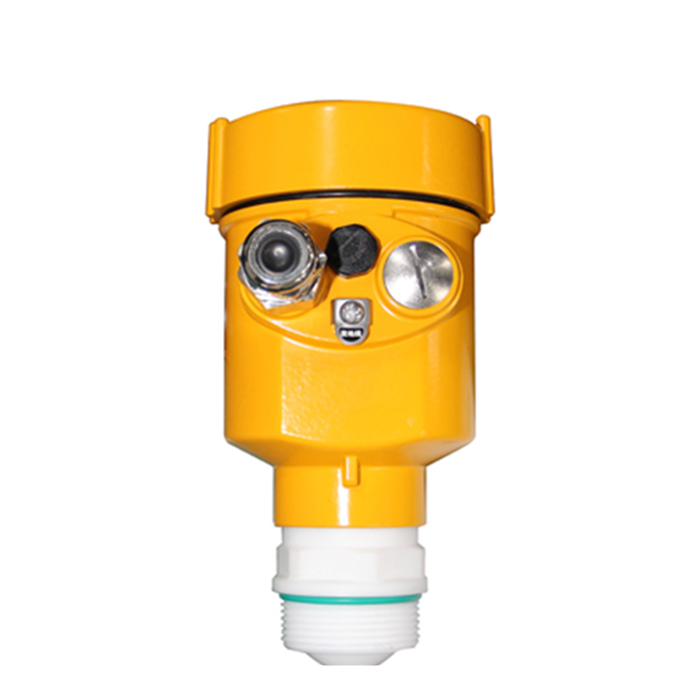
Wait times are typical reference values for a baffled road tanker; confirm them against the actual tank length and the observed ripple on the first commissioning load.
The transfer datum and the tank strapping table
Consider next a smaller, 2 m long compartment with a 2.20 m diameter. The reading that matters at a loading bay is volume, not height, so the gauge must be reconciled to the tank's certified strapping table before it becomes evidence. The worked example below is illustrative, based on assumed site values, and is not METRAVON measured data. It separates the gauge figure from the booked load. Note that a simple cylinder area is only a cross-check; the certified table already accounts for end curvature, manways and any permanent internal structure that a plain formula ignores.
Assumed site values:
- Tank internal diameter, D = 2.20 m (nominal circular end area A_end = 3.80 m²; this is not the horizontal free-surface area used for a level increment)
- Sensor position: compartment mid-length (offset from geometric centre ≈ 0)
- Empty (pre-load) gauge reading, L₀ = 0.02 m
- Loaded (post-load) gauge reading, L₁ = 1.46 m
- Strapping-table volume at 1.46 m = 5.51 m³
- Tilt at reading time = 1.0° (within limit)
Calculation:
- Gauge load height = L₁ − L₀ = 1.44 m
- Invalid shortcut: A_end × 1.44 m = 3.80 × 1.44 = 5.47 m³. This is not a valid level-to-volume conversion for the horizontal compartment.
- For transfer volume use V(1.46 m) − V(0.02 m) from the same certified strapping table. A stated V(1.46 m) = 5.51 m³ is insufficient without the pre-load table volume; the 0.04 m³ arithmetic difference above is not a validated transfer error.
- Boundary: if tilt at reading time exceeds 1.5°, the A × height conversion is invalid and the load must be re-weighed or re-read level.
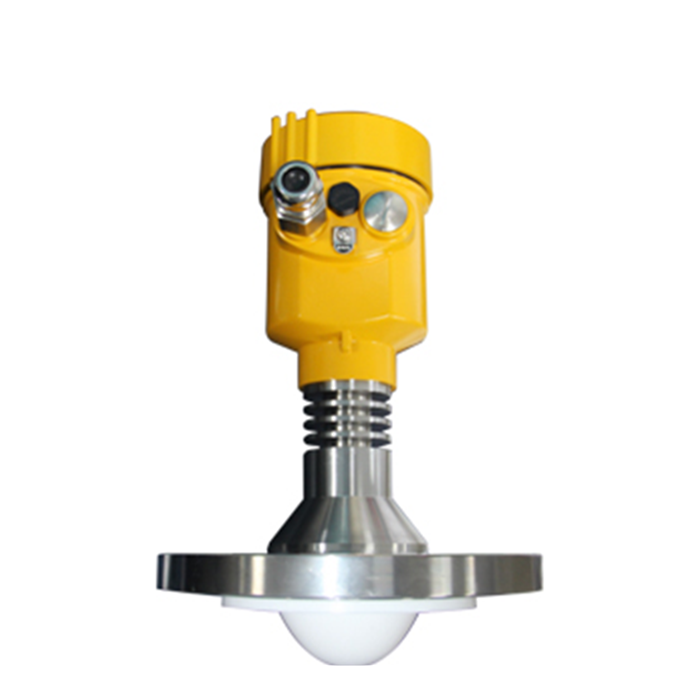
Marking in-transit readings as invalid
A tanker truck level sensor that logs continuously during transit produces a stream of numbers that look like inventory but are not. Road vibration, cornering and braking tilt make every in-motion sample a moving target, so the data must carry a status bit that marks it "in-transit, not for reconciliation". Only the parked, settled, level reading at each end of the journey enters the transfer record.
The discipline matters because a mixed log silently averages invalid motion samples with valid stopped samples, and the average drifts toward the wrong total. Tag the status at the controller, store it with the timestamp, and reject any sample taken while speed exceeded 2 km/h or tilt exceeded 1.5° when the ledger is closed at the depot. A clean audit trail also protects the carrier: if a short delivery is later disputed, the flagged in-transit block proves the booked figure came from a parked reading, not from a guess made on the road.
When the sensor must not be trusted
There are cases where a tanker truck level sensor should be ignored for transfer purposes entirely. Readings taken while the vehicle is moving, or within the slosh decay window after a hard stop, are not evidence of load. A tank whose internal coating has been changed since the strapping table was certified no longer matches that table, so the gauge-to-volume link is broken until re-calibrated.
A level within 0.3 m of the antenna (near full), or a surface lost to heavy foam, also returns a number with no physical meaning. In any of these, fall back to a weighed bridge ticket or a manual dip, and flag the sensor value as indicative only rather than booking it as the measured quantity. Temperature matters too: a product loaded hot and measured cold changes density, so record the temperature with the reading when the strapping table is volume-corrected to a reference such as 15 °C.

A loading and unloading record set
The transfer is defensible only if each leg is documented against the same fields. The set below is the minimum a depot should keep for a tanker truck level sensor installation; it works for both a non-contact radar head and an external-mounted unit.
| Record field | Source | Acceptance rule |
|---|---|---|
| Pre-load gauge, m | Sensor @ tilt < 1.5° | Matches last post-unload within 0.02 m |
| Post-load gauge, m | Sensor @ tilt < 1.5° | Slosh wait completed |
| Strapping rev. | Tank certificate | Matches physical tank |
| Tilt at read | Onboard indicator | ≤ 1.5° |
| Motion flag | Controller log | "parked" only |

Keep the strapping-table revision number with the reading; a gauge value without its table reference cannot be audited later if the tank is re-lined.
FAQ
Q1. Can I read the level while the tanker is moving?
The direct answer is no, not for any quantity you intend to book. Road tilt and slosh make a moving reading wrong by more than a transfer tolerance, so the controller should flag every in-motion sample as invalid. Use the parked, settled reading taken after the decay wait, and reject samples logged above 2 km/h.
Q2. How long should I wait after stopping before reading?
The direct answer depends on fill ratio: about 3 min below 40 % full, 4 min near mid-fill, and 5 min above 70 % full, judged by a surface ripple under 5–8 mm. These are typical baffled-tanker values to confirm on the first load. Reading earlier books a slosh mean that settles to a different true level.
Q3. Why does the gauge height not match the strapping volume?
Height and volume are linked by the certified strapping table. For a horizontal compartment, the circular end area times the vertical height increment is not a valid volume formula. Obtain both pre-load and post-load table volumes and subtract them; the post-load value 5.51 m³ alone does not establish the net load.
Q4. What tilt angle makes a reading unusable?
The direct answer is anything above 1.5° at the moment of reading, because the free surface and the tank axis then diverge enough to shift the wedge volume past a normal gauge tolerance. Keep the vehicle on level ground, read the tilt indicator, and re-level or re-read if the limit is exceeded.
Q5. Does an external-mounted sensor avoid the motion problem?
The direct answer is no; an external-mounted unit still measures the same tilted, sloshing surface, it only avoids a tank nozzle. Motion and slosh rules apply identically. Its advantage is no tank penetration, not immunity to parking angle or decay time, so apply the same wait and tilt limits.
Q6. What if the tank was re-lined after the strapping table was issued?
The direct answer is that the gauge-to-volume link is then broken and must not be used for transfer until the table is re-certified. A new internal coating changes the empty volume the table assumes. Book the bridge weight or a manual dip until a revised strapping revision is filed with the reading.
SUMMARY
A tanker truck level sensor becomes transfer evidence only when its parked and settled reading meets the approved tilt criteria and is reconciled to the certified strapping table. Determine the net load from the difference between the pre-load and post-load table volumes, with any approved tilt and temperature corrections. Tag in-motion samples invalid for reconciliation so they do not enter the load ledger.
Talk to a METRAVON engineer about this application
When you plan a mobile tank installation, send us the tank diameter, fill range and whether the tank has been re-lined since its strapping certificate. Our engineers will set the tilt and slosh limits and show how to tag in-transit samples so your ledgers stay auditable.
