


 Chinese
 Spanish
 Russian
 Portuguese
 French
 German
 Indonesian
 Thai
 Vietnamese
 Arabic
 Italian
 Turkish
 Polish
 Japanese


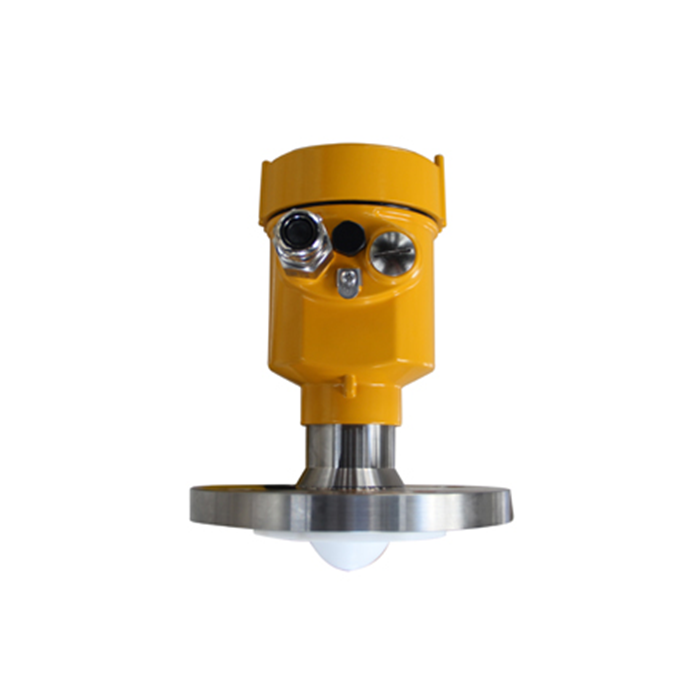
The METRAVON MV-RD12 80 GHz radar level meter uses a 32 mm PTFE lens for non-contact liquid measurement. It is available with threaded or flanged process connections. For a closed tank, the decisive purchasing question is whether the complete connection, seal and antenna assembly is rated for the operating pressure and temperature, not whether the product name says pressure-resistant.
Specify the Pressure Connection Before the Electronics
Provide the normal and maximum process pressure together with temperature, including vacuum or cleaning conditions where applicable. The thread specification does not define a pressure rating, and a PTFE lens does not make all exposed parts chemically compatible. List the liquid composition and concentration so the process-facing metal, lens and seal can be considered as an assembly.
For replacement work, identify the existing thread standard or supply the flange drawing, pressure class, face and bolt pattern. Do not force an NPT fitting into a parallel-thread connection. Request the matching seal arrangement and dimensional drawing before modifying the nozzle.
MV-RD12 Measurement and Connection Data
| Feature | Published model data | What to establish for the order |
|---|---|---|
| Liquid measuring interval | 0.1-30 m | Include nozzle height when calculating the shortest distance to the liquid. |
| Antenna | 32 mm PTFE lens | Check the actual bore and projection rather than the connection name alone. |
| Beam angle | 8 degrees | The tank drawing should show the inlet, mixer and other potential reflectors. |
| Nominal accuracy | +/-2 mm | Agree on installed acceptance limits and an independent reference measurement method. |
| Thread options | G1 1/2A; 1 1/2 NPT | Identify the thread and sealing method on the existing tank fitting. |
| Flanged version | From DN40 | Specify flange standard, pressure class, face, wetted material and lining. |
| Temperature configurations | -40 to 100 / 120 deg C | Confirm the connection and seal version for the required temperature. |
| Pressure rating | Configuration-specific | Obtain the allowable pressure at operating temperature in the quotation. |
Pressure and temperature options must be evaluated together. Do not design a vessel connection from separate maximum values or assume that every available flange has the same rating. If the process exceeds the selected MV-RD12 configuration, assess the MV-RD12G high-temperature version against its own assembly limits.
Nozzle and Control-System Checks
A long narrow nozzle can return a strong echo before the signal reaches the liquid. Submit its internal diameter, length and any reducers for review. Avoid aiming directly at the filling jet; on an agitated tank, examine the reading with the agitator stopped and at its normal operating speeds.
Select a two-wire 24 V DC 4-20 mA/HART circuit when it matches the receiving input. An RS485/Modbus requirement needs the corresponding separately powered electronics and wiring. For either route, record the distance reference and whether the controller expects level, distance or a calculated volume. A correct radar distance can still produce an incorrect displayed tank volume if the vessel geometry is wrong.
Questions Before Replacing an Existing Transmitter
Q1. Can the flange photograph confirm a direct replacement?
No. Compare the dimensioned connection, pressure class, sealing face, insertion geometry and available headroom. Replacing only the electronics also requires confirmation of the existing assembly and its identification; similar housings are not evidence of interchangeability.
Q2. Is the +/-2 mm figure a complete tank measurement guarantee?
It is the nominal accuracy listed for the model, not a guarantee for every installation. Nozzle reflections, surface motion and reference measurements contribute to the observed error. Agree on test levels, surface conditions and the reference instrument before judging the installed system.
Q3. Does PTFE construction establish hygienic suitability?
PTFE describes the lens material. It does not establish a hygienic process connection, drainability, surface finish or approval for a particular cleaning procedure. A sanitary service needs the exact construction and relevant documents reviewed separately.
Q4. How should a pressurised installation be commissioned?
Have qualified personnel follow the site's isolation and pressure-system procedures. Verify the mechanical rating and installed seal before operation, then compare the level signal at stable process conditions and after normal pressure changes. Do not loosen a connection to investigate a reading while the vessel is pressurised.
Information Needed for a Firm Quotation
Request an MV-RD12 quotation with the fluid specification, pressure-temperature conditions, nozzle drawing, operating level interval and control-system input. Include required hazardous-area documentation, if applicable, rather than assuming that a standard enclosure carries the necessary approval. The quotation should identify the supplied housing protection: metal IP67 and ABS IP65 are distinct options in the selection table.
