


 Chinese
 Spanish
 Russian
 Portuguese
 French
 German
 Indonesian
 Thai
 Vietnamese
 Arabic
 Italian
 Turkish
 Polish
 Japanese


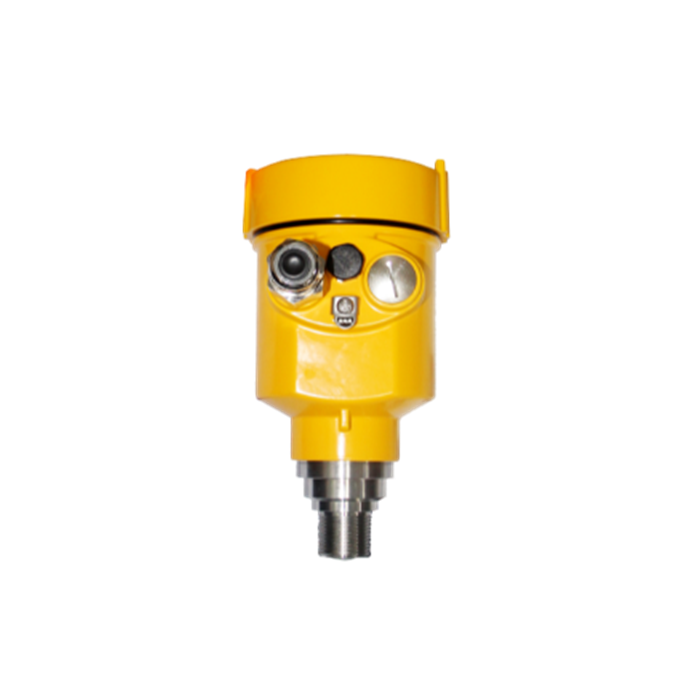
The METRAVON MV-RD11S compact 80 GHz radar level meter measures liquid level through a 21 mm PTFE lens. Its 0.1-10 m measuring interval and small process connection suit installations where tank-top space is limited. The important restriction is its 14-degree beam: a small antenna does not mean a narrow measurement footprint inside the vessel.
Will the MV-RD11S Fit a Small Tank?
Start with the distance from the measurement reference plane to the lowest and highest liquid surfaces, not the nominal tank capacity. At maximum fill, keep the liquid outside the specified near-field limit. Include the nozzle height in this check; adding a tall standpipe to gain clearance can introduce a different problem by reflecting the transmitted signal.
A dosing vessel with a clear vertical path is a more straightforward installation than a narrow vessel containing a mixer, heating coil or off-centre inlet. For the latter, send a top view and a section drawing showing the complete path to the lowest operating level. Moving the mounting point may solve a false-echo problem that changing the measuring range cannot.
Dimensions and Ratings That Affect Selection
| Item | Model data | Site notes |
|---|---|---|
| Measurement | 80 GHz FMCW; liquids | This configuration measures the liquid surface without an immersed probe. |
| Measuring interval | 0.1-10 m | Include the highest fill level and the lowest working level in the distance calculation. |
| Lens and beam | 21 mm PTFE; 14 degrees | Allow for the widening beam when locating nearby walls and internal components. |
| Process connection | G3/4A; 3/4 NPT; flange from DN25 | Thread forms are alternatives, not interchangeable fittings with a common seal. |
| Process temperature | -40 to 100 deg C | Seal compatibility and the actual process pressure must be reviewed together. |
| Nominal accuracy | +/-5 mm | Installed performance also depends on echoes, reference geometry and operating conditions. |
| Housing protection | IP67 metal; IP65 ABS options | The enclosure code, cable glands and unused-entry plugs determine the installed protection. |
The model introduction lists a process-pressure interval of -0.1 to 1.6 MPa. Obtain the rating for the selected connection and seal at operating temperature before specifying a pressurised vessel. A flange size alone does not establish its pressure class.
Wiring and the First Fill Test
A two-wire 24 V DC version provides 4-20 mA with HART. Separately powered electronics with RS485/Modbus are a different selection. Agree on the receiving PLC input and the required electronics before cable installation; adding a serial connection to an analogue input does not create digital communication.
Record the empty-distance reference and the analogue scaling, then compare the local reading and PLC value during a controlled fill. Observe the signal with the dosing pump running and stopped. If the reading follows the inlet stream rather than the settled surface, investigate the mounting position and echo trace before increasing damping. Record the chosen signal-loss behaviour so a retained value cannot be mistaken for a fresh measurement.
Small-Tank Installation Questions
Q1. Does the compact connection allow installation close to the wall?
Not by itself. The installation guide calls for at least 200 mm wall clearance for flange mounting, but this is not a guarantee that the beam stays clear over the full tank height. A narrow or irregular tank needs its wall profile checked against the beam path at low level.
Q2. Will foam on a dosing chemical be ignored?
That depends on the foam and the available surface echo. Persistent foam or deposits on the lens can change what the instrument detects. Provide the chemical, concentration, temperature and whether foam remains after pumping stops; include those conditions in the trial rather than accepting an empty-tank test alone.
Q3. Can the radar replace a high-level switch?
It can supply a continuous level signal to a control system. That does not establish suitability as an independent overfill protection device. Keep any separate protective function and its required approvals in the project specification.
Q4. What should accompany a quotation request?
Send the tank section, fitting thread or flange drawing, nearest and farthest surface distances, chemical details and the PLC input type. A photograph showing the inlet and mixer is useful where no drawing exists. State whether the enclosure is indoors, exposed to weather or subject to washing.
Choosing Beyond the Compact Model
Where the tank needs a different antenna or range, compare the other 80 GHz radar level meters by mounting geometry and process limits. For the MV-RD11S, send the tank and connection details to obtain a configuration-specific quotation, including the electronics and sealing arrangement.
