


 Chinese
 Spanish
 Russian
 Portuguese
 French
 German
 Indonesian
 Thai
 Vietnamese
 Arabic
 Italian
 Turkish
 Polish
 Japanese

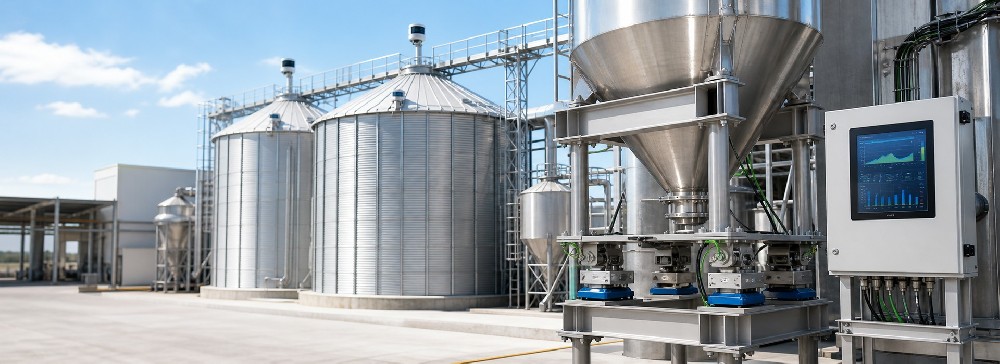

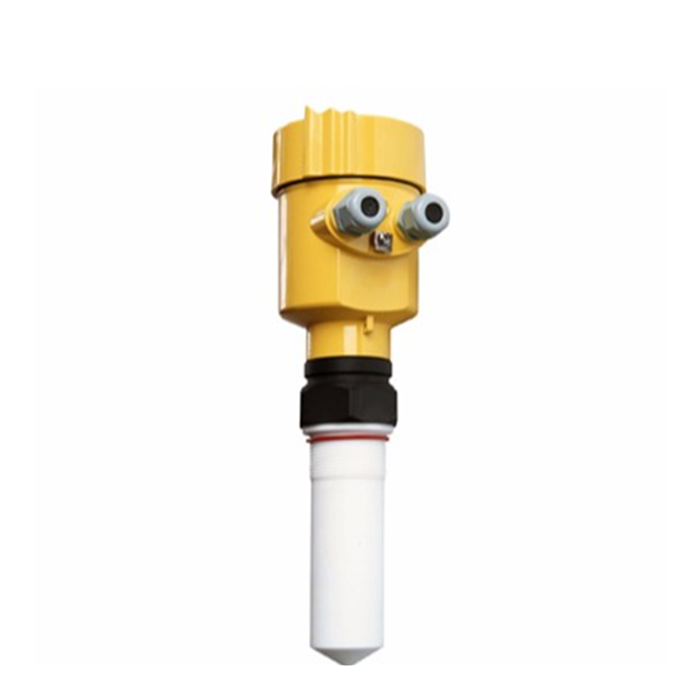
METRAVON MV-RD901 is a corrosion-resistant radar level meter with a 26 GHz PTFE rod antenna for non-contact liquid measurement. The configuration described here is for atmospheric-pressure tanks with a listed distance range of 0.3-10 m. The antenna projects into the vessel opening, but it does not need to extend down into the liquid like a guided wave probe.
Choosing a corrosion-resistant radar level meter for a chemical tank
Start with the chemical name, concentration and temperature. PTFE at the antenna does not establish compatibility of every exposed connection, gasket or seal. Vapour and splashes can reach components above the normal liquid surface, so include those parts in the material review. Also identify cleaning chemicals and any temperature excursion during cleaning.
This atmospheric configuration should not be selected for a pressurised reactor merely because the thread fits. For a vessel that needs a pressure-rated assembly, compare the MV-RD906 lens configuration using the complete process conditions. Chemical compatibility and pressure suitability remain separate checks.
Check the opening and the distance to the liquid
| Parameter | Atmospheric-tank configuration |
|---|---|
| Listed distance range | 0.3-10 m |
| Process temperature | -40 to 100 deg C |
| Process pressure | Atmospheric |
| Antenna | 44 mm PTFE rod; 50-250 mm lengths |
| Connection options | G1 1/2 A or flange from DN50 |
| Reference accuracy | +/-5 mm; installed performance depends on the measurement conditions. |
Measure from the instrument reference plane to the lowest liquid surface, including the nozzle height. Then check the highest liquid position against the near measuring limit. The antenna must not remain screened by a long, narrow nozzle. Send the opening diameter, nozzle length and internal projections so the required antenna length can be selected.
A small thread does not mean a narrow beam. Inspect the full path towards the low liquid level for tank walls, pipes and supports. Keep the filling stream out of that path. If the available mounting point only sees foam or an inlet splash zone, changing the range setting will not correct the installation.
Verify the measurement during the troublesome part of the cycle
Compare readings at known liquid levels, then repeat the observation while filling or mixing if these operations produce foam. Record whether condensation or crystals collect on the antenna after a temperature change. Cleaning access is worth arranging before commissioning, particularly where the tank cannot be opened during normal production.
The 24 VDC two-wire option provides 4-20 mA/HART. For a PLC connection, set and test the empty and full values at both the transmitter and the analogue input. Specify RS485/Modbus separately when digital communication is required; request the matching supply, terminal diagram and register map.
Application questions
Q1. Does the PTFE antenna remove the need for maintenance?
No. Non-contact measurement avoids an immersed probe, but vapour deposits can still reach the antenna. Base the inspection interval on observed buildup and the site's safe-access procedure. Check the echo and level after cleaning before returning the measurement to automatic control.
Q2. Can an outdoor IP rating be used as proof of chemical resistance?
No. The metal enclosure options are listed as IP67 and the plastic option as IP65. These ratings concern ingress protection, not resistance to a particular chemical atmosphere. Specify enclosure exposure, cable-entry materials and the actual liquid separately.
For an MV-RD901 quotation, send the chemical specification, temperature, tank and nozzle dimensions, highest and lowest levels, plus the required electrical output. Add a photograph of deposits or foaming when those conditions influence the measurement.
