Chinese
 Spanish
 Russian
 Portuguese
 French
 German
 Indonesian
 Thai
Thai Vietnamese
 Arabic
 Italian
 Turkish
 Polish
 Japanese

Selection summary
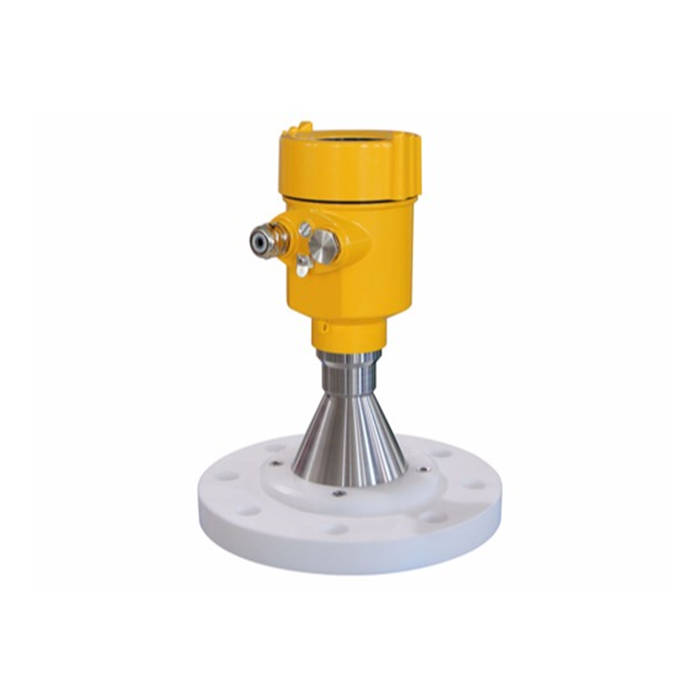
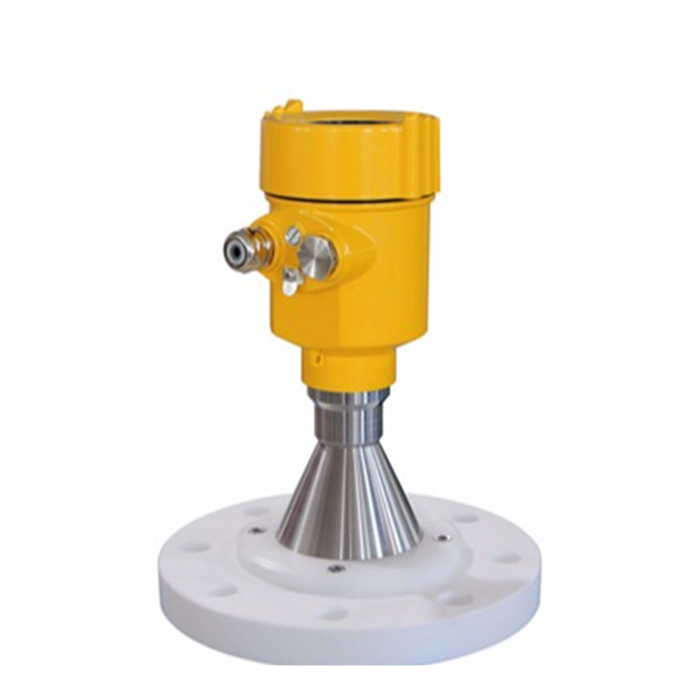
The MV-RD906 is a 26 GHz lens-antenna radar level meter for liquids, with a reference measuring range of 0.2–30 m. Typical applications include acetone storage tanks, chemical reactors, and process vessels containing methanol, xylene or similar liquids. Confirm the measuring range, process temperature and pressure, connection, wetted materials, output and mounting conditions before ordering.
Product overview
A 26 GHz radar level meter with a 76 mm PTFE lens antenna for pressurized or corrosive process vessels and liquid surfaces with significant movement.
Measurement principle
The MV-RD906 antenna transmits 26 GHz microwave signals toward the material surface and receives the reflected echo. The instrument calculates distance and level from the signal travel characteristics. Antenna size, nozzle geometry, dielectric properties and internal obstructions are key selection and installation factors.
Core advantages
- PTFE lens antenna for corrosion resistance and pressure service
- Stable measurement on agitated or fluctuating liquid surfaces
- 10° beam for improved obstacle avoidance
Usage scenarios
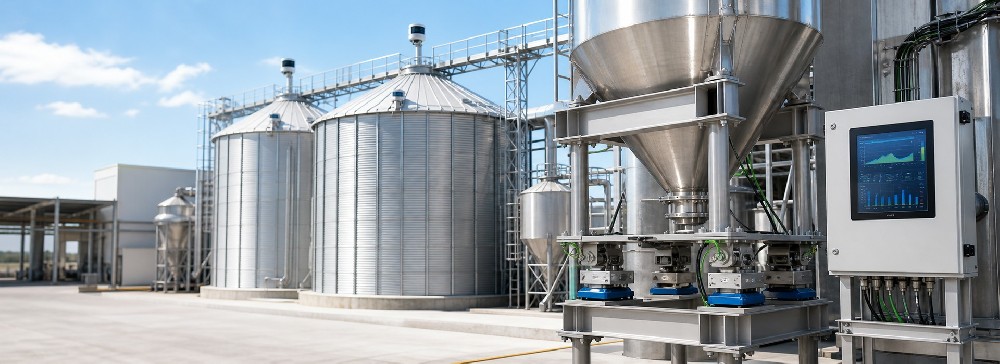
- Acetone storage tanks
- Chemical reactors
- Methanol, xylene and similar liquid process vessels
Application value
Technical parameters
| Measuring medium | Liquids |
|---|---|
| Measuring range | 0.2–30 m |
| Process connection | flange ≥ DN80 |
| Process temperature | standard: −40 to 120 °C; high-temperature version: −40 to 200 °C |
| Process pressure | −0.1 to 1.6 MPa |
| Antenna | 76 mm PTFE lens antenna |
| Measurement accuracy | ±5 mm |
| Beam angle | 10° |
| Degree of protection | IP67; IP66/68 available on selected configurations |
| Center frequency | 26 GHz |
| Power supply and output | Two-wire: 24 V DC, 4–20 mA/HART; options: four-wire 220 V AC, RS485/Modbus, dual relays, FOUNDATION Fieldbus and PROFIBUS PA |
| Explosion-proof certification (optional) | Ex ia IIC T6 Ga / Ex db IIC T6 Gb |
| Configuration methods | Local display, Bluetooth, HART communicator or remote display |
| Cable entry | M20 × 1.5 or 1/2 NPT |
| Seal selection | Confirm against the medium, temperature and pressure |
Note: These values are for preliminary selection. Output, hazardous-area approval, flange, seal, and temperature/pressure combinations are subject to the final configuration sheet and order code.
Selection guide
- Confirm whether the medium is liquid or bulk solid, and provide its dielectric properties together with dust, foam, vapor, condensation, buildup and agitation conditions.
- Check the effective measuring range, nozzle geometry, internal obstructions and material-surface profile against the antenna size and beam angle.
- Evaluate temperature, pressure, corrosion resistance and hazardous-area requirements as one configuration; do not rely on a single maximum rating.
- Confirm the process connection, power supply, output protocol, local indication, commissioning method and enclosure material.
Key points for installation and commissioning
- Mount the antenna with a clear view of the measured surface. Avoid filling streams, agitators, ladders, coils and structural members.
- Match the nozzle diameter and length to the antenna and beam. Perform false-echo mapping only after verifying the measurement path.
- During commissioning, enter the empty distance, full level, medium type and response speed, then verify the reading at both low and high level.
Procurement and Technical Confirmation Checklist
- Medium name, density or dielectric properties, corrosion risk, and any foam, vapor, dust, crystallization or buildup.
- Vessel or channel dimensions, normal and extreme levels, mounting position, nozzle or bracket dimensions, internal obstructions and site photos.
- Combined process temperature and pressure, wetted materials, seals, degree of protection, hazardous-area classification and ambient temperature.
- Power supply, output protocol, wiring arrangement, display or commissioning method, control-system interface and accessories.
- At receipt, verify the nameplate model, process connection, range, materials, power supply and output, hazardous-area certificate and supplied documentation.
FAQ
What media can the MV-RD906 measure?
The MV-RD906 is intended for liquids and is commonly used for acetone storage tanks, chemical reactors, and process vessels containing methanol, xylene or similar liquids. For heavy foam, condensation, buildup or very low dielectric properties, confirm the echo conditions before selection.
What is the measuring range of the MV-RD906?
The reference measuring range is 0.2–30 m. Select the range using the effective measuring distance, dead zone, installation height and required high- and low-level margins, not the vessel height alone.
What temperature and pressure can the MV-RD906 handle?
The reference process temperature is standard: −40 to 120 °C; high-temperature version: −40 to 200 °C, and the reference process pressure is −0.1 to 1.6 MPa. Temperature and pressure limits must be checked as a combination with the seal, flange and hazardous-area configuration.
Which process connection should be used for the MV-RD906?
The reference process connection is flange ≥ DN80. Confirm the final connection against the nozzle size, vessel construction, antenna dimensions, maintenance clearance and medium compatibility.
Can the MV-RD906 connect to a PLC or DCS?
Yes. The reference output is two-wire 24 V DC with 4–20 mA/HART. Options may include four-wire 220 V AC, RS485/Modbus, dual relays, FOUNDATION Fieldbus and PROFIBUS PA. Confirm the required power supply, protocol and electrical isolation before ordering.
What information is needed to quote the MV-RD906?
Provide the medium, measuring range, temperature, pressure, process connection, wetted materials, hazardous-area classification, power supply, output protocol, vessel dimensions and installation photos. Include a process drawing for unusual applications.
Ordering instructions
This page is used for procurement inquiry, technology selection and preliminary project design. Page parameters cannot replace project-level selection confirmation; when hazardous media, high temperature and pressure, explosion-proof, hygienic or strong corrosive process conditions are involved, please complete written technical confirmation before placing an order.