


 Chinese
 Spanish
 Russian
 Portuguese
 French
 German
 Indonesian
 Thai
 Vietnamese
 Arabic
 Italian
 Turkish
 Polish
 Japanese

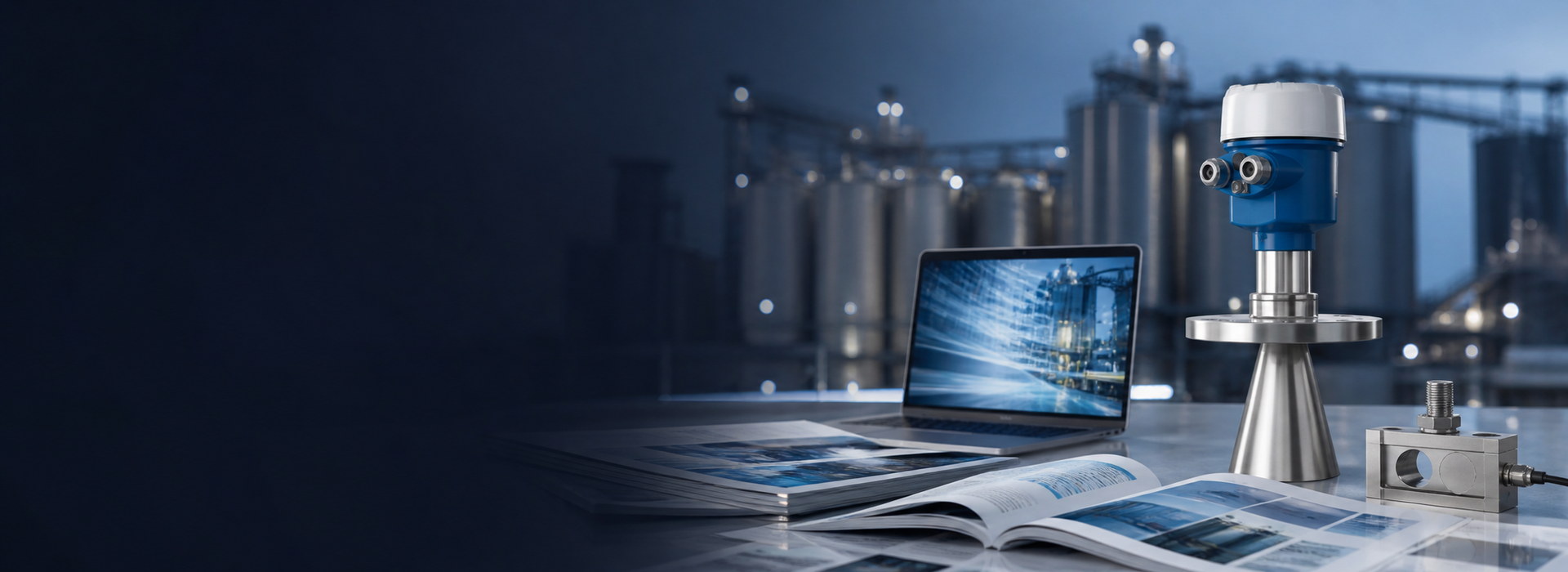
Guided wave radar probe selection is a mechanical decision as well as a signal decision. The probe contacts the process and must be installed, supported and eventually removed. Choose rod, cable or coaxial construction from those constraints before comparing maximum measuring ranges.
Guided Wave Radar Probe Selection: Three Arrangements
| Form | METRAVON option | Key restriction |
|---|---|---|
| Rod | MV-RD701 single rod; listed maximum length 6 m. | Provide a straight insertion and withdrawal route, with clearance from moving parts. |
| Cable | MV-RD701 single cable; listed maximum length 30 m. | Assess swing, drag and load at the connection, not just transport convenience. |
| Coaxial | MV-RD704; listed 0.3-6 m range and 25 mm or 40 mm tube options. | Liquid must exchange freely through the tube; deposits can compromise that path. |
The listed probe length is not a promise that every point along it is usable for measurement. Obtain the reference plane and upper and lower exclusions for the quoted construction. A required near-full alarm needs its own clearance check.
Start With Removal Space, Then Check the Process Loads
A rigid rod that fits inside the vessel may still be impossible to withdraw beneath a roof or pipe rack. Show the complete handling route. Do not bend the probe to fit a curved route unless that construction and procedure are specifically approved.
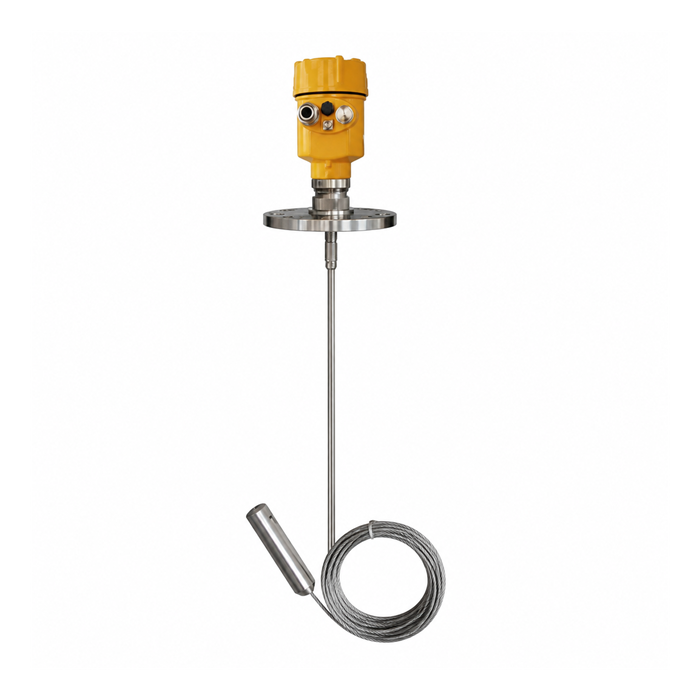
A cable reduces rigid handling length but can move during filling or become loaded by bulk material. Review the vessel support, nozzle, probe termination and any restraint as one load path. Bottom anchoring is not an automatic answer to movement.
Use Coaxial Construction Only Where It Can Exchange Liquid
The surrounding tube of MV-RD704 is part of the measuring structure. For a clean compatible liquid it provides a defined guided path; viscosity, solids or crystals can make the liquid inside fail to represent the vessel.
Check opening clearance, drainage and cleaning access. Do not assume that a tube eliminates every unwanted echo or guarantees interface measurement. The actual liquid layers and supported electronics must still be assessed for an interface duty.
Specify Chemistry and Commission the Delivered Form
MV-RD701 lists 304 or 316L wetted metal options. Where a chemical requires a covered probe, review MV-RD702 as a different construction with its own end seals and handling requirements. A material change is not merely a cosmetic substitution.
At commissioning, verify probe identity, length and orientation against the order. Compare level at accessible reference positions and record the process state. Recheck after shortening or changing probe form only under an approved procedure; copying the old parameters does not prove the replacement behaves identically.
Probe Questions
Q1. Is the longest available cable suitable for any deep silo?
No. Material forces, abrasion and the support rating can be more restrictive than measurement range. Obtain the allowable construction and load assessment before selecting that length.
Q2. When should a non-contact method be reconsidered?
When contact with internals, repeated coating, unsafe cleaning access or excessive probe loads cannot be resolved. The alternative still needs a clear measurement path and its own process review.
Summary
Select a probe that remains mechanically sound and serviceable through the operating cycle. Request a probe-form review with vessel internals, handling clearance and material behaviour.
