Chinese
 Spanish
 Russian
 Portuguese
 French
 German
 Indonesian
 Thai
Thai Vietnamese
 Arabic
 Italian
 Turkish
 Polish
 Japanese
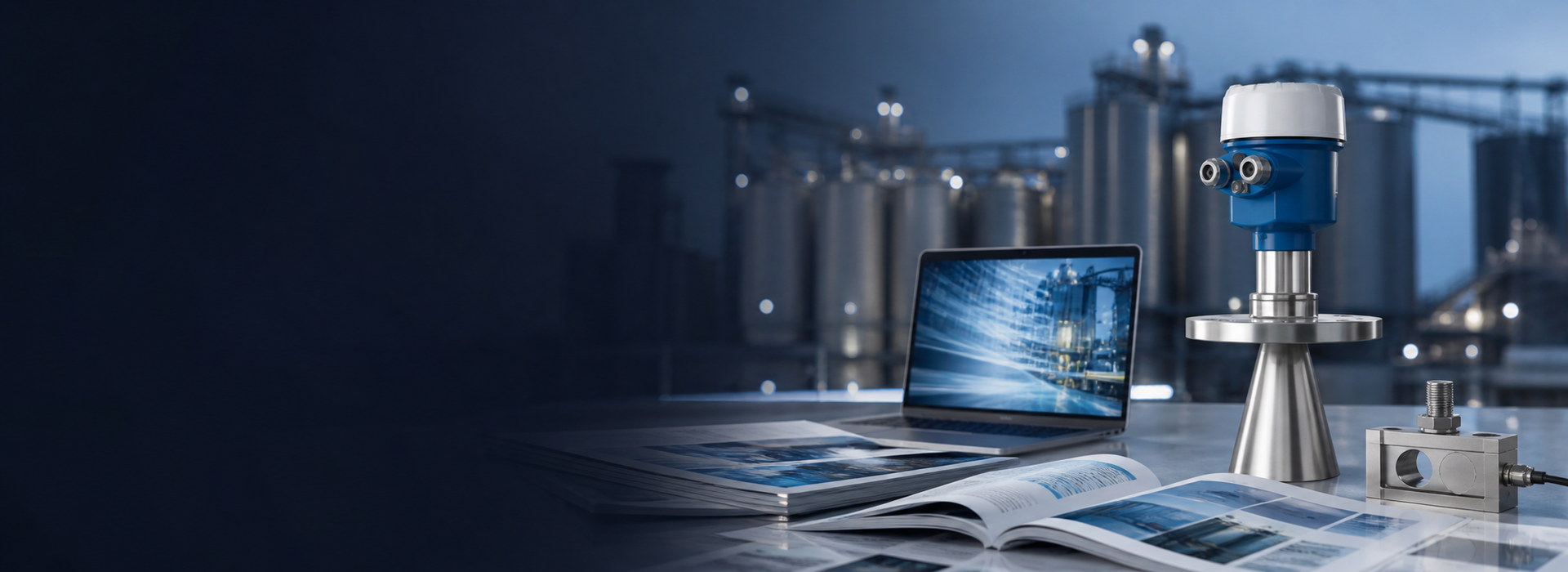
oil storage tank radar level meter, radar level meter, corrosion-resistant radar level meter, crude oil tank level meter, light oil storage tank level meter, radar level meter wiring, radar level meter commissioning, radar level meter working principle
1. Why Are Radar Level Meters Used for Oil Storage Tanks?
Liquid level in oil storage tanks is an important monitoring parameter in petroleum, chemical, storage, and transportation systems.
During the storage of crude oil, light oil, and other volatile liquids, it is necessary to continuously monitor changes in the liquid level inside the tank. Compared with manual measurement, continuous level instruments provide a more convenient way to obtain real-time liquid level information.
METRAVON radar level meters can be used in various storage vessels and process measurement environments. Applicable media include:
Crude oil;
Light oil;
Volatile liquids;
Slurry;
Solid particles;
Raw coal;
Pulverized coal;
Coke, etc.
For oil storage tank applications, radar level meters continuously measure liquid level by transmitting electromagnetic waves toward the medium surface and receiving the reflected echo.
This method does not rely on manual observation of the liquid surface and is suitable for long-term level monitoring in industrial storage tanks.
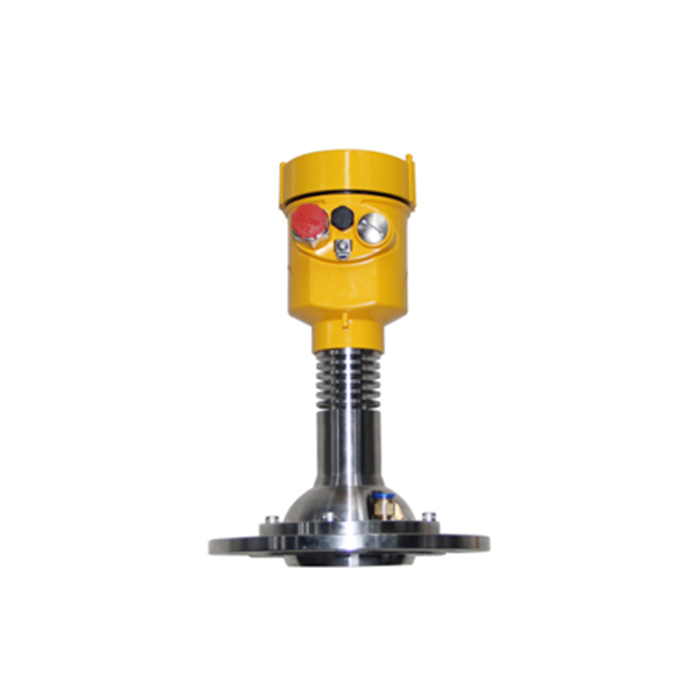
2. What Is the Working Principle of a Radar Level Meter?
Radar level meters use high-frequency electromagnetic waves for distance measurement.
The basic process can be summarized as:
Transmit radar signal → liquid surface reflection → receive echo → calculate distance → convert to liquid level
The radar probe transmits high-frequency pulses into the vessel.
When the radar signal reaches the surface of the measured medium, part of the energy is reflected back and received by the instrument receiver.
Because electromagnetic waves travel extremely fast, the electronic unit inside the instrument analyzes the time relationship between signal transmission and return to calculate the distance between the radar installation position and the medium surface.
Once the installation height of the storage tank is known, the actual liquid level can then be calculated.
Therefore, the first value obtained by a radar level meter is:
The distance from the instrument to the surface of the medium.
This distance is then converted into a liquid level signal according to the tank parameters.
3. What Should Be Considered When Selecting a Radar Level Meter for an Oil Storage Tank?
Different storage tanks contain different media and operate under different conditions, so purchasing a radar level meter should not be based only on measuring distance.
For crude oil, light oil, and volatile liquid storage tanks, the following should be confirmed as priorities:
Measured medium;
Tank height;
Maximum and minimum liquid levels;
Installation connection;
Operating temperature;
Operating pressure;
Whether the medium is corrosive;
Required power supply;
Required signal output.
If the medium is significantly corrosive, the material of the instrument's process-contact parts should also be considered.
4. Why Are Materials Important for Corrosion-Resistant Radar Level Meters?
In storage tanks containing sulfuric acid, nitric acid, and other highly corrosive media, ordinary materials may not be suitable for long-term use.
One of the key factors in selecting a corrosion-resistant radar level meter is:
Parts associated with the medium must use materials with sufficient corrosion resistance.
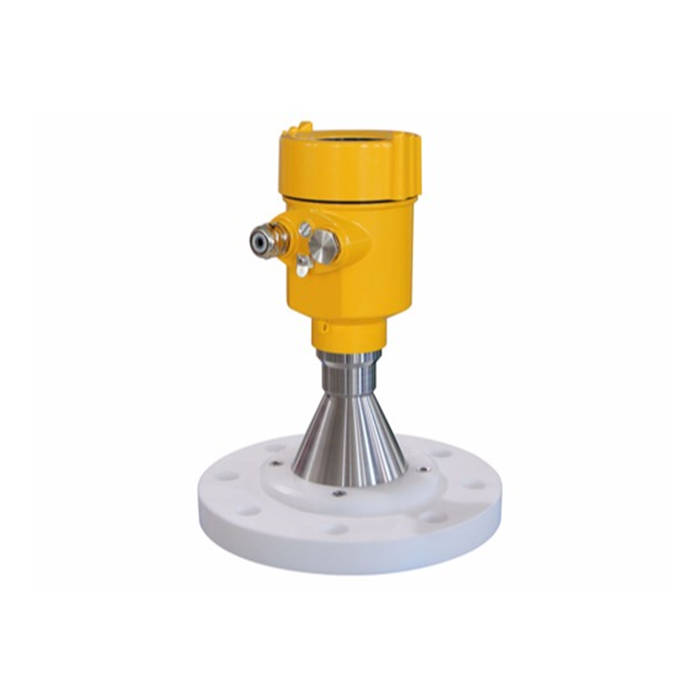
Polytetrafluoroethylene, also known as PTFE, is one of the common corrosion-resistant materials used in radar level instruments.
PTFE offers good:
Acid resistance;
Alkali resistance;
Resistance to various chemical media;
Resistance to organic solvents.
Therefore, for highly corrosive liquids, radar level meters with antennas or process isolation structures made from PTFE or other corrosion-resistant materials can be selected according to the actual medium.
However, corrosion-resistant selection should not be based solely on seeing the term "PTFE."
The specific medium name should still be provided before purchase because the compatibility of materials with chemicals may vary depending on concentration and temperature.
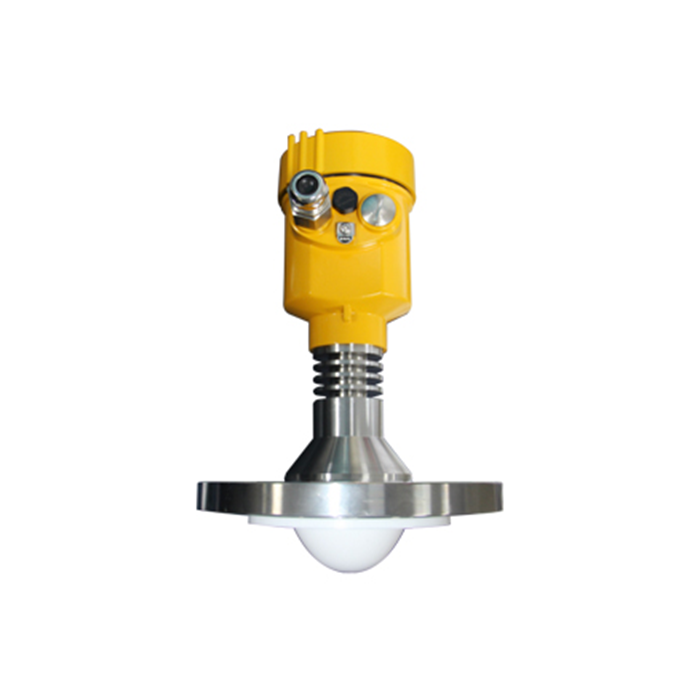
5. Which Media Are Corrosion-Resistant Radar Level Meters Mainly Suitable For?
Depending on actual process conditions, corrosion-resistant radar level meters can be used in applications where direct contact between ordinary metal materials and highly corrosive media should be avoided.
For example:
Acid storage tanks;
Alkali storage tanks;
Chemical liquid storage tanks;
Corrosive process vessels.
For media such as sulfuric acid and nitric acid, the instrument material should be confirmed according to the specific concentration, temperature, and process conditions.
Therefore, during model selection, it is better not to simply tell the supplier:
"I need a corrosion-resistant radar level meter."
More useful information is:
Medium name + concentration + temperature + pressure + tank dimensions.
This makes it possible to determine whether the selected material is suitable.
6. How Should a Radar Level Meter Be Wired?
After a radar level meter is installed on site, the power supply and signal wiring must also be connected correctly.
Depending on the model, radar level meters may use DC or AC power.
Therefore, before wiring, the first step is not to connect the power supply directly, but to:
Check the device nameplate and product label.
Confirm:
Rated supply voltage;
Power supply type;
Wiring terminal definitions;
Signal output type.
Do not wire the instrument based directly on experience with another model.
7. What Should Be Prepared Before Wiring a Radar Level Meter?
The wiring information you provided recommends using shielded twisted-pair cable, with a reference conductor cross-sectional area of:
0.5 mm²–2 mm²
The actual cable specification should also be selected according to:
Power supply method;
Communication signal;
Cable distance;
Site electrical standards.
In industrial sites, separate cables and protective conduits may also be required to comply with instrumentation wiring practices or local electrical standards.
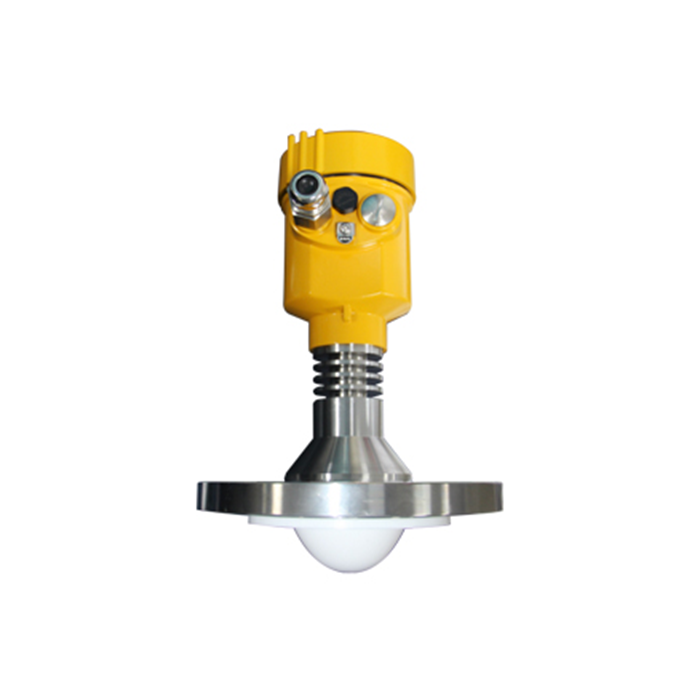
8. Basic Radar Level Meter Wiring Steps
According to the installation information you provided, a typical wiring process can be organized into the following steps.
8.1. Check the Instrument Nameplate
Confirm that the supply voltage matches the on-site power supply.
8.2. Open the Instrument Wiring Compartment
Loosen the locking mechanism and open the housing according to the specific instrument structure.
The information you provided mentions the use of a 2 mm hex tool, but this is an operating method for a specific structure and should not be directly applied to all models.
8.3. Prepare the Cable
The installation example in the provided information recommends stripping approximately 70 mm of the outer cable sheath from the cable end and then feeding the cable through the cable entry into the instrument housing.
The actual stripping length should be determined according to the structure of the specific wiring terminals.
8.4. Connect the Wires According to the Terminal Markings
The instrument terminal block will generally indicate:
Power supply;
Signal;
Positive and negative polarity;
Ground terminal.
Wiring should be carried out strictly according to the terminal diagram for the corresponding model.
8.5. Ensure Proper Grounding
Ground the instrument according to local electrical standards and instrument installation requirements.
8.6. Tighten the Cable Gland
After wiring is completed, tighten the cable gland and sealing structure to prevent rainwater, dust, or moisture from entering the instrument.
9. Why Is Sealing Important When Wiring a Radar Level Meter?
Many oil storage tanks and chemical storage tanks are installed outdoors.
If the cable entry is not properly tightened or sealed, it may cause:
Rainwater ingress;
Moisture ingress;
Corrosion of wiring terminals;
Internal circuit failure.
Therefore, after completing the wiring, it is necessary not only to check the electrical connections but also to inspect:
Whether the cable gland, housing, and cable entry are reliably sealed.
For outdoor industrial instruments, this is a very important installation step.
10. How Should a Radar Level Meter Be Commissioned?
After installation and wiring are completed, the instrument must also be commissioned.
Depending on the instrument configuration, common radar level meter commissioning methods include:
1. Software Commissioning
Connect the instrument through the corresponding software to configure or check measurement and related parameters.
2. Local Display and Adjustment Module
If the instrument is equipped with a display and operating module, parameters can be configured directly on the instrument.
3. Handheld Programming Device
Some instruments can be configured and commissioned using a handheld programmer.
Therefore, if the site has specific commissioning requirements, the supported operating method should also be confirmed before purchase.
11. What Should Be Checked During Commissioning?
Although different models use different setting procedures, on-site commissioning should at least confirm:
Whether the instrument is powered normally;
Whether the current liquid level display is reasonable;
Whether the tank height is set correctly;
Whether the zero point and full-scale position are correct;
Whether the measurement unit is correct;
Whether the output signal is normal.
If the instrument can display echo information, the actual liquid level can also be used to determine whether the instrument has identified the correct medium surface.
The specific parameter setting method should follow the operating manual for the corresponding model.
12. What Information Should Be Provided Before Purchasing a Radar Level Meter for an Oil Storage Tank?
To avoid incorrect model selection, it is recommended to organize the following site parameters before purchase:
| Item | Information to Confirm |
|---|---|
| Measured medium | Crude oil, light oil, or other liquid |
| Tank type | Oil storage tank, process tank, etc. |
| Tank height | Actual maximum measuring distance |
| Liquid level range | Highest and lowest liquid levels |
| Temperature | Normal and maximum temperature |
| Pressure | Atmospheric or pressurized |
| Corrosiveness | Whether acidic or alkaline corrosion is present |
| Installation connection | Threaded or flanged |
| Power supply | Determine according to site requirements |
| Signal output | Determine according to system requirements |
| Installation environment | Indoor or outdoor |
This information is much more useful for determining the correct model than simply asking, "How much does a radar level meter cost?"
Frequently Asked Questions
Q1: Can Radar Level Meters Be Used for Oil Storage Tanks?
Yes. Radar level meters can be selected for continuous level measurement in crude oil tanks, light oil tanks, and some volatile liquid storage tanks according to the actual operating conditions.
Q2: Can an Ordinary Radar Level Meter Be Used for a Sulfuric Acid Storage Tank?
Material corrosion resistance should be carefully considered. For highly corrosive media such as sulfuric acid and nitric acid, radar level meters using PTFE or other corrosion-resistant materials can be selected according to concentration, temperature, and other conditions.
Q3: Why Must the Nameplate Be Checked Before Wiring a Radar Level Meter?
Different models may use different supply voltages and wiring methods. If wiring is performed without checking the nameplate, incorrect connections may occur and the instrument may even be damaged.
Q4: Why Is Shielded Cable Recommended for Radar Level Meters?
Industrial sites may contain various types of electrical interference. Using shielded cable that meets the instrument requirements can help improve signal transmission stability. The specific cable specification should be determined according to the instrument manual and site standards.
Q5: Can a Radar Level Meter Be Commissioned Directly on the Instrument?
Some models are equipped with a local display and adjustment module, allowing parameters to be configured directly on the instrument. Other products are commissioned through software or handheld programming devices, depending on the instrument configuration.
Q6: Is PTFE Alone Enough for a Corrosion-Resistant Radar Level Meter?
No. Material selection also needs to take into account the specific medium, concentration, temperature, and pressure. PTFE has good corrosion resistance, but whether it is suitable must still be confirmed according to the actual operating conditions.
Summary
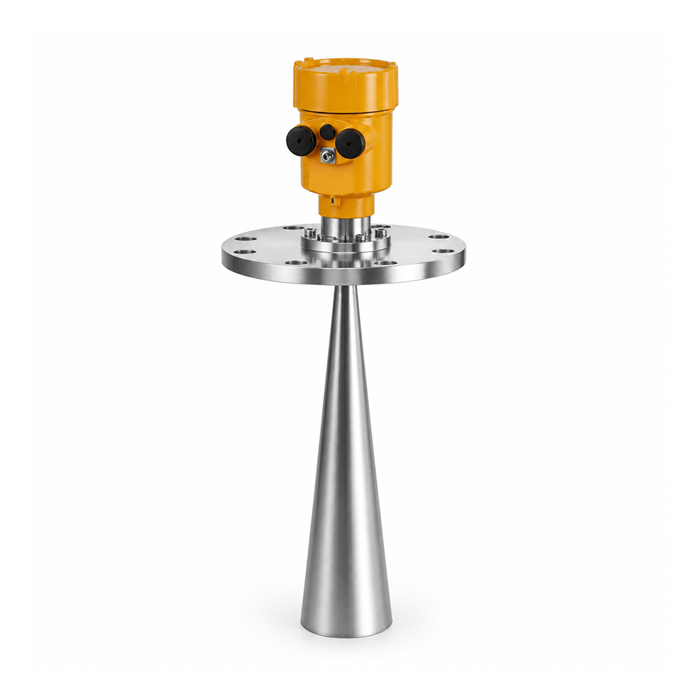
Radar level meters for oil storage tanks mainly measure the distance to the liquid surface by transmitting and receiving radar signals. They can be used for crude oil, light oil, volatile liquids, and other industrial storage and process vessels.
For ordinary oil storage tanks, the following should be confirmed as priorities:
Medium, tank height, temperature, pressure, installation connection, and power supply method.
For corrosive media such as sulfuric acid and nitric acid, particular attention should also be paid to:
The corrosion-resistant materials used for antennas and process-contact components.
After model selection is completed, on-site installation must also pay attention to:
Nameplate verification, shielded cable, correct wiring, reliable grounding, and cable entry sealing.
Finally, commissioning can be completed through software, a local display module, or a handheld programming device.
For oil storage tank and corrosive liquid storage tank projects, confirming the complete operating conditions before determining the specific radar level meter configuration is more reliable than selecting a model based only on measuring range or price.