Chinese
 Spanish
 Russian
 Portuguese
 French
 German
 Indonesian
 Thai
Thai Vietnamese
 Arabic
 Italian
 Turkish
 Polish
 Japanese
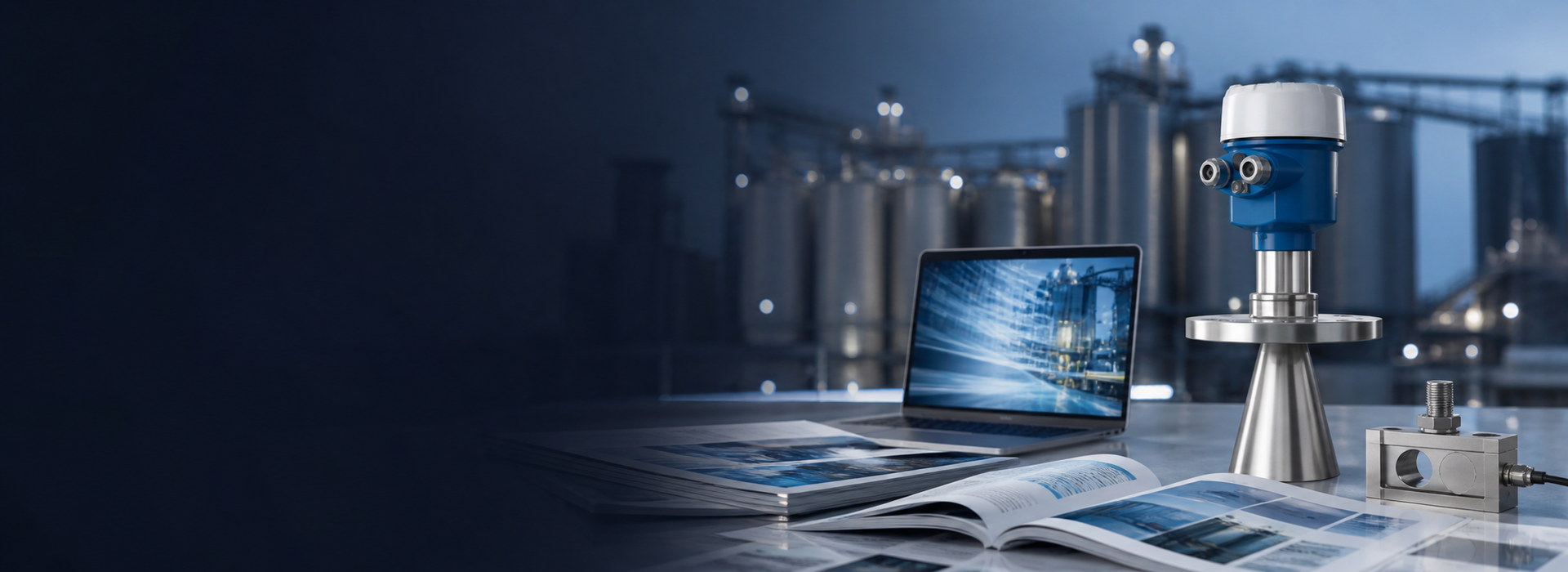
In heavy industries and precision processing sectors such as cement, power generation, metallurgy, petroleum, chemicals, coal, and food processing, high-precision continuous monitoring of level, including material level and liquid level, is directly related to production safety and asset accounting. In recent years, explosion-proof radar level gauges have shown exceptionally strong purchasing demand and growing project demand in the market.
This article combines actual industrial operating conditions to analyze the core reasons behind the rapid growth of explosion-proof radar level gauges and provides a technical breakdown of radar level instrument types, selection methods, and resolution parameters.
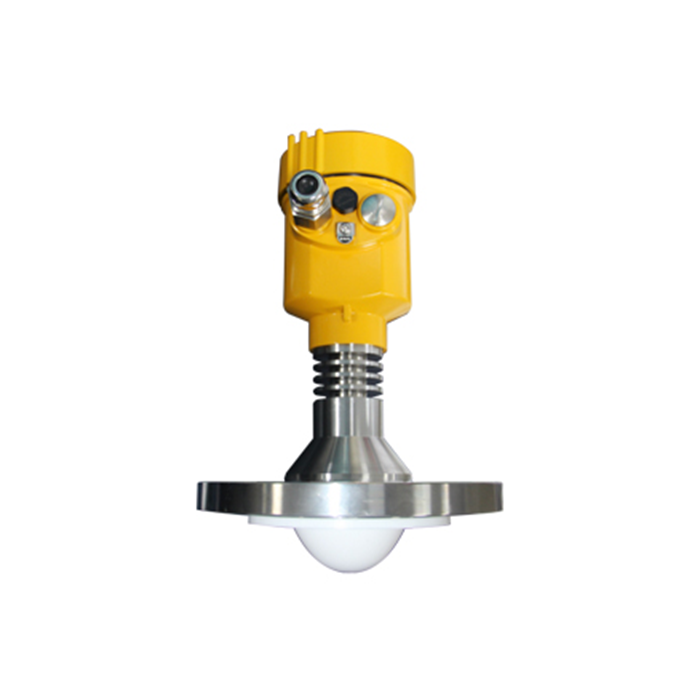
I. Why Explosion Protection Must Be Treated as a System Requirement
Explosion-proof radar level gauges have become designated procurement products for many engineering projects and system integrators, mainly because of their high stability and strong adaptability under harsh operating conditions:
Strong resistance to environmental interference: High-frequency microwave signals, such as 26 GHz or 80 GHz, are used. The measurement process is not affected by vacuum, high concentrations of smoke and dust, intense steam, inert gases, extreme pressure, or high-temperature variations.
Explosion-proof safety design: Flameproof (Ex d) or intrinsically safe (Ex ia/ib) certification allows safe application in hazardous areas containing flammable and explosive gases, such as chemical tank farms, or combustible dust, such as coal silos, cement silos, and flour storage facilities.
Sensitive measurement and high stability: Based on intelligent echo analysis technology, the instrument can accurately capture echoes from low-dielectric-constant media or complex process vessels with agitators, enabling continuous monitoring with stable measurement performance.
Easy installation and low maintenance costs: The non-contact measurement design avoids material buildup, mechanical wear, and mechanical jamming, significantly reducing the frequency of shutdown maintenance.
II. Radar Level Instrument Selection Comparison
| Selection Dimension | Low-Frequency Radar (6GHz - 10GHz) | High-Frequency Radar (26 GHz / 80 GHz) | Guided Wave Radar |
|---|---|---|---|
| Beam Angle and Focusing | Wide beam angle with dispersed energy | Narrow beam, as small as 3°, with strong focusing capability | Directional transmission along a cable or probe rod |
| Main Application Conditions | Conventional calm liquid surfaces and simple storage tanks | Dust, narrow spaces, tall silos or tanks, and vessels with agitators | Heavy foam, low dielectric constant, and extremely narrow vessels |
| Antenna Type Selection | Horn antenna | PTFE anti-condensation antenna and planar antenna | Cable probe or rod probe |
| Adaptability to Dust / Steam | More susceptible to interference | Very strong, with concentrated high-frequency measurement and optional purging devices | Unaffected by gas-phase conditions and steam in many applications |
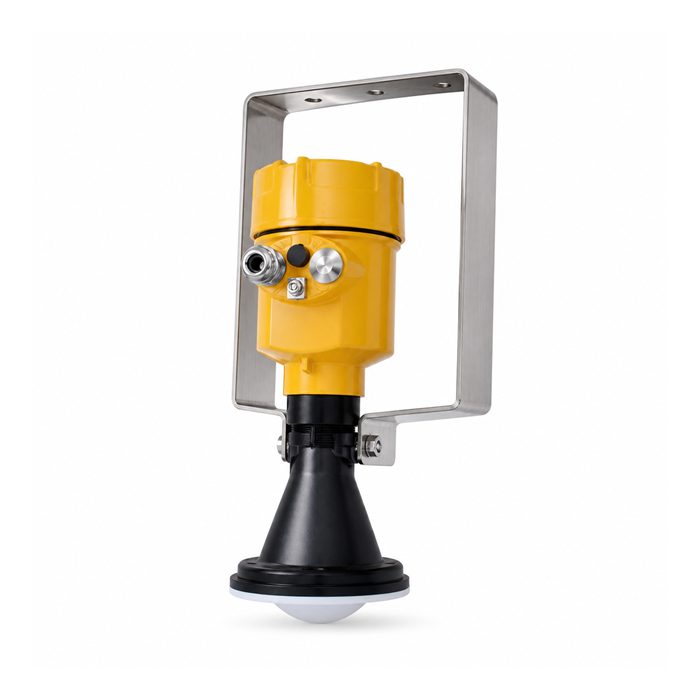 80 GHz Radar Level Meter" style="margin: 0px; padding: 0px; box-sizing: border-box; -webkit-tap-highlight-color: transparent; vertical-align: bottom; height: auto; border-width: medium; border-style: none; border-color: currentcolor; border-image: none; transition: 0.3s ease-in-out; opacity: 1; display: inline-block;"/>
III. Radar Liquid Level Gauge System Selection Guide
Selecting a suitable radar liquid level gauge requires comprehensive consideration of the physical and chemical properties of liquids or solids and matching them with the corresponding instrument parameters:
Dielectric constant (εr): For low-dielectric-constant media such as diesel and liquefied gas, high-frequency radar such as 80 GHz, or guided wave radar with a cable probe, should be prioritized to ensure sufficient reflected echo strength.
Process temperature and pressure: For high-temperature conditions above 200℃ or high-pressure applications, special explosion-proof models with cooling extensions, ceramic seals, or high-grade flange connections should be selected.
Antenna and lining materials:
For highly corrosive media such as acids and alkalis, select a PTFE fully sealed antenna or corrosion-resistant lining.
For high-dust or easily crystallizing media, select a parabolic or planar antenna with an instrument-air purging connection to prevent dust accumulation and blockage on the antenna.
Output protocol and interface: According to the requirements of the control system, such as DCS or PLC, select 4–20mA + HART, RS-485 Modbus RTU, or PROFIBUS-PA output to ensure compatibility with industrial field integration.
IV. Resolution and Accuracy Standards for Industrial Radar Liquid Level Gauges
The resolution of a radar level instrument refers to the minimum level change that the instrument can identify and respond to. In industrial selection, it is necessary to distinguish between process monitoring grade and custody-transfer grade:
Industrial process-grade radar liquid level gauge: Resolution is typically between 10 mm – 20 mm, with system measurement accuracy of ±2 mm – ±5 mm. It is suitable for reactor control, silo level monitoring, and intermediate process tanks.
Custody-transfer-grade radar liquid level gauge: Resolution can reach within 1 mm, with the highest level reaching approximately 0.1 mm, while system measurement accuracy can reach ±0.5 mm – ±1 mm. It is mainly used for commercial oil depots and large tanks containing high-value fine chemicals for custody-transfer applications.
V. METRAVON System Integration and Compatibility Advantages
As a professional industrial automation instrumentation supplier, METRAVON radar level instruments are optimized for complex industrial operating environments:
Strong system compatibility: Native support for 4–20mA/HART and Modbus digital communication, with DTM/EDD driver files available for integration with mainstream DCS control systems from Honeywell, Yokogawa, Schneider, Siemens, and other suppliers.
Explosion-proof and industrial-grade reliability: A complete explosion-proof certification system, together with built-in electromagnetic compatibility (EMC) protection and surge protection, helps ensure long-term stable operation under strong static electricity and harsh electrical conditions.
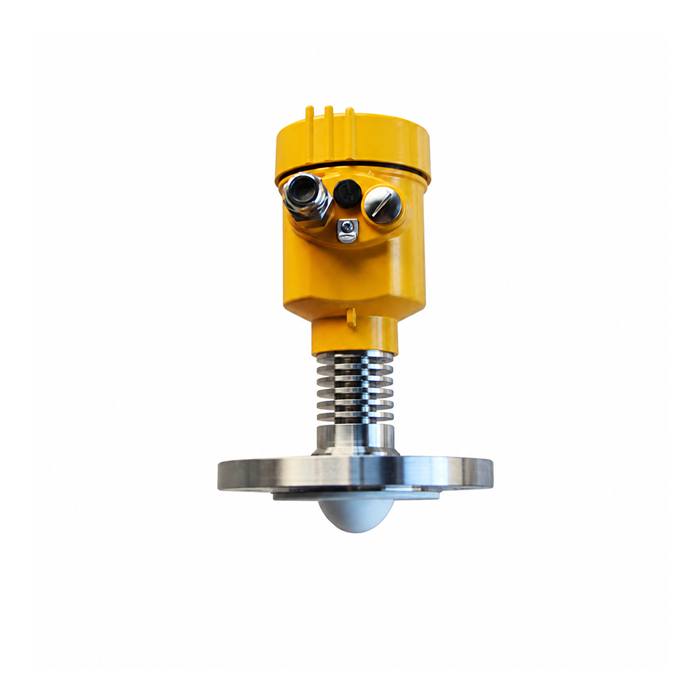
FAQ
Q1: What Should Be Done If Dust Accumulation on the Radar Level Gauge Antenna Affects Measurement in a Cement Silo or Coal Silo with Extremely Heavy Dust?
It is recommended to select a high-frequency 80 GHz explosion-proof radar level gauge and configure it with a dust cover and Air Purging interface. By introducing instrument air to periodically purge the antenna surface, dust adhesion can be effectively reduced and the radar beam path can remain unobstructed.
Q2: What Are the Selection Advantages of High-Frequency Radar (80 GHz) Compared with Lower-Frequency Radar (26 GHz)?
80 GHz radar has a narrower beam angle with more concentrated energy, which helps avoid false echoes caused by internal tank obstacles such as ladders, heating pipes, and agitator blades. Its antenna is also smaller, saving installation space when mounted on short nozzles.
Q3: How Can a Radar Liquid Level Gauge Provide Stable Measurement in a Reactor with Intense Agitation?
A high-frequency radar equipped with intelligent false echo suppression can be selected, or a stilling well can be installed. By using algorithms to suppress dynamic reflection interference generated by agitator blades, stable and high-precision tracking of the liquid surface can be achieved.
Q4: What Is the Difference Between “Flameproof” and “Intrinsically Safe” Explosion Protection for Explosion-Proof Radar Level Gauges?
Flameproof protection (Ex d) uses a robust enclosure to contain and isolate any sparks that may be generated internally. Intrinsically safe protection (Ex ia) limits the electrical energy entering the hazardous area so that it is insufficient to ignite surrounding gases or dust. Compliant selection should be made according to the hazardous area classification at the site, such as Zone 0/1/2 or Zone 20/21/22.
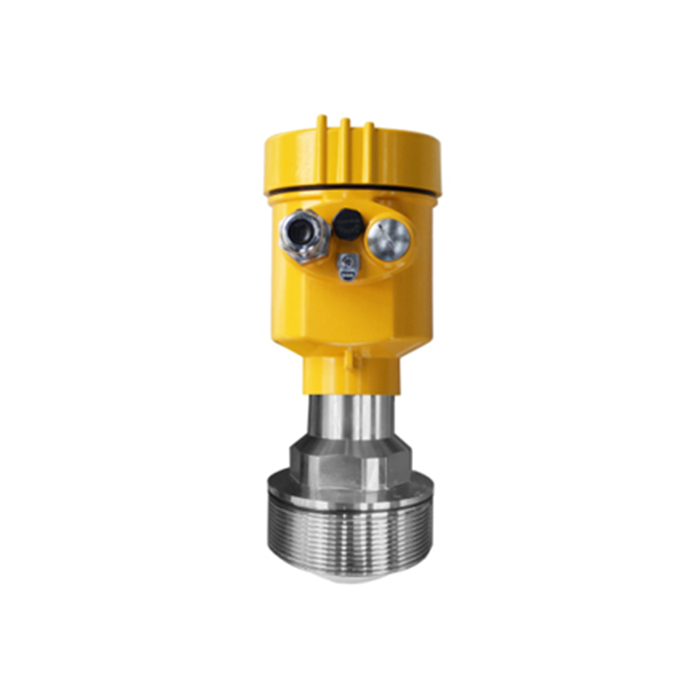
Conclusion
With its advantages of non-contact measurement, high accuracy, explosion-proof safety, and strong adaptability to complex operating conditions, the explosion-proof radar level gauge has become an important instrument in modern industrial process control. Proper selection, including matching dielectric constant, temperature and pressure, antenna material, and resolution, is the key to ensuring long-term stable equipment operation.
As a professional partner in the field of industrial process automation, METRAVON is committed to providing global system integrators and engineering contractors with stable, compatible, and easily scalable radar level measurement solutions.
Project Selection and Technical Support
Need the METRAVON radar level gauge selection manual, CAD installation drawings, or a customized quotation for your specific operating conditions?
Contact the METRAVON Engineering Technical Team for one-on-one professional selection support.