


 Chinese
 Spanish
 Russian
 Portuguese
 French
 German
 Indonesian
 Thai
 Vietnamese
 Arabic
 Italian
 Turkish
 Polish
 Japanese


Sulfuric Acid Tank Level Measurement: Materials and Method
Sulfuric acid compatibility depends on concentration, temperature, flow, impurities and the exact material. Carbon steel is used in some controlled concentrated-acid duties, but 70–90% acid is not a universally protective range. Review the complete operating and dilution envelope before accepting any tank, nozzle, diaphragm or seal material.
What the acid does to each wetted part
| Component | Compatibility evidence needed | Specification check |
|---|---|---|
| Tank shell and nozzle | Corrosion data for concentration, temperature and velocity | Do not extend one storage-duty approval to every concentration |
| Antenna or process window | Exact polymer grade, temperature, pressure and permeation limits | PTFE or PFA may be candidates; confirm the complete assembly |
| Gaskets and seals | Exact grade, loading and chemical exposure | Include vapour, splash, cleaning and upset conditions |
| Pressure diaphragm or wetted probe | Alloy-specific corrosion data | 316L is not a default sulfuric-acid material |
| Flange faces and fasteners | Mechanical rating and exposure assessment | Check leakage and local corrosion risks |
Review general corrosion, local attack and seal degradation using data for the actual service. Dilution, contamination or a temperature excursion can move the equipment outside its approved material envelope. Record those limits and the required response to an upset in the instrument file.
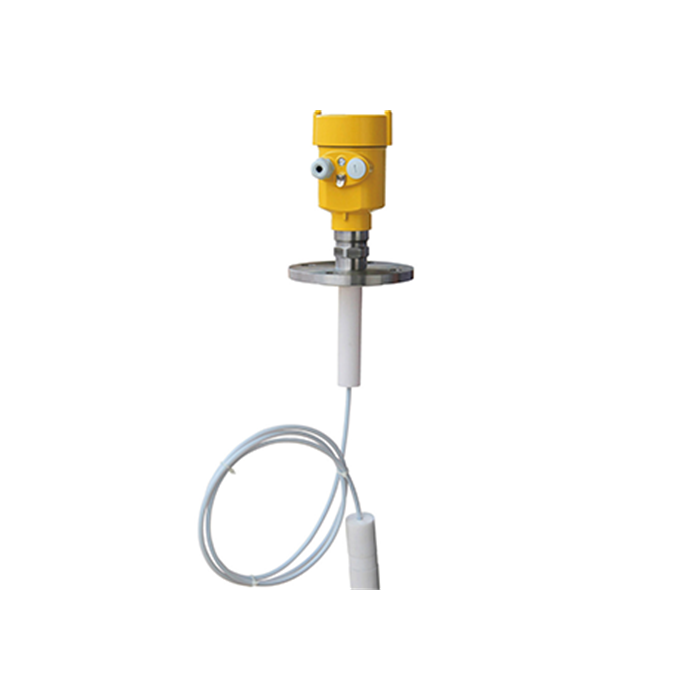
Why radar usually wins here
Non-contact radar can reduce the number of continuously immersed components, but the antenna, process window, seals and connection remain exposed to vapour, mist or splash. Verify signal quality and full chemical compatibility rather than relying on a single dielectric value. Pressure-based alternatives need the same review of their diaphragms, lines and seals.
Hydrostatic or DP measurement remains an option when the pressure arrangement and materials suit the service. Include process density and temperature in the conversion. A vented tank may need no wet reference leg; a closed tank may need pressure compensation. Seal fill fluid is normally separated from the acid by the diaphragm and is selected for the seal system’s thermal and response requirements.
Worked dosing check. A day tank Ø 1.5 m holds 93% acid at 1,835 kg/m³. One metre of level change is π × 0.75² × 1.0 = 1.767 m³, or 1.767 × 1,835 ≈ 3.24 tonnes per metre. If the dosing pump is rated 500 kg/h, one metre of level covers about 6.5 hours of operation — a useful cross-check against unexplained inventory drift, and a number the instrument technician can verify with a tape before blaming the transmitter.
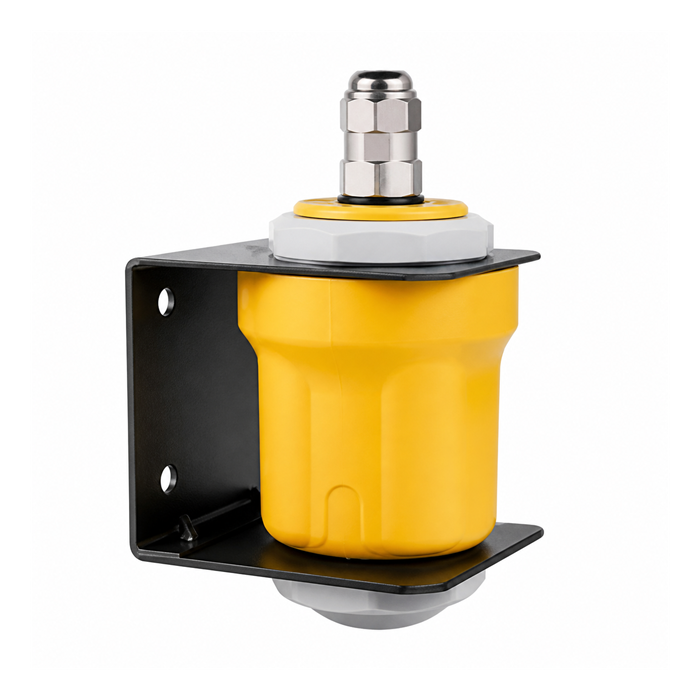
Installation details that matter in acid service
Venting and breathing: keep the instrument away from an acid-mist discharge path and preserve the designed tank ventilation. Inspect deposits and their composition before choosing a cleaning method.
Splash during filling: locate the antenna away from the fill stream. Acid or contaminated deposits can alter the echo and attack unsuitable components. A purge is an option only after confirming chemical compatibility, gas supply, moisture content, pressure effects and the approved fitting.
Temperature: acid temperature shifts both density (for any DP or mass conversion) and material limits. Record the operating range on the specification.
Bund and leak detection: position cables and junction boxes so credible leakage or spray will not disable the measurement or alarm path. Coordinate the routing with the containment and maintenance design.
Questions from acid service
Q1. Is 316L always acceptable for 98% acid?
No — acceptability depends on concentration, temperature, velocity and aeration. Use a published corrosion chart or the tank designer's material selection as the authority, and record it in the instrument file.
Q2. Does acid foam or vapor disturb radar?
Assess the actual operation. Filling, agitation, gas entrainment, mist and antenna deposits can affect tracking even if the resting surface gives a strong echo. Demonstrate operation through the expected filling and temperature cycle.
Q3. What about dilute acid in the same farm?
Treat it as a different service. Corrosion behaviour changes with concentration and temperature; more water does not imply a universally lower dielectric constant. Reconfirm materials, density conversion where used and radar performance against the actual mixture.
Related technical guides
- Radar Level Antenna Types: Horn, Lens, Encapsulated and Guided Wave
- How to Specify a Radar Level Transmitter: The 14 Fields That Decide the Quote
Discuss your measurement application with METRAVON
