


 Chinese
 Spanish
 Russian
 Portuguese
 French
 German
 Indonesian
 Thai
 Vietnamese
 Arabic
 Italian
 Turkish
 Polish
 Japanese


Process Connections for Level Instruments: Thread, Flange, Clamp and Hygienic
The process connection is the part of a level instrument that most buyers skim over and most installations pay for later. It is not a cosmetic detail — it is the mechanical and sometimes the sealing boundary between the instrument and the process, and it controls whether the instrument can even see the product. A radar that cannot be aimed through its own nozzle, or a clamp that leaks a hot or corrosive product, is a process-connection failure dressed up as an instrument failure.
The four families of connection
Threaded. Match the complete thread designation, size, sealing method and rated materials. Tapered NPT or ISO 7 threads and parallel G/BSPP or metric connections are not interchangeable; some seal on threads while others require an end-face seal or gasket. Pressure and temperature limits come from the complete fitting and instrument, not a blanket rule that threaded connections are only for moderate pressure.
Flanged. Specify the exact standard, DN or NPS, rating class or PN, facing, materials, gasket and bolting. Rating depends on temperature and the weakest component; ASME Class 150 does not mean a universal 150 psi rating. Nozzle length, antenna fit and the measurement datum must be checked in addition to flange compatibility.
Clamp / hygienic. A sanitary clamp can suit food, beverage or pharmaceutical duty when the complete ferrule, gasket, clamp and sensor geometry meet the required hygienic and mechanical design. A clamp alone does not prove cleanability, drainability, sterility or a particular hygiene approval. Confirm cleaning and sterilisation temperatures as well as process pressure.
Hygienic / flush. A flush process window or diaphragm can reduce recesses but remains a process-contact surface. Review seal geometry, materials, finish, drainage and cleaning validation. Flush mounting does not eliminate product contact or automatically remove every crevice.
| Connection | Main specification | Limits to verify |
|---|---|---|
| Threaded | Exact thread and sealing method | Complete pressure-temperature rating and antenna position |
| Flanged | Standard, size, rating and facing | Gasket, bolting, materials and nozzle geometry |
| Clamp | Ferrule, gasket, clamp and sensor assembly | Mechanical rating, cleanability and required approval |
| Flush process interface | Window or diaphragm and seal geometry | Contact materials, cleaning, drainage and full assembly rating |
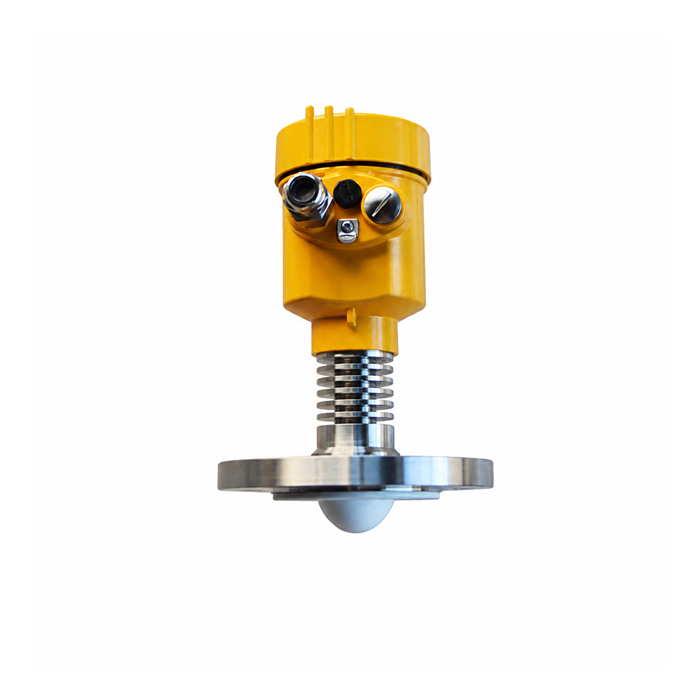
The nozzle problem that defeats a radar
For non-contact radar, verify the exact nozzle arrangement in the manufacturer’s installation guidance. Some antennas must extend below a nozzle; other lens or flush designs support specified recessed installations. A simple beam-clearance sketch is useful but does not by itself qualify pipe propagation, maximum nozzle length or unwanted nozzle echoes.
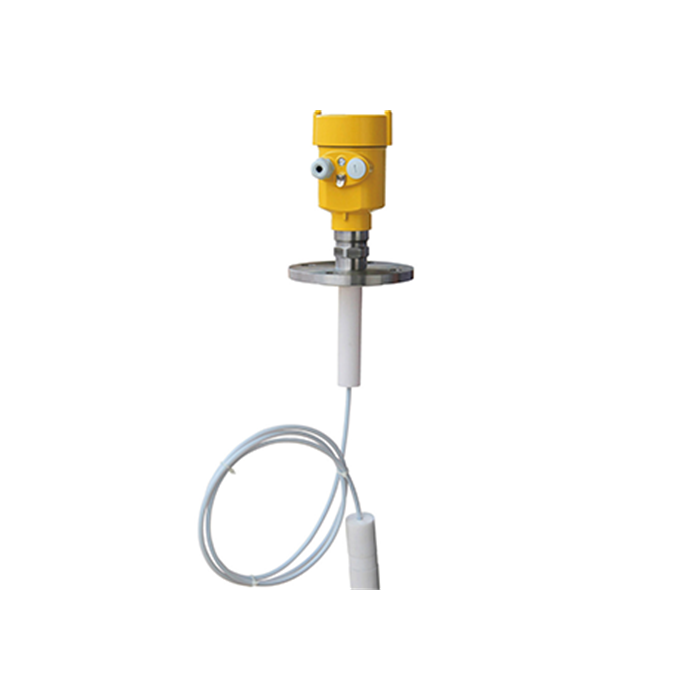
Choosing the connection in practice
Match the vessel first. If the tank already has a nozzle, the connection must fit it; changing the nozzle is a vessel modification, not an instrument choice.
Verify pressure and temperature together, including vacuum, cleaning, upset conditions and any required design margin. Every fitting, seal and instrument component must remain within its applicable rating.
Keep the radar window clear. For non-contact instruments, verify the nozzle length and diameter against the antenna and beam angle.
Pick the sealing style for the service. A crevice-free hygienic fitting where the product can trap and spoil; a robust flange where the product is hot and corrosive.
Questions technicians ask
Q1. Can I adapt a threaded hole to a flange?
An approved adapter may be possible. Review its mechanical rating, material, added height, sealing surfaces and radar clearance. Welding or changing a vessel nozzle may require formal vessel modification approval.
Q2. What flange size does a radar need?
Select it from the vessel interface and the exact antenna/nozzle installation table. Antenna diameter, recessed mounting limits, seals and process rating matter; beam angle alone does not specify the flange.
Q3. When is a clamp not acceptable?
When the complete assembly cannot meet pressure, temperature, mechanical, chemical or hygiene requirements. Special clamps can have different ratings, so assess the documented assembly rather than rejecting or accepting all clamps by connection name.
Q4. Does the connection affect the reading?
Yes, depending on the principle. A radar nozzle can affect the echo path; a guided-wave probe can see connection-related reflections; a pressure seal or tapping can introduce elevation, thermal or response effects. Include the connection in the measurement review.
