


 Chinese
 Spanish
 Russian
 Portuguese
 French
 German
 Indonesian
 Thai
 Vietnamese
 Arabic
 Italian
 Turkish
 Polish
 Japanese

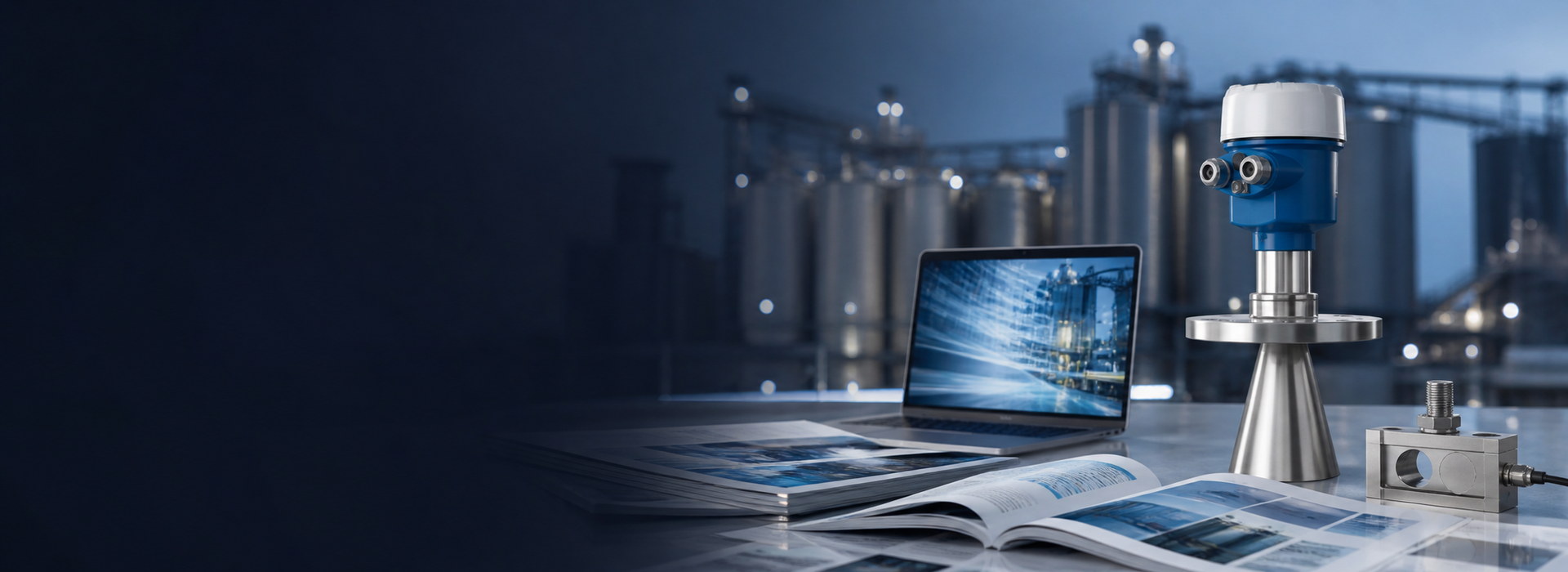
Radar vs Load Cells for Silo Inventory: Level Is Not Mass
A load-cell system derives contents mass from supported load and tare; radar measures distance to a local surface and needs geometry, surface representation and bulk density to estimate mass. Compare the required uncertainty and the actual mechanical installation. Neither a generic percentage table nor one radar distance establishes the accuracy of inventory in tonnes.
Two different quantities, often confused
A silo weighing system uses a suitable supported-load arrangement, which may involve different numbers and types of load cells. The measured load includes the supported vessel and contents; tare, calibration, gravitational conversion and external forces must be accounted for.
A radar on the roof measures the distance to the surface. Convert to volume using the silo geometry, then to mass using bulk density.
For an ideal constant-area vertical section with a representative flat height: mass = volume × representative bulk density, and volume = height × cross-sectional area. Real silos require their actual geometry and surface representation.
Choose the arrangement from the required level, volume or mass result. A weighing system is affected by load paths and calibration; a radar-derived mass estimate adds surface-model and bulk-density assumptions.
| Item | Silo weighing | Radar-derived inventory |
|---|---|---|
| Primary signal | Supported load | Distance to selected local surface |
| Mass calculation | Calibration, tare and force effects | Geometry, surface model and representative density |
| Surface profile | Not directly needed for supported mass | Important for volume estimation |
| Structure | Supports, restraints and connected services | Mounting movement can affect the distance reference |
| Retrofit | Qualified structural and load-path review | Qualified mounting and measuring-path review |
| Uncertainty and cost | Actual system evidence and scope | Actual system evidence and scope |
Bulk density is not a constant
Bulk density depends on particle properties and state, including aeration, moisture and consolidation. A change in density does not create or remove mass in a closed silo; it changes volume and can change a mass estimate that uses a fixed density.
| Density information | Evidence needed |
|---|---|
| Freshly filled material | Representative sampling or process data |
| Settled material | Time and consolidation state identified |
| Moisture and composition | Credible operating range |
| Mass conversion | Configured versus representative density and uncertainty |
| Ongoing validation | Comparison with independent material balances or weighing |
With volume assumed correct, estimated mass divided by true mass equals configured density divided by actual density. For an assumed configured 1.2 t/m3, actual 1.0 t/m3 gives a 20% high estimate; actual 1.5 t/m3 gives a 20% low estimate. These are arithmetic examples, not guaranteed cement properties.
A radar-derived inventory can be useful when its geometry, surface and density uncertainties meet the purpose. A suitably designed weighing system may reduce density dependence, but its installed load paths and calibration still need validation.
Where load cells go wrong
A weighing system must receive the relevant load without uncontrolled bypass paths or parasitic forces. Check its supports, pipework, restraints and the intended calibration.
| Contribution | Investigation |
|---|---|
| Connected piping and services | Load bypass, pipe forces and suitable flexible details |
| Binding or restraints | Approved load paths, friction and travel |
| Thermal effects | Support and service movement over the operating cycle |
| Wind and vibration | Structural design and measurement response |
| Calibration | Reference method and installed uncertainty |
| Load-cell behaviour | Actual rated performance and service history |
Connected piping can introduce load bypass or parasitic forces. A qualified design should define suitable connections and restraints; simply making every pipe flexible is not a complete structural or safety design.
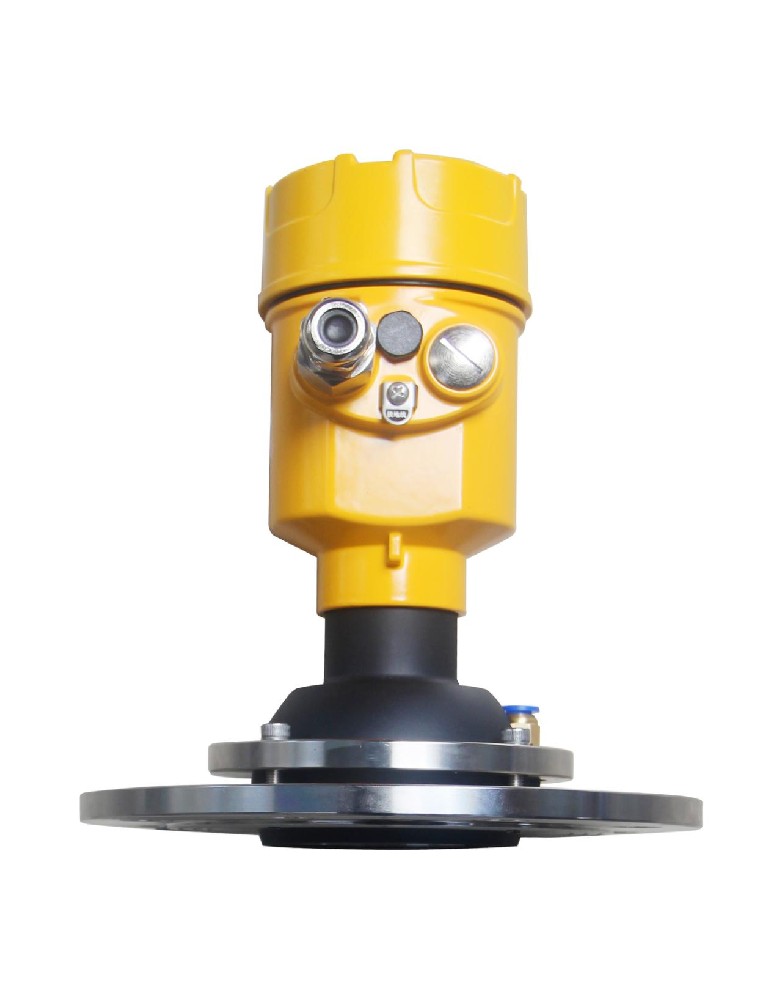
The error budget, side by side
As a geometry example, a 5 m diameter cylinder with 18 m usable straight height has about 353.4 m3 volume. At an assumed 1.4 t/m3 it contains about 494.8 t before any cone, dead stock or surface correction. Derive uncertainty from actual evidence, not a generic label of a 500 t silo.
| Contribution | Weighing evidence | Radar inventory evidence |
|---|---|---|
| Instrument | Installed load calibration | Verified distance and reference |
| Mechanics | Supported load and external forces | Mounting and geometry |
| Product state | Relevant loading effects | Representative bulk density |
| Surface shape | Not needed for total supported load | Required volume model or coverage |
| Overall result | Combined uncertainty for contents mass | Combined uncertainty for derived mass |
Do not equate a radar distance specification with inventory accuracy, or a load-cell component specification with installed weighing accuracy. Define the required quantity and validate the complete system.
The three ways to get a defensible number
There are three practical architectures, and the right one depends on what the number is used for.
Radar with a fixed density. It can support operations or inventory where the combined uncertainty is acceptable. Quantify the density and surface assumptions rather than claiming it is always unsuitable for accounting or always wrong by tens of tonnes.
Weighing for contents mass. A suitable system can avoid a bulk-density conversion. Retrofit scope and commercial acceptance depend on the actual structure, approval requirements and calibration, not simply the presence of load cells.
Radar plus representative density. It can improve a mass estimate, but a fill-line sample or another silo is not automatically representative of the full stored material. Validate the sampling basis and its uncertainty.
Partial-support strain or one-leg measurements require a specific validated structural model. They cannot automatically infer total mass or update bulk density as material settles, especially when load distribution changes.
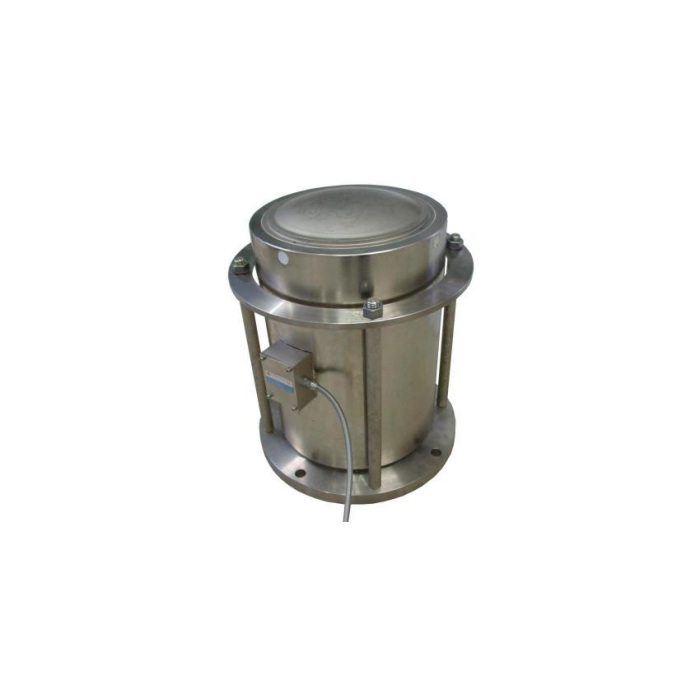
Where radar wins regardless of the mass question
Level control and retrofit constraints may favour a radar arrangement even where weighing is selected for mass. Assess each required function separately.
- Level control. Radar can provide a direct local surface measurement for filling or alarms within its application limits. A mass signal is a different quantity; assess any conversion and response requirements.
- Retrofit. Compare the actual mounting and load-path work. Neither one nozzle nor jacking every silo is a universal scope.
- Multiple silos. Compare current compliant quotations and maintenance for the full installation; do not assume a fixed one-fifth cost.
- Solids that bridge or rat-hole. A load cell reports the mass that is there; a radar reports the surface that is there. Neither solves bridging, but the radar at least shows a surface that is not falling when material is drawn, which is a diagnostic.
- Structural work. Even a radar support or roof opening needs the appropriate structural and process review. It is not automatically free of mechanical approval requirements.
A note on angle of repose
Even with a perfect density, a single-point radar is measuring one point on a surface that is a cone. In a 6 m silo filled from a central point, the surface can be 1 m higher at the centre than at the wall, and the difference is a substantial volume.
For an ideal cone of radius 3 m at an assumed 35-degree slope, peak height above the edge is about 2.10 m and cone volume about 19.8 m3. A stated 1 m peak with the same radius would imply a different slope. The percentage inventory effect also depends on the rest of the filled vessel.
A suitable three-dimensional system can reduce surface-model uncertainty, subject to coverage, visibility and calibration. It does not remove geometry, density or all volume error. A single-point correction needs a justified, sufficiently stable shape model.
Frequently asked questions
Q1. Which is more accurate for silo inventory, radar or load cells?
It depends on the installed uncertainty and required quantity. Weighing avoids a bulk-density conversion but depends on force paths and calibration. Radar-derived mass depends on geometry, surface representation and density.
Q2. Can a radar calculate tonnes in a silo?
Yes, with a suitable volume model and representative bulk density. Quantify and validate the combined uncertainty; density variation is not a universal percentage and is not the only contribution.
Q3. Why do load cells read low on a silo?
Possible causes include load bypass, pipe forces, binding, calibration, tare or component faults. Diagnose the actual system before changing connections or zero settings.
Q4. Does angle of repose affect a radar silo measurement?
Surface slope can make local height differ from volume-equivalent height. Use a validated shape model or suitable mapping arrangement, and retain the remaining geometry and density uncertainty.
Q5. Can load cells be retrofitted to an existing silo?
Sometimes. A qualified structural and weighing review must determine safe load transfer, restraints, connections and calibration. Do not assume every retrofit requires or permits the same jacking procedure.
Q6. What is the best setup for a cement plant?
Choose the architecture from each silo duty, structure, product variation and required inventory uncertainty. A weighed reference silo or laboratory density routine is useful only when its representativeness is demonstrated.
