


 Chinese
 Spanish
 Russian
 Portuguese
 French
 German
 Indonesian
 Thai
 Vietnamese
 Arabic
 Italian
 Turkish
 Polish
 Japanese


Radar Level Transmitter vs Float Gauge: Moving Parts vs None
A mechanical float-and-tape gauge uses buoyancy and moving components to provide local indication, often without electrical power. Radar measures a reflected electromagnetic signal and normally needs power. Compare the required indication, remote signal, process compatibility and maintenance conditions; neither technology is universally immune to deposits, icing or silent faults.
How each instrument produces a number
A float gauge mounts on the tank roof. A float, sized for the product density, hangs on a perforated stainless tape. As the level rises the float rises, the tape runs over a measuring drum, and a spring keeps tension. The drum drives a mechanical counter or a dial, and optionally an encoder that produces 4–20 mA or HART.
The float immersion depends on buoyancy, product density, float shape and the gauge mechanism. Changes in density can affect the indicated reference. Check the actual float selection and calibration convention for the full product range.
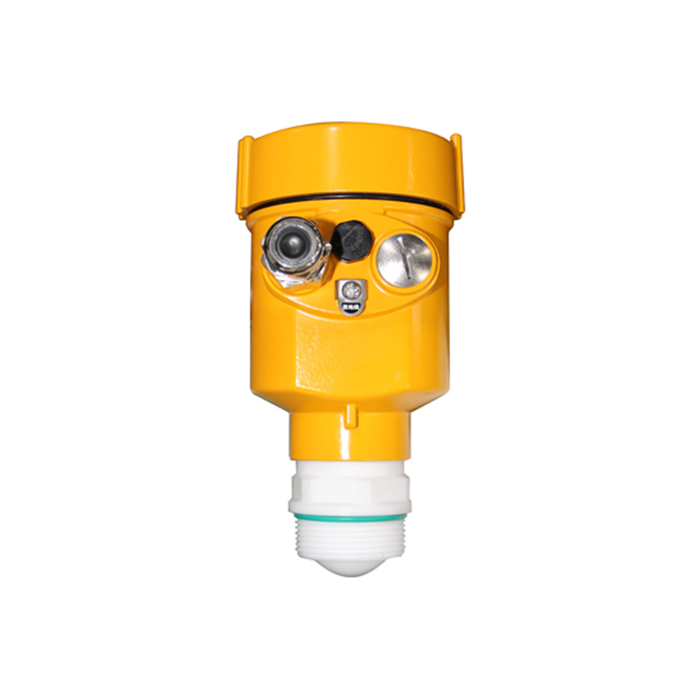
A radar transmitter measures the time for a pulse to reach the surface and return. It has no knowledge of density, no float to immerse, and no tape to stretch. What it needs is a clear path and a dielectric contrast at the surface.
| Property | Mechanical float-and-tape | Radar |
|---|---|---|
| Local indication | Can be power-free | Requires an appropriate powered display or system |
| Moving parts | Float, tape and external mechanism as designed | No moving measuring element in ordinary radar designs |
| Process effects | Buoyancy, deposits and mechanical freedom | Reflection, deposits and target selection |
| Remote output | Requires a suitable transmitter/encoder arrangement | Requires the ordered interface and receiving system |
| Commercial measurement | Applicable model approval and full gauging system | Applicable model approval and full gauging system |
| Cost and maintenance | Actual assembly and service evidence | Actual assembly and service evidence |
Two systematic errors that are rarely mentioned
A float gauge is not simply a less accurate radar. It has two error mechanisms that radar does not have at all, and both are invisible on a datasheet.
Density. A change in product density changes float immersion and may change the indication. The sign and magnitude depend on float geometry, linkage and calibration, so do not assign a universal 5-20 mm offset.
Foam. Whether a float rides within the liquid, foam or transition depends on their densities and the float design. It does not automatically read high by the full foam thickness. Validate the intended boundary.
Failure modes, and what they look like
The failures are mechanical, which means they are visible if someone climbs the tank, and silent if nobody does.
| Failure mode | What to check |
|---|---|
| Float leaks or loses buoyancy | Float condition and actual mechanism response |
| Float or tape sticks | Ice, wax, guides, deposits and mechanical freedom |
| Tape or drum problem | Tension, alignment, damage and indication reference |
| Remote encoder fault | Local/remote comparison and encoder diagnostics |
| Foam or changing density | Intended boundary and float immersion |
| Solidification or deposits | Safe inspection and approved maintenance |
A mechanical or electronic installation can retain a plausible wrong value. Compare the indication with independent evidence and define how faults will be detected.
Where the float gauge is the right instrument
There are real installations where a float is better, and replacing it with radar would be a mistake.
- Tanks with no power. A compatible mechanical gauge can provide local indication; a powered or solar alternative needs a complete energy and maintenance design.
- Lightning-prone sites. A mechanical indication avoids some electronic exposure, but the vessel, bonding and any added encoder still need the applicable protection design.
- Local visual indication. Compare access, readability and whether the required result must remain available without power.
- Very small tanks and day tanks. Check the actual float travel and radar usable measuring zones rather than excluding all radar from a 500 mm vessel.
- Products with very low dielectric. A float does not care whether the product is hexane at 1.9 or water at 80.
Where radar wins, and why replacements are accelerating
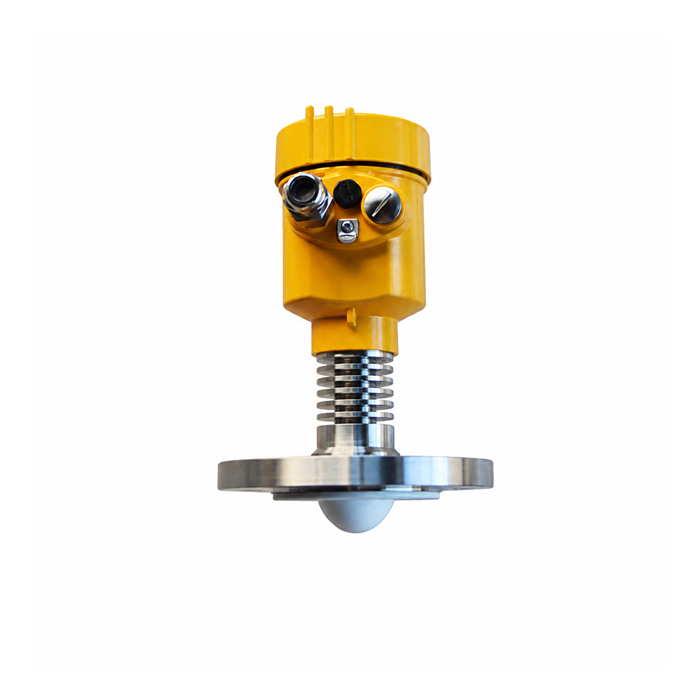
Radar may be useful where a contacting mechanism is difficult to maintain or remote measurement is required. Review the following conditions before choosing a replacement.
Cold climates. Ice can affect floats, guides, antennas and connections. Use the specified environmental and process design; a heater or purge is not a universal remedy or an automatic rating upgrade.
Waxy and crystallising products. Deposits can restrict a tape or float and can also affect a radar antenna or nozzle. Assess safe cleaning, shutdown and restart conditions for the actual assembly.
Remote monitoring and inventory reconciliation. Compare the available radar and encoder outputs, supply, diagnostics and integration. Neither output guarantees detection of every process-induced error.
| Lifecycle item | Evidence needed |
|---|---|
| Purchase and installation | Current compliant scope and quotation |
| Inspection and access | Site method, permits and observed condition |
| Recovery from failure | Approved repairs, spare compatibility and lead time |
| Environmental risk | Actual icing, corrosion, lightning and deposit history |
| Overall cost | Defined time horizon and explicit assumptions |
Keep a suitable existing gauge when verified performance meets the duty. There is no universal cost crossover, replacement life or maintenance-visit count for either technology.
The hybrid that is often the right answer
The two instruments are not mutually exclusive, and the best installation in a tank farm is often both.
Keep the float gauge for local indication and as a power-free backup. Add a radar transmitter on a separate nozzle for the control system, and leave the float where it is. The two readings disagree in a way that is diagnostic: a float that has frozen shows a steady value while the radar moves with every fill, and the operator sees the discrepancy before it becomes an incident.
If both indications are retained, define how disagreement is investigated and which function each measurement serves. Separate connections alone do not establish an independent safety layer; review common causes, power, logic and testing requirements.
Frequently asked questions
Q1. Is a float level gauge accurate enough for custody transfer?
Use the applicable legal-metrology rules and the approval for the exact gauging system. A float or radar label, certified tape or reference to OIML R85 does not alone establish custody-transfer acceptance.
Q2. Does a float gauge work without electricity?
Yes. That is its defining advantage. The float, tape and drum are mechanical, and the indicator is a counter or a dial. An optional encoder can add a 4–20 mA output, but the mechanical reading continues to work if the power fails.
Q3. Does foam affect a float gauge?
Foam can affect float immersion, but it does not automatically support every float at its top. Assess foam density, float geometry and the boundary required by the process.
Q4. Can radar replace a float gauge without changing the nozzle?
Sometimes. Survey the opening, guide or stilling arrangement, process boundary and actual antenna or probe installation requirements. A large roof opening alone does not establish a drop-in replacement.
Q5. Which is better in a cold climate?
Compare the full cold-weather design and verified failure behaviour. Both mechanical and radar arrangements can be affected by ice, and any heating or purge must be process-compatible and approved.
Q6. Can a float gauge measure interface?
Suitable float arrangements can indicate an interface when the float is designed for the phase densities and conditions. The number and configuration of floats are design-specific. Guided-wave radar is another option with its own limits.
