


 Chinese
 Spanish
 Russian
 Portuguese
 French
 German
 Indonesian
 Thai
 Vietnamese
 Arabic
 Italian
 Turkish
 Polish
 Japanese

Radar vs Capacitance Level Sensor: Calibration Is the Cost
Capacitance level measurement depends on the electrical properties around a contacting probe and its geometry. Configuration and calibration requirements vary by design. Radar measures a reflected signal and also needs commissioning and any required calibration or verification. Compare actual product variation, deposits, usable range and complete assembly ratings rather than universal price or temperature limits.
The measurement, and why it needs calibrating
A capacitance probe and the tank wall form the two plates of a capacitor, with the product as part of the dielectric. For a coaxial arrangement:
For an ideal coaxial section: C = 2*pi*epsilon0*epsilon_r*L / ln(D/d). For a partly filled probe, total capacitance includes filled and gas-filled sections, insulation, stray capacitance and geometry effects; the change with level is not simply the capacitance of the wetted length alone.
Here L is the section length, epsilon_r its relative permittivity, D the outer conductor inside diameter and d the inner conductor diameter. This ideal model is not a complete calibration equation for every installed capacitance probe.
For a simple fixed geometry, changes in product electrical properties can alter sensitivity. Follow the actual instrument setup or calibration procedure, including conductive-product, insulation and coating-compensation provisions where applicable.
| Property | Capacitance arrangement | Radar arrangement |
|---|---|---|
| Signal | Electrical response of probe and surrounding medium | Reflected electromagnetic signal |
| Product changes | Permittivity, conductivity and compensation | Reflection, propagation and target conditions |
| Contact | Probe, insulation and connection | Antenna assembly or guided-wave probe as selected |
| Calibration | Model- and quality-system requirements | Model- and quality-system requirements |
| Ratings and span | Complete ordered design | Complete ordered design |
| Cost | Current installed scope | Current installed scope |
Product electrical properties can change
A capacitance instrument must be evaluated over the credible electrical properties of the process, including any compensation it provides.
Water content, emulsions and temperature can change the electrical response, but a mixture cannot generally be assigned one universal permittivity from water percentage alone. Conductivity, phase distribution and probe insulation can alter the model.
| Process change | Evidence to obtain |
|---|---|
| Water or emulsion in oil | Representative electrical properties and mixture behaviour |
| Concentration change | Conductivity/permittivity over the actual range |
| Temperature change | Applicable property and instrument compensation data |
| Product campaign change | Calibration/configuration validity for each product |
| Deposits or ageing | Observed response and approved verification method |
Do not convert a published dielectric change directly into an equal percentage level error without the probe model, gas reference, insulation and compensation. Validate the actual response against a reference.
Coating: two failure directions, both silent
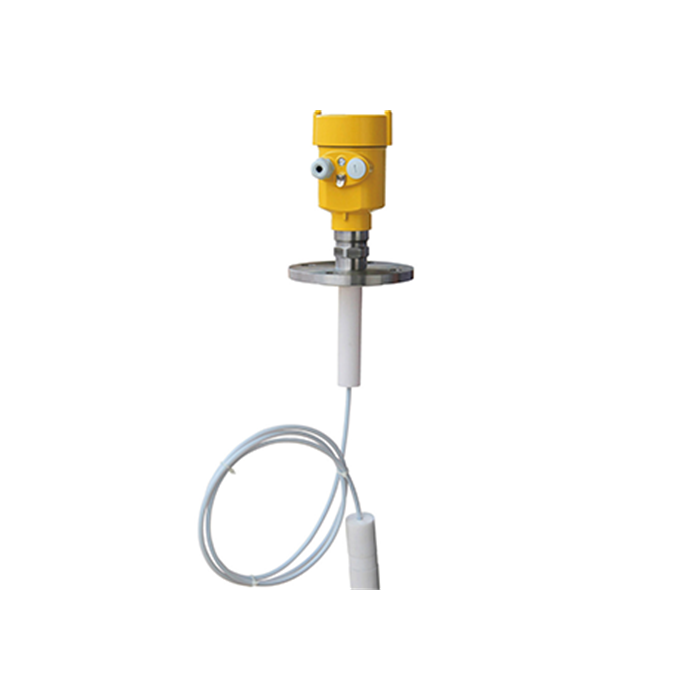
A probe is exposed to the product and deposits can change active capacitance, leakage or impedance. Their effect and the error direction depend on the complete probe, insulation and measurement design, not conductivity alone.
| Deposit or condition | What to assess |
|---|---|
| Conductive coating | Bridging, leakage and compensation limits |
| Insulating coating | Changed effective geometry and dielectric path |
| Scale or crystallisation | Buildup, mechanical condition and response |
| Foam | Effective electrical properties and required boundary |
A coating can create a plausible but incorrect reading in some designs. Diagnose it using the selected instrument instructions and reference evidence rather than assuming every full-scale value has the same cause.
Where capacitance is still the correct instrument
Capacitance is not a legacy technology, and three of its properties are hard to replace.
Temperature and pressure. Purpose-designed capacitance and radar assemblies can cover demanding duties. Check the exact combined ratings; a standoff, purge or remote electronics cannot upgrade an unqualified process boundary.
Short spans. Compare actual probe sensitivity and radar near-end limits for the required levels. A 300 mm span does not exclude every radar.
Interface. Suitable capacitance arrangements can detect selected phase boundaries. Validate the electrical contrast, probe condition and measurement objective; segmentation is not a universal requirement.
Cost on many points. Compare actual compliant quotations, configuration, installation and service rather than a fixed 45% price ratio.
When a radar alternative deserves review
A radar alternative can reduce some product-dependent capacitance effects or avoid a long contacting probe. It still needs reflection, compatibility and maintenance assessment.
- Multi-product tanks. Review the credible properties and setup needed by either instrument. Radar does not directly use liquid density for distance, but it can be affected by changing reflection, vapour or coating.
- Coating and slurry service. Non-contact radar avoids a full-height probe, but antenna or nozzle deposits can still affect it.
- Hygienic service. Both the contacting probe and a non-contact antenna assembly need suitable cleaning, materials and connection documentation.
- Long spans. Compare model-specific range, probe loads, support, installation and signal performance rather than a universal three-metre changeover.
- Restricted commissioning access. Agree an acceptable configuration and reference method for the selected instrument; neither principle makes measurement evidence unnecessary.
The compromise that works
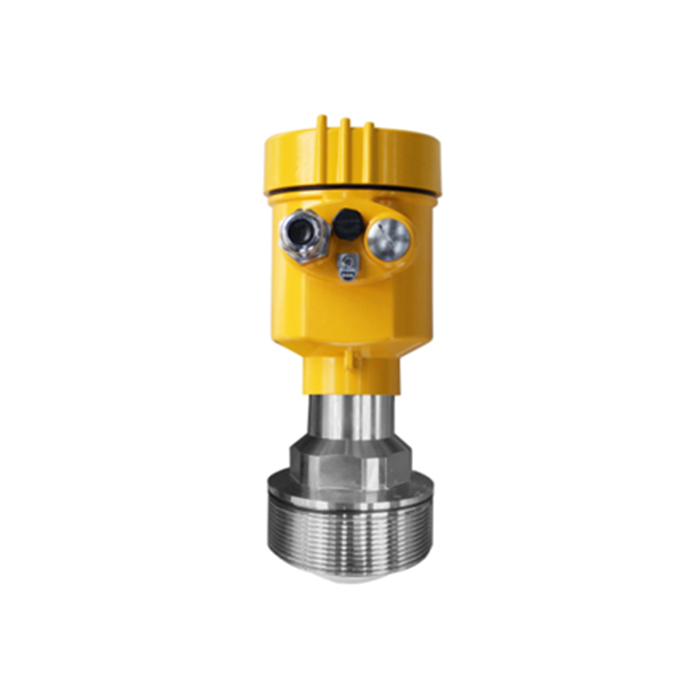
A capacitance point switch and a continuous radar can serve different functions where both are suitable. If independence is required, assess the full architecture and common causes rather than assuming that different principles establish it.
A point switch also needs suitable sensitivity, coating tolerance and verification. It is not automatically immune to product changes or suitable as an independent high-high device simply because an existing continuous probe is available.
Frequently asked questions
Q1. Does a capacitance level sensor need calibration?
Follow the actual capacitance design and site quality requirements. Some models use product calibration, electronic setup or compensation. Verify validity over the product and temperature range rather than assuming all use the same two-point procedure.
Q2. Can a capacitance probe measure interface?
Suitable capacitance arrangements can measure selected interfaces when the electrical properties, geometry and probe condition support the required result. Determine whether the desired boundary is sharp or an emulsion transition.
Q3. Which is more accurate, capacitance or radar?
Compare the actual configurations, reference conditions and installed uncertainty. A universal millimetre-versus-percent ranking does not establish performance for the application.
Q4. Does foam affect a capacitance probe?
Foam can affect capacitance according to its electrical properties, but it is not necessarily equivalent to the same thickness of liquid. Radar may also measure or lose a foam return; validate the intended boundary for both.
Q5. Can capacitance be used at 400 °C?
Purpose-rated capacitance instruments can serve some high-temperature applications. Verify the complete temperature-pressure envelope and materials. The same requirement applies to a radar alternative; an ordinary unit cannot be upgraded by a generic extension.
Q6. Why do capacitance probes sometimes read full scale?
Possible causes include coating, bridging, configuration, wiring or an actual process condition. Use model diagnostics and an independent reference before selecting cleaning, repair or replacement.
