


 Chinese
 Spanish
 Russian
 Portuguese
 French
 German
 Indonesian
 Thai
 Vietnamese
 Arabic
 Italian
 Turkish
 Polish
 Japanese


Radar vs Differential Pressure Level Transmitter: You Are Measuring Density
A DP transmitter measures pressure difference and calculates level using the process density and reference arrangement. Radar measures distance to a reflecting surface. Density variation can therefore affect a DP level calculation directly, while radar still requires suitable reflection, geometry and process ratings. Compare actual configurations and acceptance requirements rather than universal prices or accuracy rankings.
What the instrument actually measures
A differential pressure transmitter has two pressure sides. In a closed vessel, an appropriate arrangement can reference the vapour pressure; in an open vessel the reference may be atmosphere. After accounting for tap elevations, reference legs and seals, the hydrostatic contribution for a uniform liquid is:
p = ρ · g · h
For a 10 m water tank at 20 °C, ρ = 998 kg/m³:
p = 998 × 9.81 × 10 = 97,904 Pa, or 97.9 kPa
The transmitter is calibrated to output 4 mA at 0 kPa and 20 mA at 97.9 kPa, and the control system reads 10 m at 20 mA. Nothing in that chain knows what the density is. It was typed into the calibration.
| Property | DP level arrangement | Radar level arrangement |
|---|---|---|
| Direct measurement | Pressure difference | Distance to a selected reflecting boundary |
| Level calculation | Density, gravity, tap and reference conditions | Sensor reference and intended surface |
| Changing process | Density, reference legs, taps and seals | Reflection, vapour, deposits and internals |
| Mechanical access | Suitable pressure connections or seals | Suitable antenna or probe connection |
| Ratings and accuracy | Exact assembly and measurement model | Exact assembly and reference conditions |
| Cost and maintenance | Actual installed scope and evidence | Actual installed scope and evidence |
The technologies have different sensitivities, but neither is immune to the process. DP depends on its pressure reference and liquid or foam head; radar depends on the selected target and measuring path. Review both failure mechanisms for the actual duty.
The density error, in numbers
For a simplified uniform column with fixed reference corrections, h_indicated = h_true × rho_actual / rho_configured. At a fixed true height, a higher actual density than configured makes the indicated level higher. The error scales with the actual column height, not automatically with the full configured span.
(h_indicated - h_true) / h_true = (rho_actual - rho_configured) / rho_configured
For example, a 1% density mismatch at a true 10 m column produces a 0.10 m indication error under those assumptions. This does not include reference-leg, seal, tap or pressure-measurement effects.
| Assumed true column | Configured density | Actual density | Indicated level | Error |
|---|---|---|---|---|
| 10.00 m | 1000 kg/m3 | 900 kg/m3 | 9.00 m | 1.00 m low |
| 10.00 m | 1000 kg/m3 | 1100 kg/m3 | 11.00 m | 1.00 m high |
| 2.00 m | 1000 kg/m3 | 1100 kg/m3 | 2.20 m | 0.20 m high |
The table uses assumed densities to show the sign and height dependence. Real chemical concentration and temperature data must come from the process specification, representative measurements or an applicable property source.
Temperature moves density even when the product does not change
Temperature can change liquid density and the density of a reference leg or seal fill. At a fixed true column height, lower actual density than configured makes the simple DP level indication lower. In a tank heated at fixed mass, liquid expansion can also change the true level; distinguish that physical change from the calculation error.
Where appropriate, use representative temperature and composition information to compensate the density and reference effects. Validate the complete measurement model, especially if the vessel is stratified. Compensation adds assumptions that should be documented and tested.
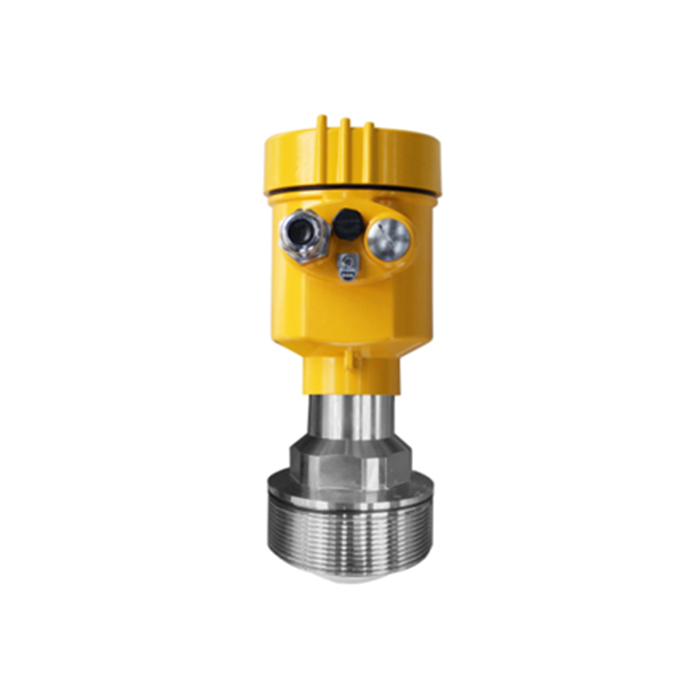
Wet legs, dry legs and the traps that follow
A DP installation is a small piping project, and the piping fails in ways the transmitter cannot report.
| Arrangement | Failure to assess | Possible indication effect |
|---|---|---|
| Wet reference leg | Loss, evaporation or density change of reference liquid | Offset depending on connection geometry |
| Dry reference leg | Unexpected condensate | Changing reference pressure and offset |
| Impulse lines | Plugging, freezing or leakage | Slow, frozen or incorrect pressure response |
| Remote seals | Diaphragm coating, fill and temperature effects | Configuration-dependent offset or response |
| Vacuum service | Fill-fluid and assembly suitability | Requires the actual pressure-temperature review |
Some faults leave a plausible value without an obvious alarm. Use diagnostics, reference checks and the relevant maintenance evidence rather than relying only on the presence of a numerical output.
Where DP is still the right instrument
DP remains a useful option where its density, pressure-reference, connection and maintenance requirements can be met.
- Low-permittivity products. DP does not require a radar reflection, but it needs a defensible density model. Suitable radar alternatives may also work and should not be rejected from a universal dielectric cutoff.
- Foam, steam and dust. DP avoids a free-space echo path, but foam head, vapour reference, condensate and pressure connections still require assessment.
- High pressure. Compare the complete assembly pressure-temperature ratings and installed scope; neither technology has one universal pressure ceiling.
- Very short spans. Compare required resolution and uncertainty with the DP span and the actual radar near-end limits. A 300 mm span is not automatically excluded for every radar.
- Budget constraints. Compare current compliant quotations including connections, seals, wiring and service. Do not use a fixed fraction of radar price.
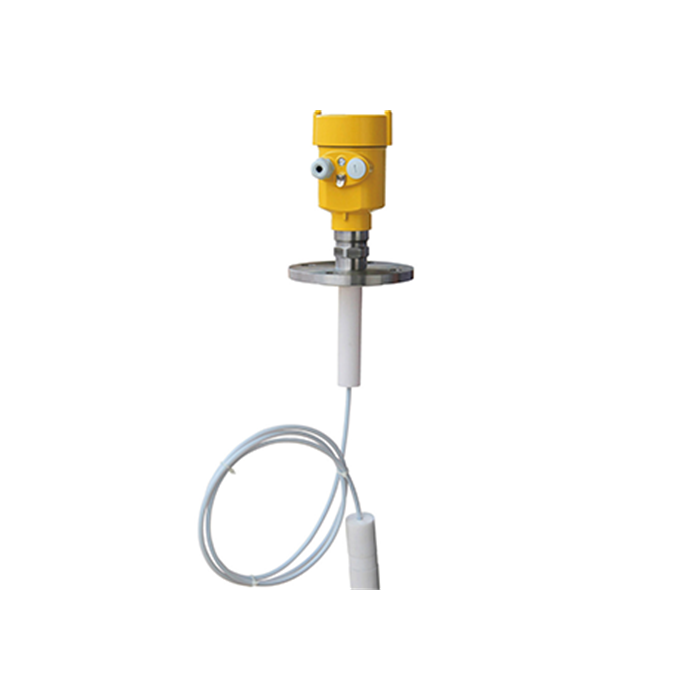
Where radar wins, and why it usually wins in the end
Radar can reduce dependence on assumed liquid density and avoid bottom pressure taps in a suitable installation. It still needs compatible exposed materials, suitable process ratings and verified target tracking.
| Situation | DP review | Radar review |
|---|---|---|
| Changing composition | Density and compensation | Actual reflection and process envelope |
| Coating or solids | Tap and diaphragm condition | Antenna/probe deposits and access |
| Vacuum or condensing gas | Reference and fill-fluid design | Process rating and vapour effects |
| Hygienic process | Complete cleanable connection | Complete cleanable connection |
| Inventory or protection | Whole-system acceptance | Whole-system acceptance |
Maintenance depends on the installed design and process. Some DP systems operate reliably with little intervention, while radar antennas or probes may need cleaning. Use actual service history rather than an assumed ten-year cost advantage.
Using both, deliberately
DP and radar can provide a useful cross-check because some failure mechanisms differ. Independence for a protective function still needs its own assessment of shared connections, power, logic and process effects.
A disagreement should trigger checks of density, pressure references, taps, datum, output scaling and radar target selection. Two values alone do not identify which instrument is wrong or prove an independent protection layer.
Specify any cross-check and required protective architecture from the application risk and performance requirements. Confirm the connection and testing scope before treating an additional instrument as a complete solution.
Frequently asked questions
Q1. Does a DP transmitter measure level or density?
It measures pressure difference. Level calculation requires the relevant density and reference model. At a fixed true column height in the simple model, a 1% higher actual density than configured gives a 1% higher indicated level.
Q2. Can a DP transmitter work in a vacuum tank?
Suitable DP assemblies can operate in vacuum when the reference arrangement, seals and fill-fluid behaviour are designed for the actual conditions. Radar is another option, not an automatic requirement.
Q3. Does foam affect a DP level measurement?
Foam can contribute hydrostatic head according to its effective density, and the intended boundary must be defined. DP avoids the free-space echo path but is not universally unaffected by every foam condition.
Q4. Which is cheaper, radar or a DP transmitter?
Compare current configuration-specific quotations and the complete installation and service scope. A fixed purchase-price ratio or guaranteed ten-year reversal is not justified.
Q5. Can radar replace DP on a boiler steam drum?
Suitable radar, including purpose-designed guided-wave arrangements, can be used in particular boiler applications. Follow the applicable boiler rules, approved architecture and compensation requirements; replacement is a controlled engineering change.
Q6. What about interface measurement between two liquids?
A suitable DP arrangement can infer interface position with known phase densities and a defined geometry or total-level condition. Guided-wave interface measurement is another option with its own transmission, layer-thickness and emulsion limits.
