


 Chinese
 Spanish
 Russian
 Portuguese
 French
 German
 Indonesian
 Thai
 Vietnamese
 Arabic
 Italian
 Turkish
 Polish
 Japanese

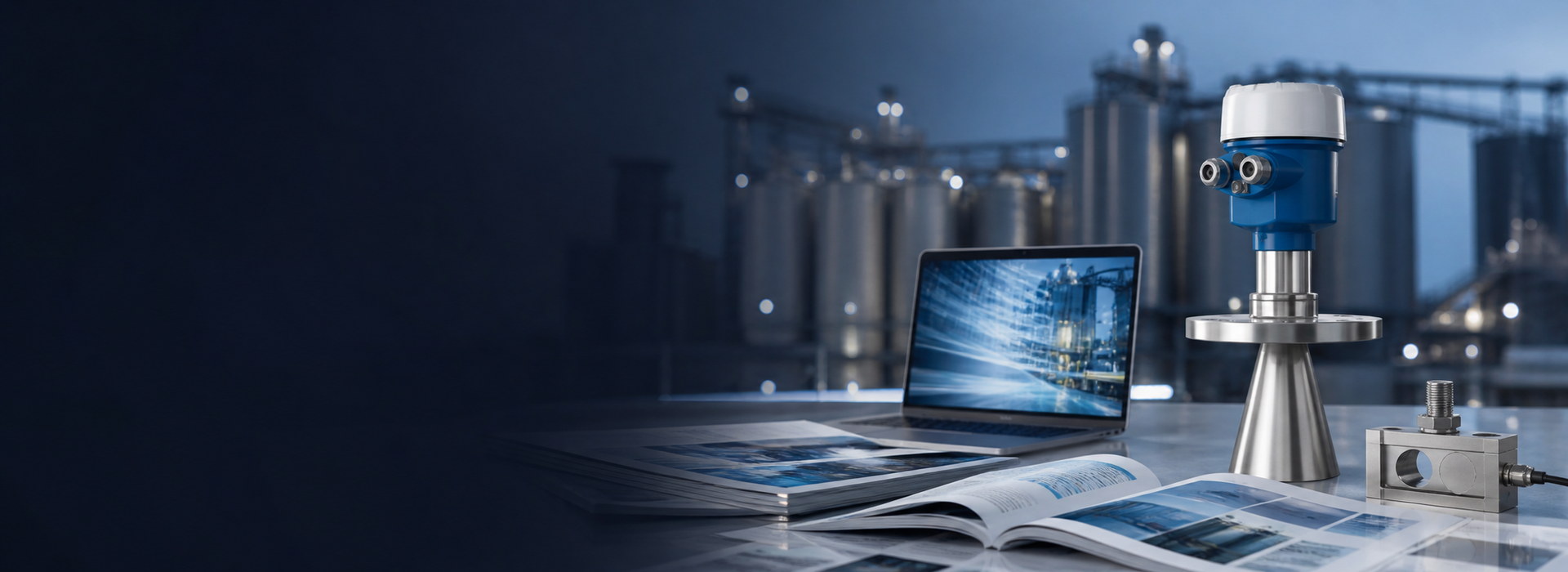
METRAVON Millimeter-Wave Radar Level Transmitters: Features, Selection and Industrial Applications
Millimeter-wave radar level transmitters are widely used in liquid tanks, powder silos and granular-material storage vessels.
Their main engineering advantage is not simply a higher operating frequency. The shorter wavelength allows compact antennas to produce narrow measuring beams, making it easier to avoid vessel walls, pipes, heating coils and other fixed internals.
1. What Characterizes an Approximately 80GHz Industrial Radar?
Many modern industrial level radars operate around the 80GHz millimeter-wave band and use FMCW technology to measure the distance from the antenna to the product surface.
The exact frequency, bandwidth and RF design depend on the product model. A single fixed frequency range should not be treated as a universal specification for all high-frequency radar instruments.
2. What Are the Real Advantages of 80GHz?
Relatively small process connections can still support industrial radar measurement.
Makes it easier to avoid vessel walls, pipes and other internal structures.
Provides better conditions for distinguishing the true level from nearby fixed targets.
Reduces exposure of measuring elements to abrasion, corrosion and direct product contact.
3. Is 80GHz Automatically More Accurate?
No.
Distance performance also depends on effective modulation bandwidth, signal-to-noise ratio, antenna design, dynamic range, algorithms and calibration.
Millimeter-level accuracy can be a valid specification for particular products, but it should not be presented as a universal characteristic of every 80GHz level transmitter.
4. What Matters Most for Liquid Tank Selection?
Important application data include:
- Product name and composition;
- Dielectric properties;
- Foam;
- Vapor and condensation;
- Corrosiveness;
- Temperature and pressure;
- Agitators and heating coils;
- Maximum and minimum level.
5. What Is Different About Bulk-Solid Silo Selection?
For solids, also consider:
- Powder or granules;
- Silo height and diameter;
- Dust intensity;
- Filling point;
- Angle of repose;
- Bridging and collapse;
- Wall buildup;
- Maximum material level.
Knowing only that a silo requires a “30m range” is generally not enough for reliable radar selection.
6. Is 80GHz Unaffected by Dust?
No.
A narrow high-frequency beam helps reduce interference from walls and internals, but severe airborne dust, wet dust and long-term antenna buildup can still weaken the usable material echo.
High-dust applications still require appropriate mounting, antenna design and, where supported, suitable cleaning or purge arrangements.
7. How Should Foam and Condensation Be Treated?
Foam can affect radar differently depending on thickness, liquid content and dielectric properties. The radar may detect the foam surface, receive a weakened liquid-surface echo or switch between two targets.
Vapor itself is often not the main ranging error source, but condensation and deposits on the antenna must be considered.
8. Are Low-Dielectric Products Automatically Better Suited to 80GHz?
No.
Oils, hydrocarbons and some plastic granules may naturally generate relatively weak reflections.
A high-frequency narrow beam can improve target selection, but it cannot remove the fundamental weak-reflection characteristic of a low-dielectric medium.
Range, minimum level, bottom reflection and the dynamic range of the specific radar should all be evaluated.
9. Typical Industrial Applications
| Industry | Typical Application | Main Considerations |
|---|---|---|
| Chemical | Raw-material tanks, reactors, acid/alkali tanks | Corrosion, vapor, foam, temperature and pressure |
| Cement & Building Materials | Cement, fly ash and mineral powder silos | Dust, buildup and surface geometry |
| Energy | Coal bunkers and ash silos | Dust, hazardous area and uneven surfaces |
| Water Treatment | Basins, sludge tanks and rivers | Foam, floating material and fixed structures |
| Food | Storage tanks and CIP tanks | Materials, hygienic connection and CIP conditions |
10. Distance Accuracy Is Not the Same as Inventory Accuracy
For liquid tanks, level must still be converted into volume using reliable tank-strapping or vessel-geometry data.
For bulk solids, pile geometry and bulk density also affect the final inventory estimate.
The distance accuracy of the radar should therefore not be treated as identical to final tonnage or custody-transfer accuracy.
11. How Should Outputs and Protection Ratings Be Confirmed?
Interfaces such as 4–20mA, HART and RS485/Modbus, as well as enclosure ratings such as IP65, IP66 or IP67, depend on the specific model.
An IP rating is not the same as ATEX, IECEx or other hazardous-area certification and cannot replace it.
12. What Information Should Be Provided Before Purchase?
- Product name;
- Liquid or solid;
- Tank or silo height and diameter;
- Maximum and minimum level;
- Temperature and pressure;
- Dust, foam, vapor or condensation;
- Filling point and internal structures;
- Process connection;
- Power supply and output;
- Hazardous-area or hygienic requirements.
13. Conclusion
The main engineering value of approximately 80GHz radar is compact antenna design, narrow beam geometry and improved target separation in complex vessels.
It is not automatically the best choice for every application. Liquid measurement requires attention to dielectric properties, foam and corrosion, while bulk-solid applications depend heavily on dust, material-surface shape and filling geometry.
Reliable selection should start with the actual product and vessel conditions, and only then determine frequency, antenna type and exact radar model rather than choosing only by “80GHz,” “millimeter accuracy” or maximum range.
