


 Chinese
 Spanish
 Russian
 Portuguese
 French
 German
 Indonesian
 Thai
 Vietnamese
 Arabic
 Italian
 Turkish
 Polish
 Japanese


METRAVON Non-Contact Water Level Sensors: Radar vs Ultrasonic Selection Guide
Radar and ultrasonic are both mature non-contact water level measurement technologies. Both can be mounted above the water surface, but they use completely different types of signals.
Ultrasonic sensors rely on sound waves traveling through air, while radar uses electromagnetic waves. This difference becomes important when the site involves large temperature changes, steam, narrow installation space or longer measuring distances.
1. Quick Selection Guide
| Application Condition | Technology to Compare First |
|---|---|
| Short-range open water tank | Ultrasonic or radar |
| Budget-sensitive, simple environment | Ultrasonic |
| River, reservoir or bridge monitoring | Radar |
| Steam or large temperature variation | Radar should be evaluated carefully |
| Narrow-beam requirement | High-frequency radar often has an advantage |
| Deep groundwater well | Also compare hydrostatic sensors |
2. Both Technologies Measure Distance
Radar and ultrasonic instruments both measure the distance from the sensor reference point to the water surface.
That distance is then converted into level, depth or water-surface elevation using the installation reference.
Correct mounting height is therefore important regardless of which technology is selected.
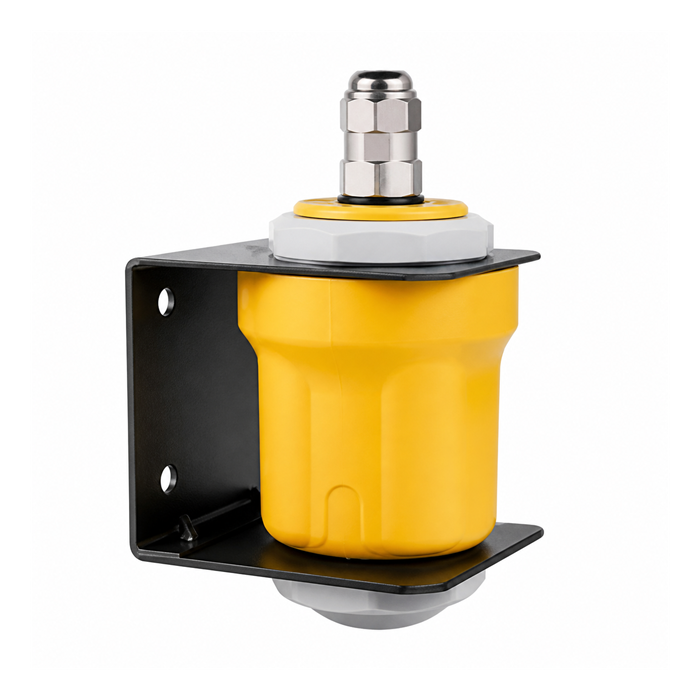
3. The Fundamental Physical Difference
| Parameter | Radar | Ultrasonic |
|---|---|---|
| Signal type | Electromagnetic wave | Sound wave |
| Air-temperature effect | Usually not a primary ranging variable | Changes sound speed and requires compensation |
| Steam | Generally better tolerance, but condensation matters | Heavy steam can attenuate the signal |
| Vacuum | Suitable models can operate | Normal acoustic ranging is not possible |
| Typical purchase cost | Usually higher | Usually lower for simple applications |
4. When Does Radar Have an Advantage?
- Higher mounting positions;
- Large seasonal level variation;
- Nearby bridge piers or riverbanks;
- Significant temperature changes;
- Steam in the air space;
- Need for a relatively narrow beam.
5. When Is Ultrasonic Still a Good Choice?
- Ordinary open clean-water or wastewater basins;
- Short to medium measuring ranges;
- Atmospheric pressure;
- Relatively stable air conditions;
- Projects where initial cost is important.
Ultrasonic technology is not limited to clean water. Wastewater basins can also be suitable, provided foam, steam and obstructions in the acoustic beam are considered.
6. Is Radar Always More Accurate?
No.
Some industrial radar instruments offer high distance accuracy, but actual accuracy depends on the specific model and installation conditions.
Similarly, an 80GHz operating frequency should not automatically be interpreted as ±1mm accuracy.
7. Why Must Both Maximum and Minimum Water Levels Be Provided?
Minimum water level determines the maximum sensor-to-water distance.
Maximum water level determines whether the water may approach the sensor's minimum measuring distance.
For bridge installations, low-water conditions also determine whether the beam starts to include riverbed or banks.
8. Why Do Beam Angle and Acoustic Beam Width Matter?
Neither radar nor ultrasonic sensors emit an infinitely narrow line.
The farther the water surface is from the sensor, the larger the covered area normally becomes.
In narrow channels or around bridge structures, a broad measuring area may include walls, piers or riverbanks and create unwanted reflections.
9. Does Non-Contact Mean Maintenance-Free?
No.
Long-term installations should still inspect:
- Radar antennas or ultrasonic transducers;
- Condensation and icing;
- Mounting brackets;
- Enclosure sealing;
- Cable glands;
- Surge protection.
10. What Installation Work Can Non-Contact Measurement Reduce?
Non-contact sensors can reduce underwater mounting structures, submerged sensor installation and underwater maintenance.
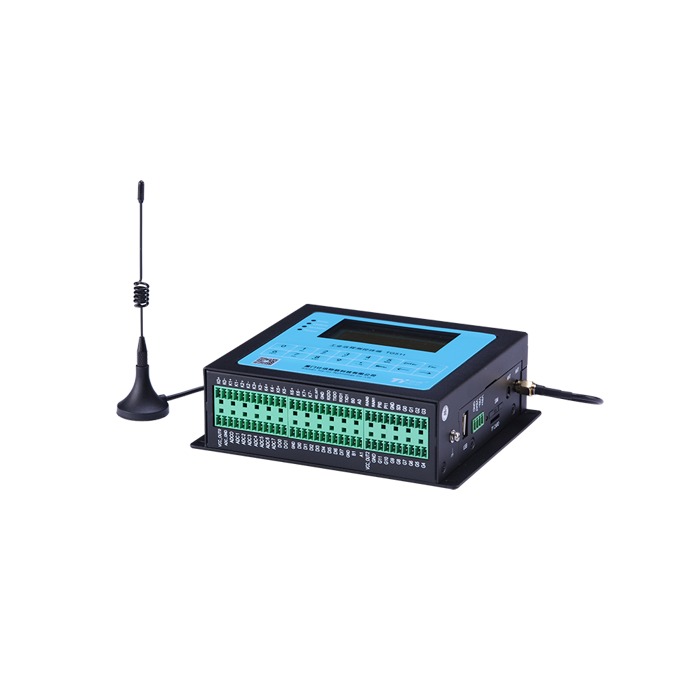
Projects may still require brackets, poles, enclosures, power systems, solar systems, cables and lightning or surge protection.
It is therefore more accurate to say that non-contact technology can reduce underwater installation and maintenance rather than eliminate civil works completely.
11. What Information Should Be Provided Before Selection?
- Mounting height;
- Historical maximum and minimum water levels;
- River width or basin dimensions;
- Banks, bridge piers and fixed structures;
- Water-surface movement, foam and steam conditions;
- Power supply;
- Required output and communication interface.
12. Conclusion
Radar and ultrasonic are not simply “high-end” and “low-end” versions of the same technology.
Ultrasonic remains economical and effective in simple environments with moderate distance requirements. Radar generally offers more flexibility for longer ranges, complex air spaces, narrow-beam requirements and bridge-mounted hydrological monitoring.
The correct choice should be based on actual site conditions rather than only on nominal accuracy or maximum range.
