


 Chinese
 Spanish
 Russian
 Portuguese
 French
 German
 Indonesian
 Thai
 Vietnamese
 Arabic
 Italian
 Turkish
 Polish
 Japanese


METRAVON Radar Level Measurement Instability: Troubleshooting Jumps, Antenna Buildup and Purge Problems in Powder Silos
A jumping radar level reading in a powder silo does not automatically mean the transmitter electronics have failed.
In cement, fly ash, mineral powder and similar applications, filling dust, uneven material surfaces, antenna buildup and purge-air quality can all change the echo environment.
If technicians only increase damping or repeatedly change range settings without checking why the real echo has changed, the problem is unlikely to be solved permanently.
1. Why Can Radar Suddenly Jump to an Incorrect Level?
The radar may receive more than the true material-surface echo.
Other possible targets include:
- Silo walls;
- Filling pipes;
- Structural beams;
- Falling material streams;
- Irregular material piles;
- Buildup near the antenna.
If the real material echo weakens while another reflection becomes stronger, the radar may switch targets, producing sudden high readings, low readings or intermittent loss of echo.
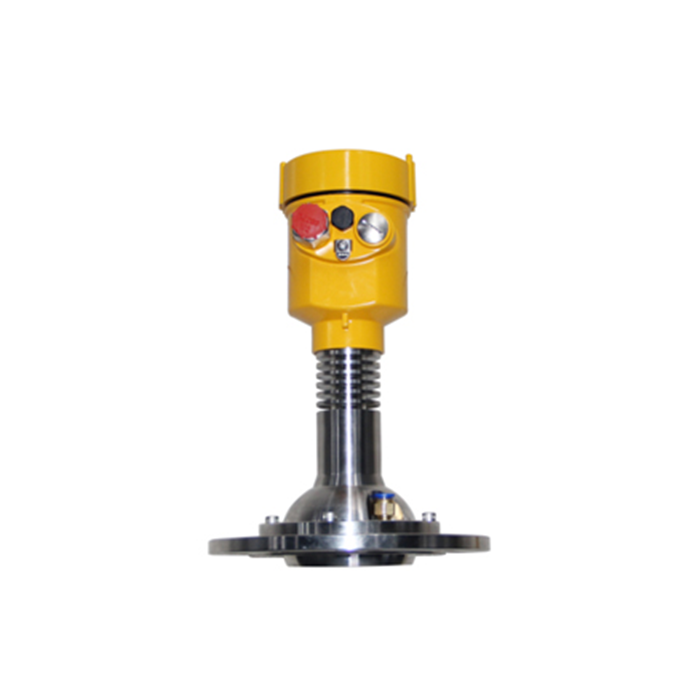
2. Airborne Dust and Antenna Buildup Are Different Problems
Dust generated during filling is dynamic, while material deposited on the antenna can build up gradually over time.
Severe buildup may cause:
- Reduced material-surface echo strength;
- Stronger near-field reflections;
- Lower signal-to-noise ratio;
- Tracking of false targets;
- More frequent loss of echo.
3. What Symptoms Suggest Antenna Contamination?
- The radar works well when newly installed;
- Measurement becomes less stable over time;
- Visible material buildup appears on the antenna;
- Cleaning produces an immediate improvement;
- The same problem returns after another period of operation.
This pattern is often more diagnostically useful than a single isolated jump.
4. Why Can Buildup Occur Even with an Air Purge?
Check the complete purge system:
- Air flow;
- Pressure;
- Purge direction;
- Blocked purge holes;
- Moisture in the air;
- Oil contamination;
- Whether the powder becomes sticky when humid.
For cement and some mineral powders, moisture can make dust adhere more strongly to the antenna surface. Purge-air quality is therefore important.
5. What Type of Purge Air Should Be Used?
If the radar is designed for purging, clean, dry and oil-free instrument air is generally preferred.
Depending on the air supply, filtration, oil-water separation, drying and pressure regulation may be required.
Purge pressure and flow must remain within the limits specified for the actual radar design. More pressure does not automatically mean better cleaning.
6. Why Should Damping Not Be the First Adjustment?
Damping only slows the output response.
If the radar is following the wrong target, more damping will not strengthen the true material echo. It will only make the incorrect reading change more slowly.
7. Typical Fault Patterns
| Observed Behavior | Check First |
|---|---|
| Instability increases with operating time | Antenna buildup |
| Jumps only during filling | Falling material and filling dust |
| Reading repeatedly jumps to the same distance | Fixed structural echo |
| Sudden change during discharge | Pile collapse or target-area change |
| Buildup worsens after purging | Wet purge air or condensation |
8. Why Is the Echo Curve More Useful Than a Single Level Value?
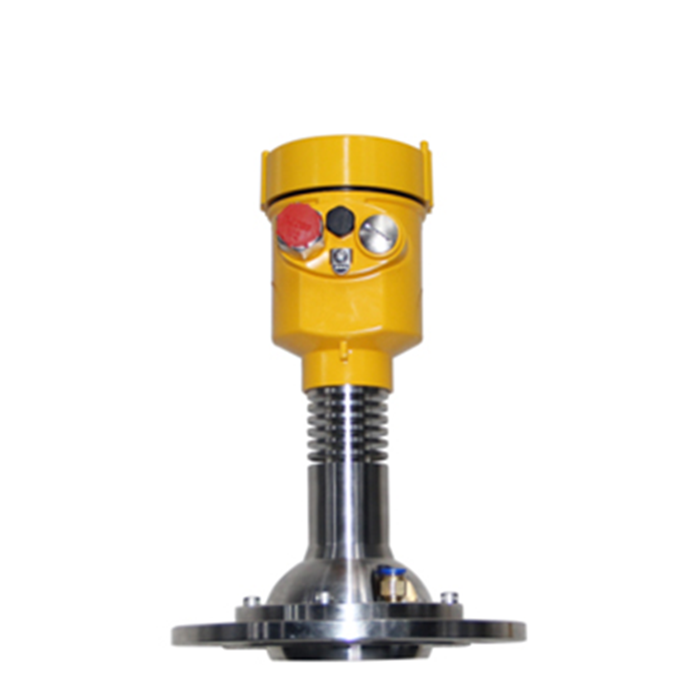
An echo curve can help determine:
- Whether the real material-surface echo is still clear;
- Whether a new strong near-field reflection has appeared;
- The location of fixed internal structures;
- Whether the radar is tracking the wrong target.
Saving a reference echo curve during normal commissioning makes later troubleshooting much easier.
9. How Should the Mounting Position Be Optimized?
Where possible, avoid:
- Directly below the filling inlet;
- Continuous falling-material zones;
- Large internal structures;
- Positions excessively close to the silo wall;
- Locations where heavy buildup is expected.
The final mounting point should be determined from silo height, diameter, filling arrangement, discharge arrangement and typical material-surface geometry rather than from a fixed wall-distance rule.
10. Can 80GHz Completely Solve Dust Problems?
No.
An 80GHz narrow beam can reduce interference from silo walls and internal structures, but heavy antenna buildup, wet dust and extreme airborne dust can still degrade measurement.
11. Recommended Field Troubleshooting Sequence
Actual Material Level → Diagnostic Status → Echo Curve → Antenna → Purge System → Mounting Position → Parameters
Avoid changing several parameters at once before the cause is understood.
12. Conclusion
Antenna buildup is one of the first items to check when radar measurement becomes unstable in a powder silo, but filling conditions, material-surface changes, fixed structures and purge-air quality are equally important.
If a point repeatedly follows the pattern “cleaning restores operation, then instability returns later,” the long-term solution should move beyond cleaning alone and address purge-air quality, mounting geometry and antenna design.
