


 Chinese
 Spanish
 Russian
 Portuguese
 French
 German
 Indonesian
 Thai
 Vietnamese
 Arabic
 Italian
 Turkish
 Polish
 Japanese

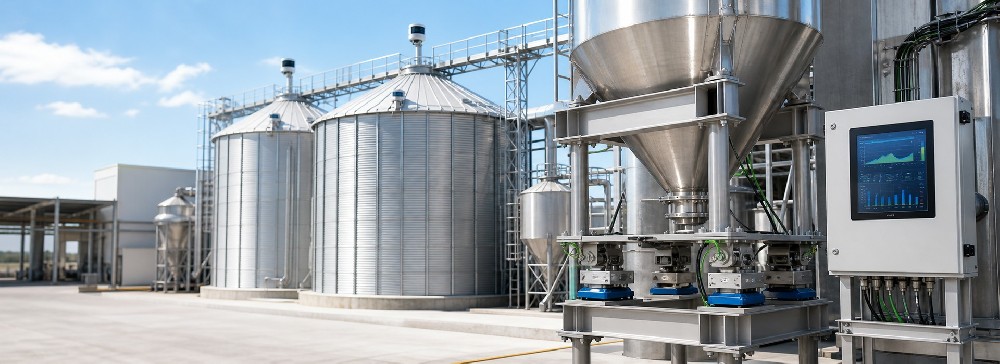

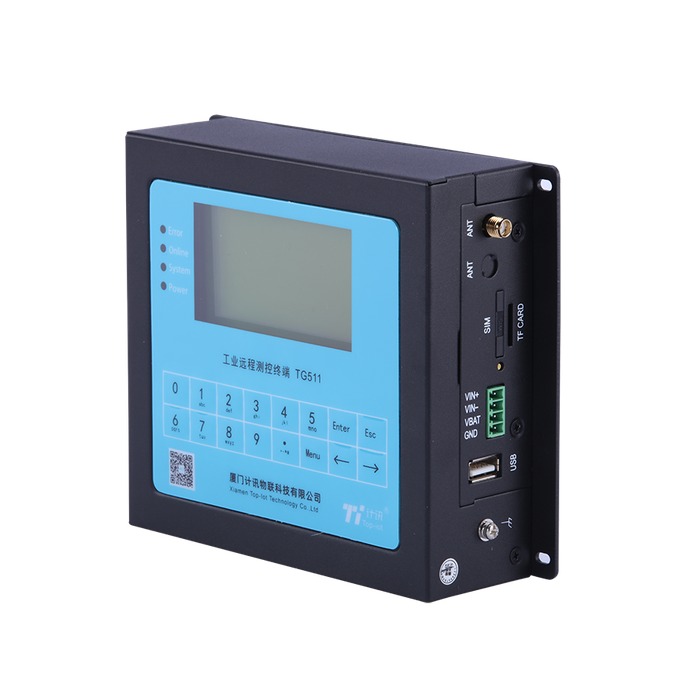
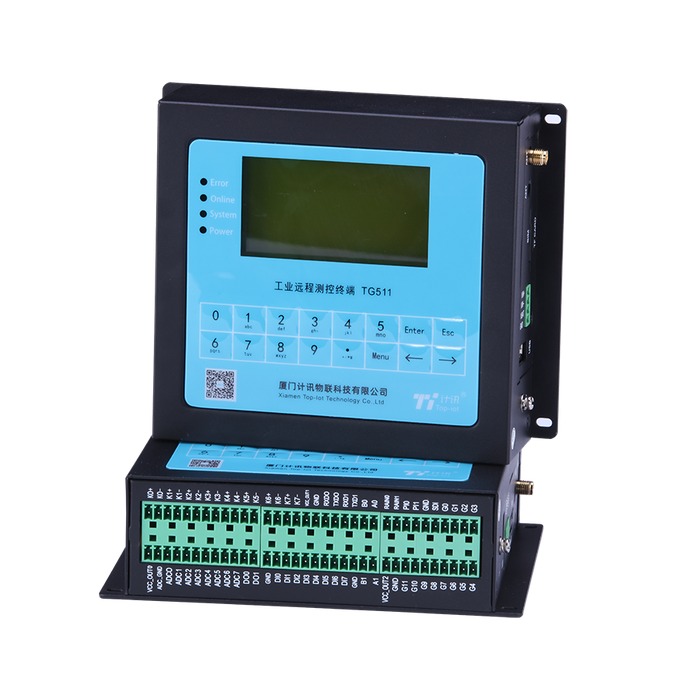
The TG511 is a multi-channel data acquisition RTU supplied by METRAVON. It brings direct inputs, multiple serial buses and local display/keypad operation into one monitoring terminal. Its listed connections include eight analogue inputs, eight digital inputs, two RS232 ports and four RS485 ports. It is intended for larger remote monitoring stations where a compact RTU's channel count or lack of local display would restrict commissioning and maintenance.
Build the station I/O schedule around the actual instruments
A station may combine water-level transmitters, pressure loops, pulse outputs and serial water-quality instruments. Group these by electrical interface, not by measurement name. Two instruments measuring the same variable can need different input circuits, supply arrangements and acquisition methods.
Reserve channels needed for site health as well as process values. Door status, supply alarms or equipment feedback can be useful, but only when the chosen input circuit matches the signal. Mark unused channels and optional channels separately on the wiring schedule.
| Function | Listed capacity | Design check |
|---|---|---|
| Analogue | 8 AI | Confirm the range and circuit for each current or voltage signal, including any required isolation. |
| Status | 8 DI | Establish the input thresholds, contact arrangement and normal or fault meaning. |
| Serial | 2 RS232; 4 RS485 | Assign instruments to buses with compatible settings and a feasible polling schedule. |
| Outputs | 2 DO; 2 relays listed | Obtain the circuit diagram and ratings; distinguish digital outputs from relay contacts and optional expansion. |
| Relay option | Up to 8 relays | Specify the number actually required; the maximum expansion count is not the default supply. |
| Pulse inputs | Rainfall and pulse functions | Check input allocation, pulse characteristics and total-count behaviour for the selected sensor. |
The terminal diagram must confirm whether any functions share terminals or depend on expansion hardware. Do not add every maximum count together without checking the deliverable configuration.
Make local readings and remote records agree
During setup, compare the instrument value, the RTU's displayed value and the value accepted by the destination. Check scaling, units and timestamps before configuring alarms. A correct number on the local display does not prove that the transmitted field has the same meaning.
TG511 lists 16 MB internal storage, TF-card expansion and retransmission functions. Specify the record format, logging rate, retention requirement and full-storage policy. Include the required card and its supported specification in the supply scope when expansion is needed. Do not infer a guaranteed storage duration from the memory figure.
Up to five reporting centres are listed, subject to the supported configuration. Give each centre's protocol, address, authentication and reporting interval. Test whether an unavailable centre affects the others and whether recovered records retain their acquisition time.
Select communications and outputs independently
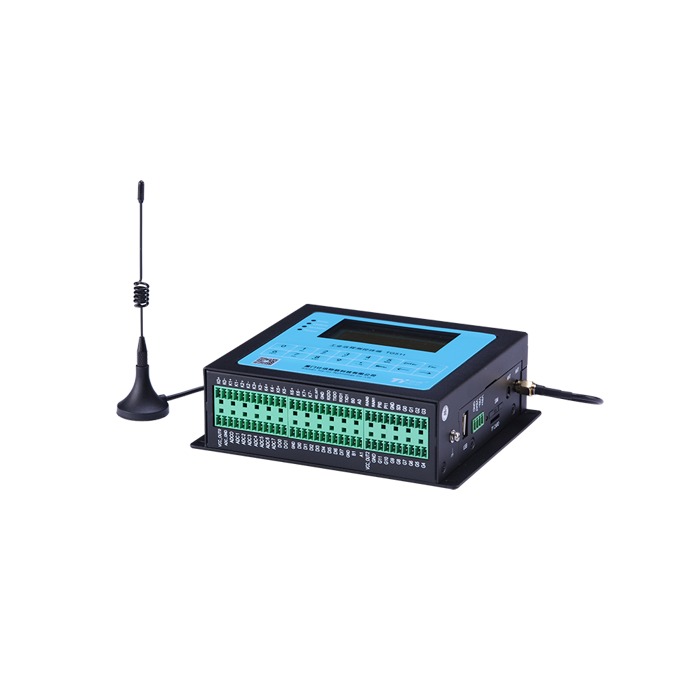
The product supports project-specific communications configurations. Identify the required cellular service and module; SMS and alternative links such as BeiDou, PSTN, radio or ZigBee must be confirmed individually. A list of possible links is not a statement that the base enclosure includes every modem or radio.
Modbus RTU/TCP and industry reporting functions need matching firmware, protocol revisions and receiving-system settings. If a project requires an authority's reporting format, provide its specification and acceptance procedure. Do not equate a supported protocol with certification of the complete monitoring station.
For outputs, state the load, operating sequence and expected state on loss of power or communication. Use appropriate interface equipment for loads beyond the confirmed output rating. Protective shutdowns require a separately assessed control design; data acquisition and relay availability alone do not establish safety performance.
Cabinet fit and site acceptance
Published dimensions are 154.2 x 127 x 46.6 mm, with a 5-35 V DC supply. The IP30 housing is specified for -20 to +75 deg C and 95% RH non-condensing. Protect the installed terminal from rain and condensation, and allow access to the display, keypad, connectors and any removable storage.
Test representative analogue values, status transitions and pulse totals before checking remote reporting. Safely interrupt a serial device and the uplink separately. Confirm the indicated fault, retained data and recovery sequence, then archive the channel list and accepted configuration. The tag mapping and acceptance guide provides the data-path checks.
Station specification questions
Q1. Is TG511 necessary for a small number of sensors?
Not always. The TG501 compact RTU may cover a smaller channel schedule. Choose TG511 where its additional inputs, serial buses or local operation address an actual requirement rather than buying unused capacity.
Q2. Are eight relay outputs included as standard?
The published default is two relay outputs; up to eight is an expansion limit. State the required delivered count, contact ratings and terminal arrangement in the purchase specification.
Q3. Can an operator change settings from the keypad?
Local operation is part of the product description, but the permitted settings and access controls must be checked for the selected firmware. Define which adjustments operators may make and which require authorised maintenance access.
Q4. How should a rainfall input be accepted?
Apply a known number of valid test pulses using the approved input method, compare the total and configured conversion, and check the value reported remotely. Also establish how totals survive a restart and how a reporting-period reset is handled.
Scope the station before requesting a price
Send a TG511 station schedule with instrument interfaces, required output loads, local-operation needs and reporting-centre details. List storage expansion, communications modules, power equipment and cabinet accessories separately so the quotation covers the complete station configuration.
