


 Chinese
 Spanish
 Russian
 Portuguese
 French
 German
 Indonesian
 Thai
 Vietnamese
 Arabic
 Italian
 Turkish
 Polish
 Japanese


Limestone slurry tank level affects reagent availability, pump operation and mixing in a flue-gas desulfurization system. The radar must see a useful surface while powder addition, recirculation and agitation change that surface. A stable reading taken with the mixer stopped is only one part of acceptance.
Start with the pump and mixer operating limits
Document the minimum usable slurry level and the process response to an invalid measurement. Identify which functions use the continuous level and which have separate protection. The tank may still contain material below a pump's usable suction level, so zero on an inventory scale is not necessarily the correct low-level limit.
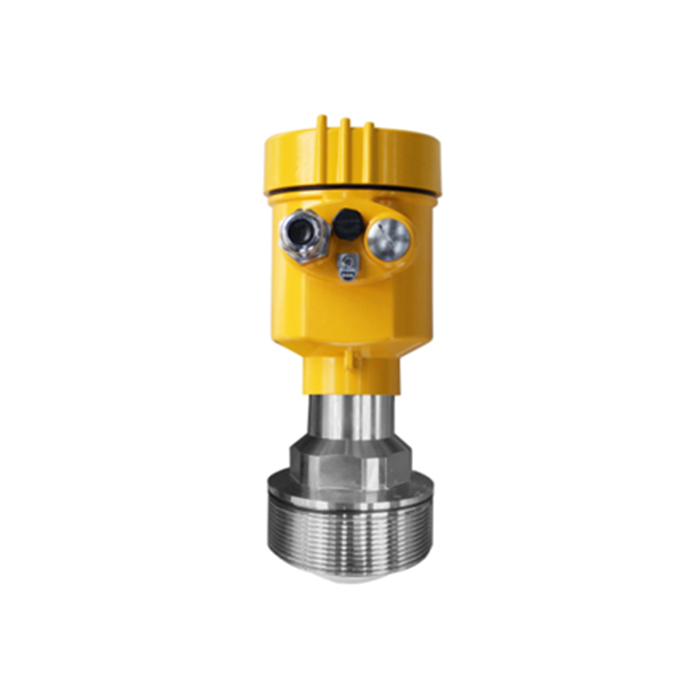
For a liquid-service radar review, the METRAVON MV-RD13 provides a 76 mm PTFE lens option. If the connection requires a hotter process assembly, assess the MV-RD12G separately. Its published 200 deg C upper process reference and smaller 32 mm lens do not make it a universal upgrade: the beam path, chemistry and ordered assembly still decide suitability.
Commission limestone slurry tank level in distinct states
| State | What can change | Acceptance check |
|---|---|---|
| Powder addition | The surface and airborne material differ from a quiet tank. | Verify the retained target and level trend while the normal addition route operates. |
| Mixing | A vortex and surface motion depend on mixer speed and fill. | Compare representative low and high operating levels at the required speeds. |
| Recirculation | A return jet can create local turbulence or foam. | Observe the measurement with the normal pump and valve arrangement in service. |
| Restart | Settled solids and dried splash change the initial condition. | Check the echo and connection after an approved shutdown and restart. |
Do not calibrate out a density difference
A hydrostatic transmitter can be a useful comparison, but its pressure-to-level conversion depends on the assumed density. When slurry concentration changes, a disagreement with radar may come from that assumption. Record concentration, temperature and the reference method before deciding that either instrument needs adjustment.
Compare the radar's distance with a reference representing the same surface region. A level taken near a quiet wall and a radar looking into a vortex are different observations. Changing an offset to force agreement at one mixer speed can create an error at another.
Inspect the nozzle for a developing false target
A connection that traps splashed slurry can gradually become a strong near-field reflector. Check bore, recess, drainability and access before installation. Do not add a splash shield inside the measurement path without assessing its reflection and the selected antenna's clearance.
Keep cable and mounting supports clear of abrasive impact and inspect them after early service. The lens may be above the slurry, yet seals and nearby metal can still encounter mist and wash liquid. Review those materials against the whole cleaning and process chemistry.
Use damping only after the target is understood. The receiving PLC must distinguish a current level from a held value during echo loss. Test the alarm response with the selected filtering and receiving-system delays included, using the site's approved procedure.
Operating questions
Q1. Is the hotter model necessary in every FGD slurry tank?
No. Select from the actual temperature at the connection and the required chemical and mechanical construction. An unnecessary thermal assembly may alter nozzle and maintenance requirements without solving the real problem, such as vortex location or deposited slurry.
Q2. Can radar be assumed to see through all foam?
No. Identify whether the signal follows foam or the underlying slurry under representative reagent and mixing conditions. If a dependable underlying surface is required but not demonstrated, the application needs a different arrangement or additional evidence.
Q3. How should cleaning intervals be established?
Use early inspection records and changes in echo quality, including the condition before cleaning. A fixed interval copied from another slurry is not sufficient. Reassess after changes to concentration, return flow, cleaning or shutdown duration.
Summary
The useful result is a trustworthy operating level with a defined response when it is unavailable. Send the FGD tank layout, slurry properties and operating sequence for model review, along with the proposed reference method and control-system interface.
