


 Chinese
 Spanish
 Russian
 Portuguese
 French
 German
 Indonesian
 Thai
 Vietnamese
 Arabic
 Italian
 Turkish
 Polish
 Japanese


Biomass silo level measurement should help operators decide whether to accept another delivery and whether fuel is available above the extraction equipment. Those are different questions. A radar can follow the wood-chip surface while a bridge or blocked outlet prevents fuel from reaching the boiler. Treat level, feeder operation and fuel delivery as separate observations.
Choose the measuring point around the moving pile
Mark the delivery chute, extraction screws, walking floor and roof supports on the silo section. During filling, the highest material may be beneath the chute; during extraction, a depression may develop elsewhere. A beam aimed at an accessible roof opening is not necessarily observing the location that limits usable capacity.
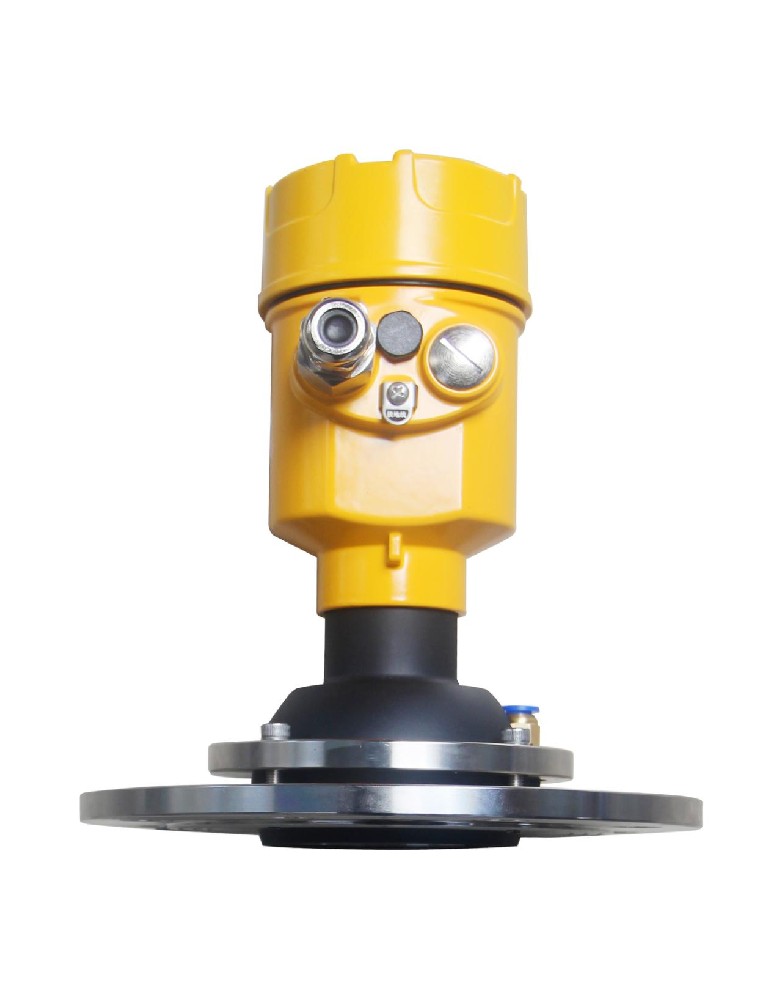
The METRAVON MV-RD21S is an ambient-temperature bulk-solids radar with a 76 mm PE lens and a nominal 3-degree beam. Its published process range is -40 to 80 deg C. Include incoming fuel and local hot-gas exposure when checking that range; an unheated building does not establish the temperature at the instrument.
Qualify biomass silo level measurement with the fuels actually purchased
Do not use a single settled pile as the acceptance test for a store receiving chips, fines and mixed fuel. Particle distribution, moisture and packing can change the surface and the return available to the radar. Observe the grades that matter to the operation, especially the condition producing the weakest usable echo.
| State | Observe | Decision |
|---|---|---|
| Delivery | Falling chips, dust and the rising peak | Keep the measurement usable before the permitted fill limit is reached. |
| Extraction | The valley above the active outlet | Check whether the observed surface still represents fuel accessible to that feeder. |
| Grade change | Echo quality and pile shape | Recheck performance before applying an inventory conversion from another fuel. |
| Stopped feed | Level trend alongside feeder status | Investigate obstruction or drive faults rather than treating a high reading as proof of delivery. |
Identify lost or stale readings at the PLC
Choose the ordered output before designing the wiring: a 4-20 mA input and an RS485/Modbus RTU network need different electronics and commissioning information. At the PLC or RTU, record validity as well as level. A retained last value should be distinguishable from a fresh reading, particularly during filling.
Test loss of the sensor signal using the agreed commissioning procedure. Confirm how the operator is notified and what happens to filling permission. Any independent high-level protection must be selected and assessed for its own duty; this level-measurement proposal does not establish a safety integrity rating or combustible-dust approval.
Questions about fuel availability
Q1. Can the radar report how many tonnes remain?
Only as a calculated estimate based on vessel geometry, pile assumptions and bulk density. Wet chips and dry chips can have different mass at the same indicated level. Reconcile an inventory estimate against weighed deliveries and consumption records before using it for purchasing or stock accounting.
Q2. Would moving the sensor above the outlet solve bridging detection?
It may improve visibility of a local depression, but a surface measurement cannot establish that material is moving through the outlet. Use feeder and process evidence to diagnose a suspected bridge. Do not enter or disturb a loaded silo as an informal sensor test.
Q3. What should accompany a request for a replacement?
Include the roof and outlet drawings, current antenna position, fuel grades, temperature limits and operating trends during a delivery and a discharge. A photograph of the nameplate alone cannot show whether the existing location should be reused.
Summary
Select for the fuel surface the operator needs to observe, then test across the delivery and extraction cycle. For an MV-RD21S application review, identify the control decision and the least favourable fuel condition so the proposed configuration can be assessed against both.
