


 Chinese
 Spanish
 Russian
 Portuguese
 French
 German
 Indonesian
 Thai
 Vietnamese
 Arabic
 Italian
 Turkish
 Polish
 Japanese


METRAVON Chemical Level Measurement Technologies: Differential Pressure, Capacitance, Ultrasonic and Magnetic Level Gauges
Chemical level measurement depends on the process duty. A water tank, hydrochloric-acid vessel, reactor, viscous slurry tank and pressurized vessel can impose very different material, signal and maintenance limits.
The correct choice depends on chemical compatibility, density, dielectric properties, viscosity, crystallization, foam, temperature, pressure and whether contact with the medium is acceptable.
Four Common Technologies at a Glance
| Technology | Measured basis | Chemical-service checks |
|---|---|---|
| Differential pressure | Liquid-column pressure with a defined reference | Density variation, pressure paths, seals and temperature |
| Capacitance | Probe response relative to a counter-electrode | Electrical properties, probe insulation, coating and vessel construction |
| Ultrasonic | Acoustic round-trip through the gas space | Vapor, temperature gradients, foam, near zone and exposed materials |
| Magnetic gauge | Float buoyancy in a suitable chamber | Liquid density, free movement, deposits and chamber ratings |
Differential-Pressure Level Measurement
DP level measurement uses the hydrostatic pressure generated by the liquid column. In a closed pressurized vessel, the vapor-space pressure is normally applied to the low-pressure side so that the transmitter measures the liquid-column differential rather than total vessel pressure.
Advantages of Differential Pressure
- Mature and widely understood technology;
- Well suited to many high-temperature and high-pressure processes;
- Can be combined with remote seals for difficult process media;
- Easy integration with 4-20 mA and HART systems.
Main Limitations of DP Level
Liquid density directly affects the level conversion. If density changes with concentration, temperature or product composition, the calculated level can shift even when the true level does not.
Other concerns include:
- Blocked impulse lines;
- Unbalanced condensate columns;
- Temperature effects in remote-seal systems;
- Crystallization or viscous product in pressure paths;
- Static-head and zero-elevation/suppression errors.
Where DP Is Often a Good Candidate
- Liquids with reasonably stable density;
- High-temperature or high-pressure vessels;
- Plants with established DP instrumentation practices;
- Applications requiring remote diaphragm seals;
- Selected steam-drum, reactor and pressure-vessel duties.
Capacitance Level Measurement
Capacitance instruments detect changes in electrical capacitance between a probe and a reference electrode or vessel wall. As the product covers more of the probe, the dielectric environment changes and the electronics convert that capacitance change into level.
Advantages of Capacitance
- Compact mechanical design;
- Can be configured for conductive or non-conductive media with the correct probe;
- Applicable to liquids and selected bulk solids;
- No moving measuring parts;
- Some designs support high process temperature and pressure.
Why Dielectric Variation and Coating Matter
Because capacitance measurement depends directly on the electrical properties around the probe, changes in product composition or dielectric constant can change the reading. Coating, crystallization and wall deposits can create additional capacitance that the instrument may interpret as level.
The maintenance priority is therefore product stability and probe condition, not an arbitrary fixed recalibration interval.
Ultrasonic Level Measurement
An ultrasonic transmitter sends a sound pulse through the gas space and measures the round-trip time from the liquid surface. It is a non-contact method and can be economical for open tanks, water systems and selected chemical vessels.
Main Advantages of Ultrasonic
- Non-contact with the liquid;
- Simple installation for many open tanks;
- Good economics for short and medium ranges;
- Useful for water, wastewater and stable atmospheric applications.
Main Limitations of Ultrasonic
Sound must travel through the gas space. Temperature, gas composition, heavy vapor, thick foam, dust, strong air movement and vessel obstructions can all affect signal quality.
Temperature compensation helps with sound-speed changes, but it cannot correct every complex vapor-space condition. Ultrasonic measurement also does not operate normally in a vacuum because sound requires a medium to propagate.
Non-Contact Does Not Mean Chemically Immune
The ultrasonic transducer does not need to touch the liquid, but its face, process connection and seals can still be exposed to corrosive vapor, acid mist, splash and condensate. Chemical compatibility must therefore include the gas-phase environment.
Magnetic Level Gauges
A magnetic level gauge normally uses a bypass chamber connected to the vessel. A magnetic float follows the liquid level and drives an external indicator through magnetic coupling. Local indication can therefore remain available without external electrical power.
Advantages of Magnetic Level Gauges
- Clear local visual indication;
- Basic indication does not require electrical power;
- Mature mechanical technology;
- Can be engineered for selected high-temperature and high-pressure services;
- Can be fitted with switches or remote transmitters.
Common Limitations of Magnetic Level Gauges
The key issue is whether the float can move freely over the full operating range. High viscosity, crystallization, suspended solids, sludge or deposits in the bypass chamber can cause sticking or blockage.
Product density also matters because the float must be correctly designed for the actual liquid density.
A Magnetic Level Gauge Measures Liquid, Not Steam
For example, a properly engineered magnetic bypass gauge can indicate water level in a steam drum, but the measured variable is the liquid level. The instrument is not measuring the steam phase itself.
Corrosive Acids and Caustics Require Material Review
A magnetic level gauge is not automatically suitable for every strong acid or caustic. The chamber, float, lining, gaskets and temperature/pressure ratings must all match the exact chemical service.
Can a Magnetic Level Gauge Send a 4-20 mA Signal?
Yes. Depending on the design, magnetic level gauges can be combined with reed-chain transmitters, magnetostrictive sensing, 4-20 mA output and magnetic level switches. They are not limited to visual indication only.
Quick Technology Comparison
| Process issue | Route to assess | Verification needed |
|---|---|---|
| Changing density | DP or another principle with the appropriate conversion | Error across the actual concentration and temperature range |
| Changing electrical properties | Capacitance with a suitable probe or an alternative | Calibration validity, conductive behavior and coating effects |
| Foam or unstable gas path | Process-rated radar, pressure or other suitable method | The intended liquid target and complete process limits |
| Viscosity or crystallization | A design with viable sensing and maintenance access | Blocked pressure paths, coated probes or stuck floats |
| Passive local indication | A compatible magnetic float-and-chamber assembly | Density matching and free movement; remote functions are separate |
When Should Radar Also Be Compared?
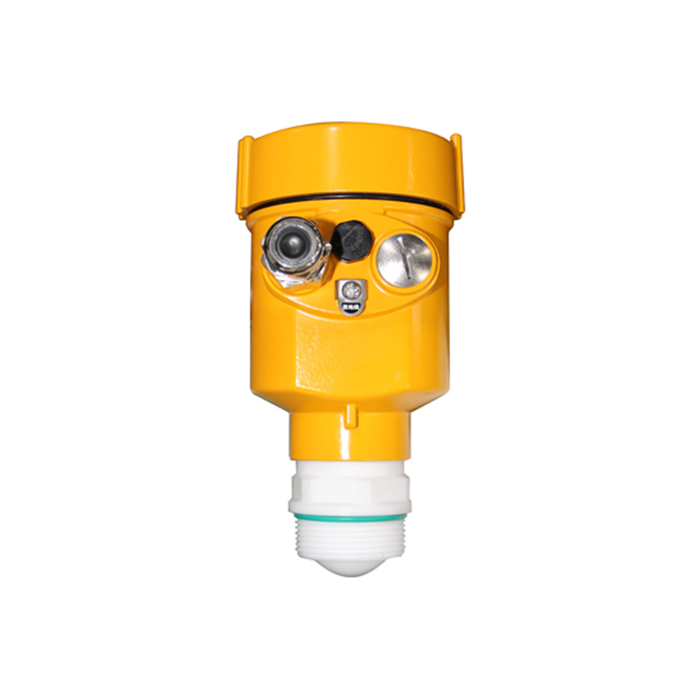
Free-space radar is worth evaluating when non-contact measurement is preferred, vapor-space temperature varies, corrosive media make contact devices difficult, vessel internals are manageable and mechanical maintenance should be minimized.
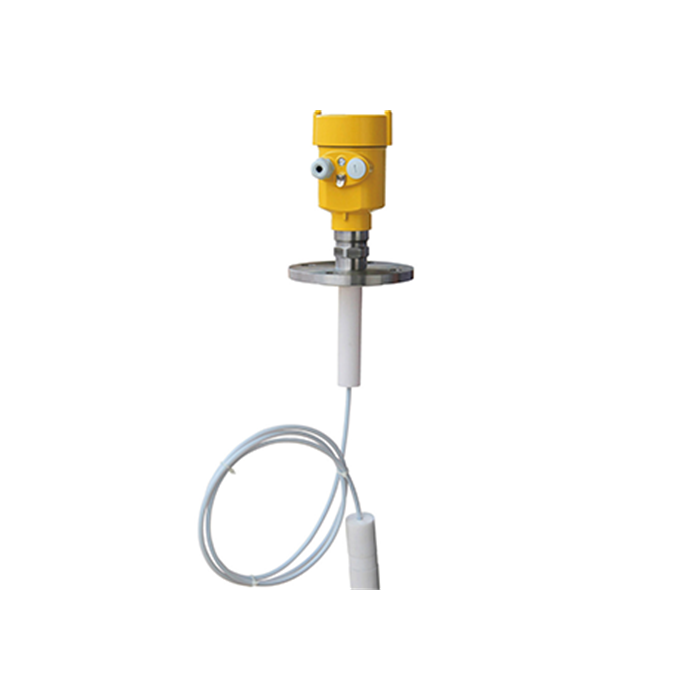
Guided wave radar can also be considered for selected low-dielectric liquids, interface measurement and applications where a defined probe path is useful. Radar is not immune to foam, condensation, buildup or dielectric limitations, so it should be selected from the application rather than treated as an automatic answer.
Minimum Data for Chemical Level Selection
- Product name, concentration, density, corrosiveness and viscosity;
- Dielectric properties if known;
- Normal and design temperature and pressure;
- Tank height, diameter, internals and mounting connection;
- Foam, vapor, agitation, deposits and solids;
- Power, output and communication requirements;
- Hazardous-area, hygienic or project-specific certification requirements.
Chemical measurement decisions
Q1. How should changing chemical concentration affect the shortlist?
Identify which physical properties vary over the process cycle. Density changes affect hydrostatic conversion, while electrical-property changes can affect a capacitance probe. Compare each candidate with the required uncertainty across that variation instead of selecting from the initial liquid composition alone.
Q2. When does local indication without power favor a magnetic gauge?
A suitable float-and-chamber assembly can provide passive local indication, but the float must match the liquid density and move freely. Check viscosity, deposits, connection blockage and process ratings. Remote transmitters or alarm accessories have separate power and interface requirements.
Q3. Are all technologies described here confirmed METRAVON product options?
No. This comparison defines technical routes and purchasing limits. Use the METRAVON product pages and the selected datasheet to confirm an actual model, configuration and output. If a route is not documented, request availability confirmation rather than assuming that a comparison article is an offer for that equipment.
Choosing the Right Measurement Principle
Differential pressure, capacitance, ultrasonic and magnetic level gauges are all mature technologies, but they solve different measurement problems. The correct choice starts with the physical and chemical behavior of the process, not with a preferred instrument family.
When density is stable, DP can be highly effective. Capacitance works well when dielectric behavior and probe coating are manageable. Ultrasonic is economical in stable atmospheric conditions. Magnetic level gauges remain valuable where robust local indication is important. Radar should be added to the comparison when non-contact measurement, vapor-space variability or difficult mechanical conditions make it attractive.
Include the chemical-property range and the required indication, control or alarm duty so that available model routes can be checked. Request a chemical-level selection review
