Chinese
 Spanish
 Russian
 Portuguese
 French
 German
 Indonesian
 Thai
Thai Vietnamese
 Arabic
 Italian
 Turkish
 Polish
 Japanese
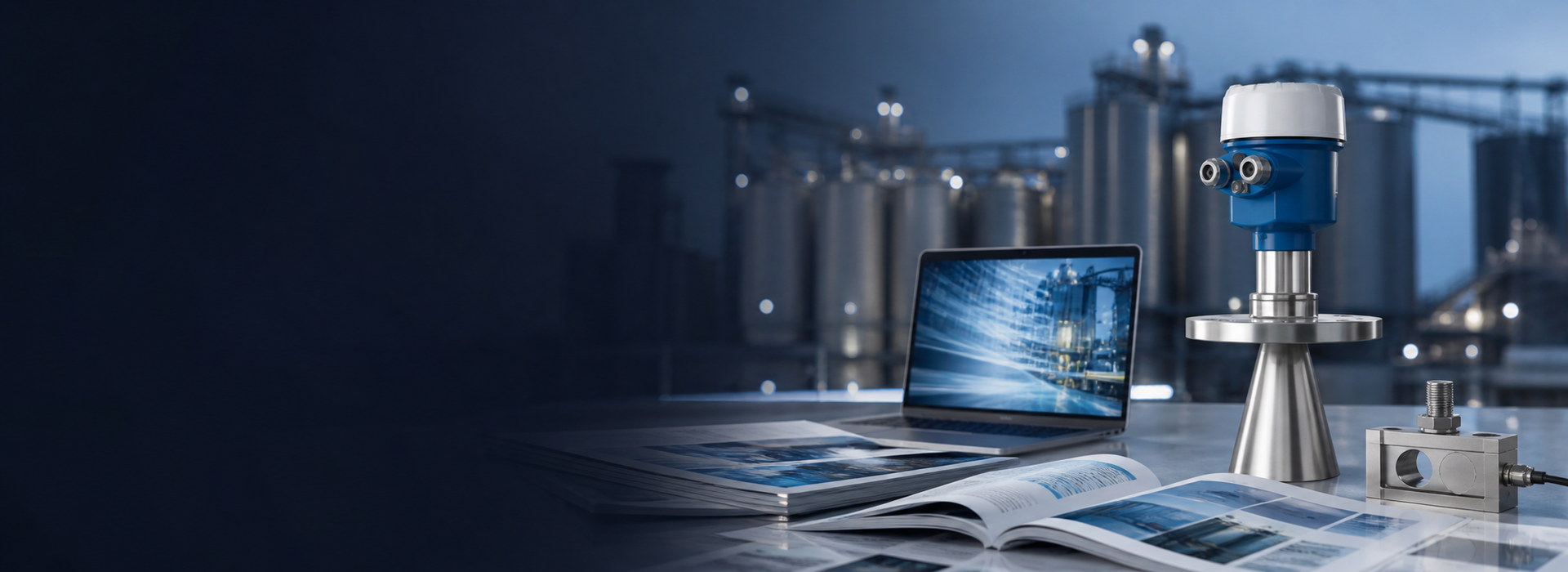
Types of Radar Level Instruments: Non-Contact Radar, FMCW and Guided Wave Radar Selection Guide
Radar level instruments use high-frequency electromagnetic waves to measure the position of liquid or bulk-solid surfaces. They are widely used for continuous level measurement in industrial storage tanks, process vessels and bulk-solid silos.
From the measurement-method perspective, radar level technology can generally be divided into two main categories: non-contact radar and guided wave radar (GWR). Non-contact radar transmits electromagnetic waves through the free space above the medium, while guided wave radar directs radar pulses along a rod, cable or coaxial probe.
These two categories can be further classified according to signal technology, operating frequency, antenna construction and probe design.
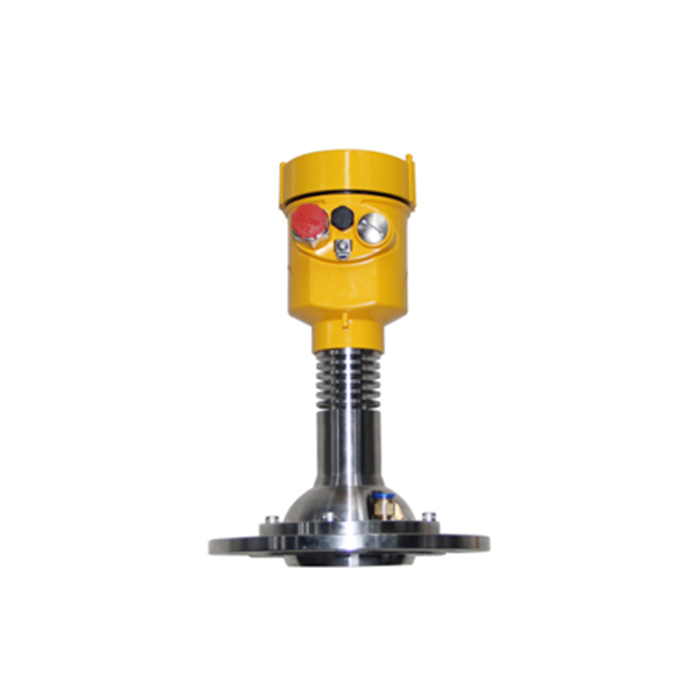
1. What Are the Two Main Types of Radar Level Instruments?
| Category | Non-Contact Radar | Guided Wave Radar |
|---|---|---|
| Signal Propagation | Electromagnetic waves travel through free space inside the vessel | Radar pulses travel along a metallic probe |
| Contact With Medium | Normally non-contact | Rod or cable enters and contacts the medium |
| Typical Installation | Mounted at the top of a tank or silo | Mounted at the top, with the probe extending into the vessel |
| Typical Media | Liquids, slurries, powders, granules and bulk solids | Liquids, selected slurries and solids, and liquid-liquid interfaces |
| Main Characteristics | Non-contact, relatively low maintenance and flexible installation | Signal is concentrated along the probe and can suit selected complex surfaces and interface applications |
2. What Is a Non-Contact Radar Level Instrument?
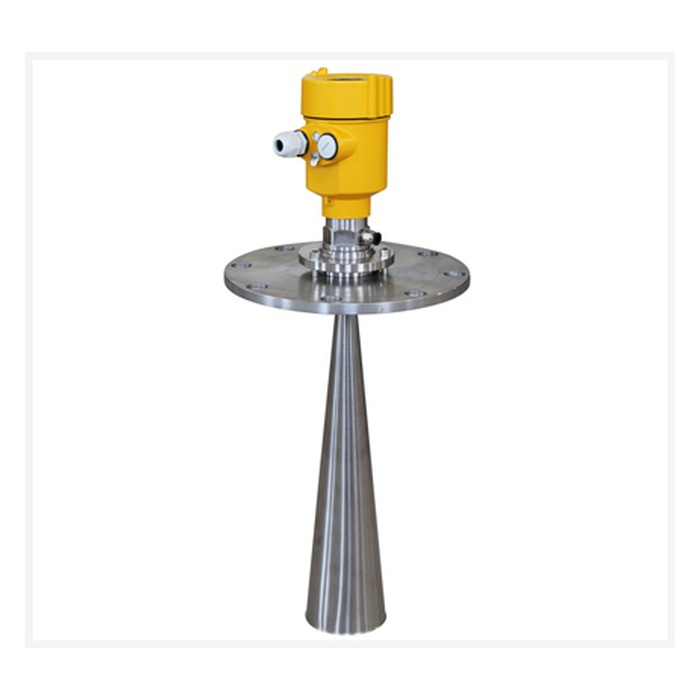
A non-contact radar level instrument, also called free-space radar, is normally mounted at the top of a tank or silo. Its antenna transmits electromagnetic waves toward the material surface.
The electromagnetic waves travel through the free space above the medium, reflect from the liquid or bulk-solid surface and return to the antenna. The instrument analyzes the time or frequency relationship between transmitted and reflected signals to calculate distance and convert it into level.
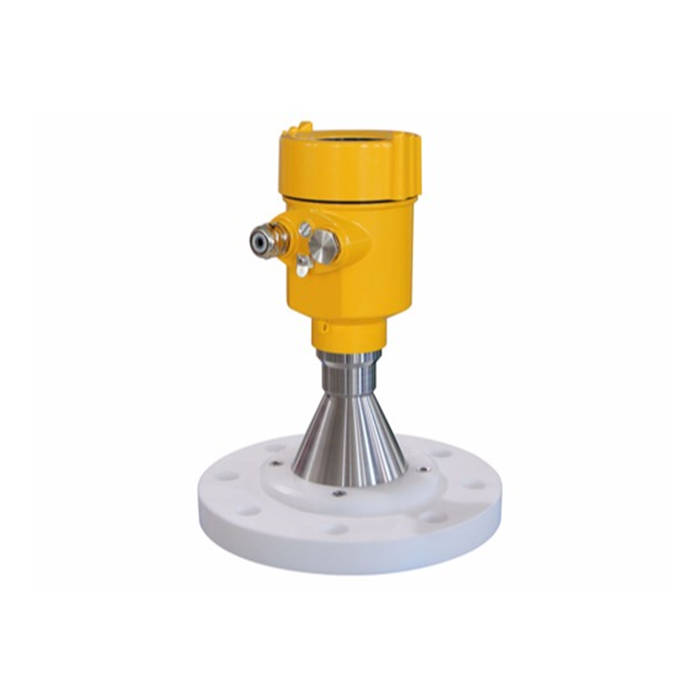
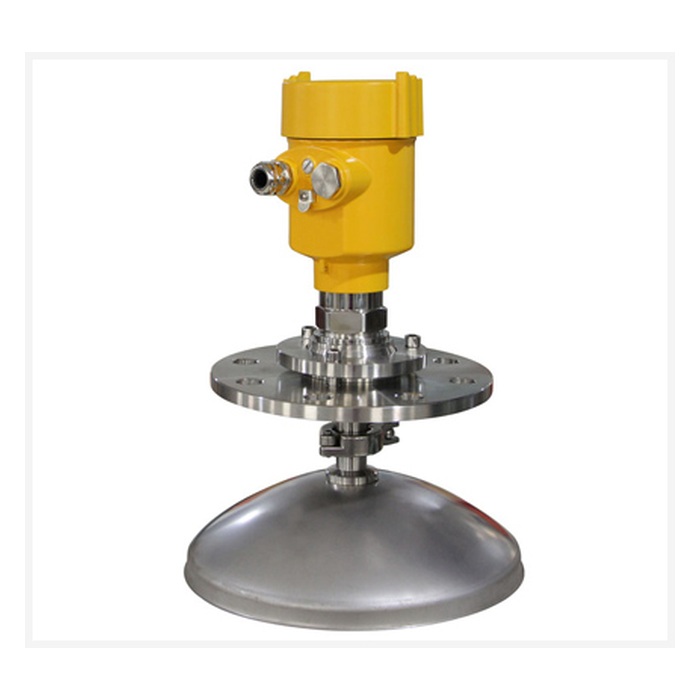
Common antenna designs include horn antennas, lens antennas and encapsulated process antennas. The appropriate design depends on operating frequency, process medium, temperature, pressure and corrosiveness.
3. How Are Non-Contact Radar Instruments Classified by Signal Technology?
From the signal-processing perspective, non-contact radar can mainly be divided into pulse radar and FMCW radar.
3.1. Pulse Radar Level Instruments
Pulse radar periodically transmits short microwave pulses and receives reflections from the material surface. The distance is calculated from the round-trip travel time of the pulse.
Distance = Electromagnetic Wave Velocity × Round-Trip Time ÷ 2
Pulse radar has a long history of industrial use and can be applied to both liquids and bulk solids. Actual performance depends on frequency, antenna design, signal processing and installation conditions.
3.2. FMCW Radar Level Instruments
FMCW stands for Frequency Modulated Continuous Wave. During each frequency sweep, the instrument continuously changes the transmitted frequency. The returning echo has a frequency difference relative to the current transmitted signal.
This frequency difference is related to target distance, allowing the instrument to determine the position of the material surface through digital signal processing. FMCW is widely used in modern high-frequency non-contact radar instruments.
Pulse Radar
Determines distance from the travel time of short microwave pulses.
FMCW Radar
Determines distance from the frequency difference between transmitted and reflected signals.
4. Can Radar Level Instruments Also Be Classified by Frequency?
Yes. Industrial non-contact radar products are available in different frequency ranges, including traditional lower-frequency radar, approximately 24–26GHz radar, and modern high-frequency technologies such as 60GHz and 80GHz radar.
Operating frequency influences wavelength, antenna size and beam characteristics. With a similar antenna size, higher-frequency radar can generally produce a narrower beam, which can be useful in small vessels, long nozzles, tanks with internal obstacles and bulk-solid silos.
Frequency is only one selection factor. Medium reflectivity, condensation, foam, buildup, installation geometry and process conditions should also be considered.
5. What Type of Radar Is an 80GHz Radar Level Transmitter?
80GHz radar belongs to the high-frequency non-contact radar category. Modern industrial 80GHz products commonly use FMCW technology and combine high frequency, short wavelength and a relatively narrow beam for liquid and bulk-solid level measurement.
The narrow beam can reduce interference from vessel walls, beams, pipes and other internal structures. As a result, 80GHz radar is widely used in chemical tanks, water-treatment systems, compact process vessels and powder or granular-material silos.
Beam angle, measuring range, accuracy and process-temperature or pressure ratings remain product-specific parameters and should be confirmed from the datasheet of the selected model.
6. What Is Guided Wave Radar?
Guided wave radar, or GWR, is based on TDR (Time Domain Reflectometry) technology.
The instrument is normally installed at the top of the vessel, with a metallic rod, cable or coaxial probe extending into the process. Radar pulses travel along the probe. When the signal reaches the material surface, the change in dielectric properties causes part of the signal to be reflected back along the probe.
The instrument determines the material position from the round-trip travel time of the radar pulse. Probe length is selected according to measuring range and vessel geometry and does not necessarily have to reach the vessel bottom in every application.
7. How Is Guided Wave Radar Classified by Probe Type?
Guided wave radar can be further classified according to probe design, including rod, cable and coaxial probes.
Rod Probe GWR
Uses a rigid metallic rod and is suitable for many short- to medium-range liquid and selected solid applications.
Cable Probe GWR
Uses a flexible cable and is suitable for taller vessels or longer measuring ranges, with consideration for probe movement, tension and internal structures.
Coaxial GWR
Uses a coaxial probe structure to provide a more concentrated signal path and is often applied to selected liquids and more demanding measurement conditions.
Some guided wave radar products also use twin-rod, twin-cable or other special probe structures. Selection depends on medium type, range, dielectric properties, viscosity, foam, internal structures and mechanical installation conditions.
8. Why Is Guided Wave Radar Suitable for Interface Measurement?
When two immiscible liquids form separate layers, the dielectric change between the upper and lower liquids can generate a second radar reflection. Selected guided wave radar instruments can analyze both the upper liquid surface and the liquid-liquid interface.
Interface measurement requires consideration of the dielectric properties of both liquids, upper-layer thickness, emulsion layer and process conditions. A model specifically designed for interface measurement should therefore be selected.
9. What Is the Difference Between Non-Contact Radar and Guided Wave Radar?
| Comparison Item | Non-Contact Radar | Guided Wave Radar |
|---|---|---|
| Contact With Medium | Antenna normally remains above the medium | Rod or cable enters the process medium |
| Propagation Path | Free space | Along a probe |
| Internal Obstacles | Mounting should minimize reflections from walls, beams and other structures | Signal is concentrated along the probe, but the probe itself should remain clear of internal metal structures |
| Agitators | Can often be avoided through suitable mounting position | Mechanical contact risk between probe and agitator should be evaluated |
| Interface Measurement | Normally measures the uppermost process surface | Selected models support liquid-liquid interface measurement |
| Maintenance | Non-contact construction generally reduces maintenance | Probe buildup, mechanical loading and process adhesion should be considered |
10. Is Non-Contact Radar Affected by Dust, Temperature and Vapor?
Radar uses electromagnetic waves, so air temperature and pressure changes do not create distance errors through changes in sound velocity as they can with ultrasonic measurement. Radar also generally provides a wide operating range in dusty and vapor-rich environments.
Actual performance can still be influenced by extreme dust, severe condensation, antenna buildup, heavy vapor, dielectric properties and the effect of process temperature and pressure on the antenna, seals and mechanical construction.
Demanding applications should therefore be matched with the appropriate radar model, antenna design and process rating.
11. When Should Non-Contact Radar Be Considered?
The sensing element should not remain in contact with the medium
Corrosive or contamination-prone chemical media
Powders, granules and bulk-solid silos
High-temperature, vacuum or pressurized processes
Large storage tanks and long measuring ranges
Vessel geometry allows a clear radar beam path
12. When Can Guided Wave Radar Be Considered?
Liquid-liquid interface measurement is required
The vessel is narrow or mounting space is limited
The liquid surface is strongly moving
Selected foam or vapor applications
Bypass chamber or external chamber applications
The probe can be installed safely without interfering with process equipment
13. What Information Is Required for Radar Level Instrument Selection?
| Selection Parameter | Information to Confirm |
|---|---|
| Process Medium | Liquid, slurry, powder, granules or other bulk solid |
| Measurement Task | Continuous level, bulk-solid level or liquid-liquid interface measurement |
| Measuring Range | Maximum and minimum level and total measuring distance |
| Dielectric Properties | Low-dielectric media require additional attention to echo strength |
| Process Temperature | Minimum, normal and maximum operating temperature |
| Process Pressure | Vacuum, atmospheric or positive-pressure conditions |
| Process Conditions | Foam, vapor, condensation, dust, agitation and buildup |
| Vessel Geometry | Tank diameter, height, nozzle, beams, agitators and internal obstacles |
| Output Interface | 4–20mA, HART, RS485 Modbus RTU or another required interface |
FAQ
Q1: What are the two main types of radar level instruments?
A1: They are generally divided into non-contact radar and guided wave radar. Non-contact radar transmits electromagnetic waves through free space, while guided wave radar directs radar pulses along a metallic probe.
Q2: What is the difference between pulse radar and FMCW radar?
A2: Pulse radar calculates distance from pulse travel time, while FMCW radar determines distance from the frequency difference between the transmitted sweep and the returned echo.
Q3: What type of radar is 80GHz radar?
A3: 80GHz radar is normally a high-frequency non-contact radar technology, and modern industrial products commonly use FMCW measurement.
Q4: Is guided wave radar considered a contact measurement?
A4: The rod, cable or coaxial probe enters and contacts the process medium, so guided wave radar is commonly classified as a contact-type continuous level measurement technology from the installation perspective.
Q5: Must a guided wave radar probe reach the bottom of the tank?
A5: No. Probe length should be selected according to measuring range, vessel geometry and the requirements of the specific instrument.
Q6: What probe types are available for guided wave radar?
A6: Common probe designs include rod, cable and coaxial types. Some products also provide twin-rod, twin-cable or other specialized structures.
Q7: Which radar type is more suitable for bulk-solid silos?
A7: High-frequency non-contact radar is widely used for powder and granular-material silos, especially where long range, heavy dust or complex internal structures are present. Selected guided wave radar products can also be used for solids depending on probe mechanics and material properties.
Q8: Which radar technology is suitable for liquid-liquid interface measurement?
A8: Guided wave radar with dedicated interface-measurement capability is commonly used for continuous measurement of two immiscible liquid layers. The dielectric properties of both media should be confirmed.
Conclusion
Radar level instruments can generally be divided into non-contact radar and guided wave radar. Non-contact radar transmits electromagnetic waves through free space and can be further classified into pulse radar and FMCW radar. By operating frequency, industrial products may include traditional lower-frequency radar, approximately 24–26GHz radar and modern 60GHz or 80GHz radar.
Guided wave radar directs radar pulses along a metallic rod, cable or coaxial probe and can be further divided according to probe construction. Its concentrated propagation path makes it suitable for selected applications involving surface movement, foam and liquid-liquid interface measurement.
METRAVON radar level measurement products can be selected as non-contact or guided wave radar according to process medium, measuring range, temperature, pressure, dielectric properties, foam, vapor, dust, vessel geometry and automation-interface requirements, with support for industrial interfaces such as 4–20mA and RS485 Modbus RTU for compatible and scalable continuous level measurement in tanks, process vessels and bulk-solid silos.