Chinese
 Spanish
 Russian
 Portuguese
 French
 German
 Indonesian
 Thai
Thai Vietnamese
 Arabic
 Italian
 Turkish
 Polish
 Japanese

How to Maintain a Radar Level Transmitter: Antenna Cleaning, Echo Checks and Fault Prevention
Radar level transmitters use electromagnetic waves for non-contact level measurement and contain no continuously moving floats or weights. As a result, routine maintenance requirements are generally low under stable operating conditions.
Effective maintenance focuses on keeping the antenna and measurement path in good condition and identifying buildup, condensation, water ingress, loose wiring and abnormal echo behavior before they affect measurement reliability.
Applications involving dust, sticky media, vapor, crystallization or corrosive chemicals may require more frequent inspection, while clean water tanks and stable process vessels can normally use longer inspection intervals.
1. How Often Does a Radar Level Transmitter Need Maintenance?
There is no universal maintenance interval for all radar level transmitters. When the instrument is correctly selected and installed in a stable process, frequent mechanical maintenance is usually unnecessary.
Routine inspection should focus on alarms, unusual measurement trends, declining signal quality and any visible damage to the housing, antenna or process connection.
Inspection frequency should be based on actual process conditions. Dusty silos, crystallizing media, sticky liquids, corrosive processes and severe condensation normally require more attention than clean atmospheric storage tanks.
2. When Should the Radar Antenna Be Cleaned?
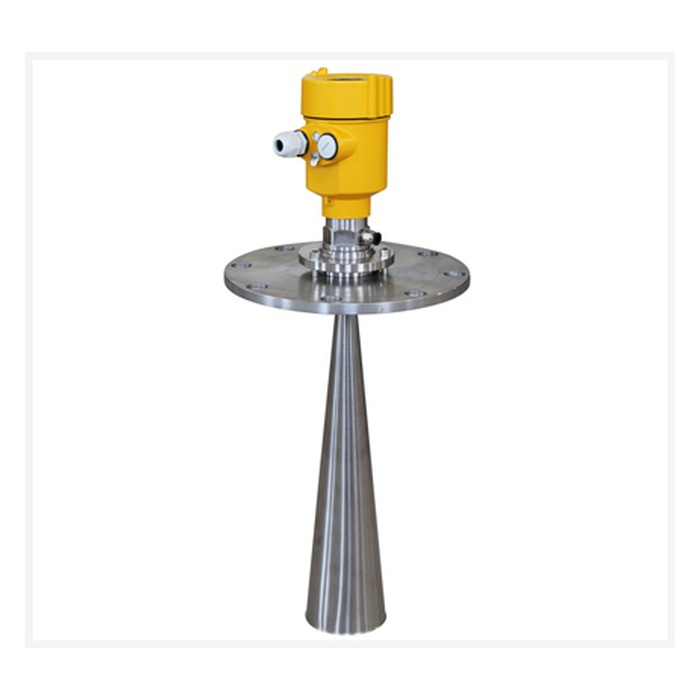
Dust, crystallization, sticky deposits and condensation can gradually accumulate on the radar antenna. As the buildup becomes more significant, it may weaken the useful echo or create additional reflections, leading to unstable readings, echo loss or incorrect level indication.
Echo strength gradually decreases
Measurement begins to jump unexpectedly
Visible dust or process buildup appears on the antenna
Persistent condensation or crystallization is present
Cleaning methods should follow the antenna material and product maintenance requirements. Soft and non-damaging cleaning methods are generally preferred. When cleaning PTFE, PFA, PVDF or other corrosion-resistant surfaces, any cleaning agent should also be checked for material compatibility.
3. How Can Maintenance Be Reduced in Dusty or Sticky Applications?
In cement, mineral powder, grain, chemical powder and sticky-liquid applications, antenna buildup is often the main maintenance concern. Reducing the risk of buildup during instrument selection and installation is generally more effective than relying on frequent cleaning later.
The mounting position should be kept away from filling streams, direct splashing and severe condensation zones where practical. Depending on the application, suitable antenna construction, flush-mounted designs, purge connections or other buildup-resistant process arrangements may also be considered.
4. What Should Be Checked First When the Reading Becomes Abnormal?
A useful first step is to identify whether the problem is a continuous offset, sudden jumping, a fixed reading or intermittent echo loss. Each symptom points toward different inspection areas.
| Observed Condition | Priority Checks |
|---|---|
| Continuous Measurement Offset | Tank height, reference plane, 0% and 100% settings, and actual installation dimensions |
| Sudden Reading Jumps | Antenna buildup, filling stream, agitation, surface movement and fixed false echoes |
| Reading Remains Fixed | Actual process level, power supply, instrument status, echo tracking and output configuration |
| Intermittent Echo Loss | Foam, condensation, dust, antenna contamination and process-surface condition |
5. Why Should the Echo Curve Be Checked During Maintenance?
Smart radar instruments often provide an echo curve, echo strength or other diagnostic information. Compared with looking only at the final level value, echo data provides more information about the relationship between the true process echo and unwanted fixed reflections.
After commissioning, it is useful to save an echo curve from a normal operating condition as a reference. If the true level echo gradually weakens later, antenna buildup, condensation or a process change can be investigated. If a new strong echo appears at a fixed distance, a new internal structure, deposit or buildup may be present.
6. Why Should Radar Parameters Be Backed Up?
After commissioning, important configuration parameters should be recorded or backed up. These may include tank height, reference plane, empty and full settings, measuring range, damping, medium settings, false-echo configuration and communication parameters.
A parameter backup makes it easier to restore the instrument after an electronics replacement, factory reset or recommissioning. It also helps identify whether a measurement problem was caused by an unintended configuration change.
7. Which Process Changes Require the Radar to Be Rechecked?
Even when the radar instrument itself is operating correctly, significant process or vessel changes can alter the echo environment and affect measurement behavior.
The measured medium is changed
Maximum or minimum operating level changes
Filling position or filling method changes
Agitators, pipes or internal structures are added
Tank or nozzle geometry is modified
Temperature, pressure or foam conditions change significantly
After these changes, the actual measurement and echo curve should be reviewed, and the medium, range and false-echo settings should be confirmed again.
8. How Should Waterproofing and Sealing Be Checked?
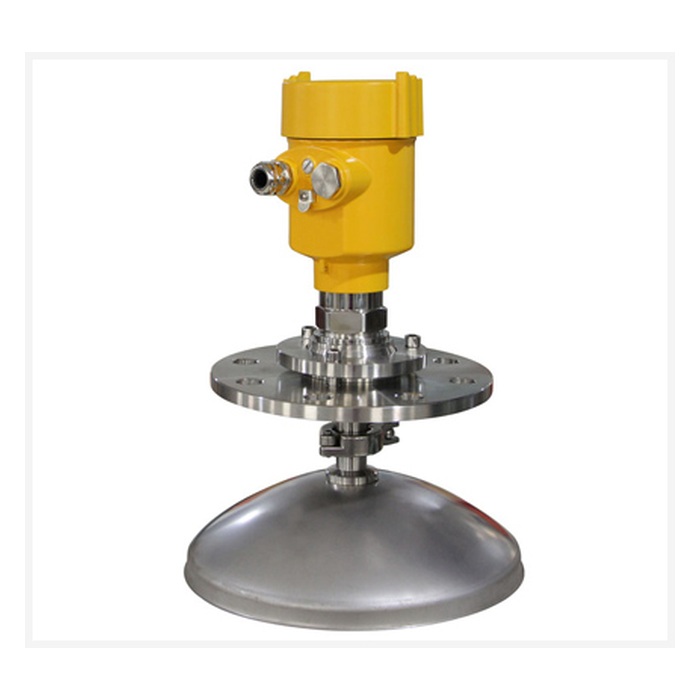
Outdoor radar transmitters may be exposed to rain, humidity and condensation. Moisture can enter through cable glands, unused cable entries or damaged seals and may cause display faults, unstable output, communication problems or electronics damage.
Routine inspection should include the housing cover, cable glands, sealing rings and plugs fitted to unused cable entries. For outdoor cable routing, a suitable drip loop can help reduce the possibility of rainwater traveling along the cable into the instrument.
If moisture or water is found inside the housing, the ingress path should be identified and the sealing condition restored before the instrument is returned to service. Display, output and communication functions should then be verified.
9. What Else Should Be Checked on the Antenna and Process Connection?
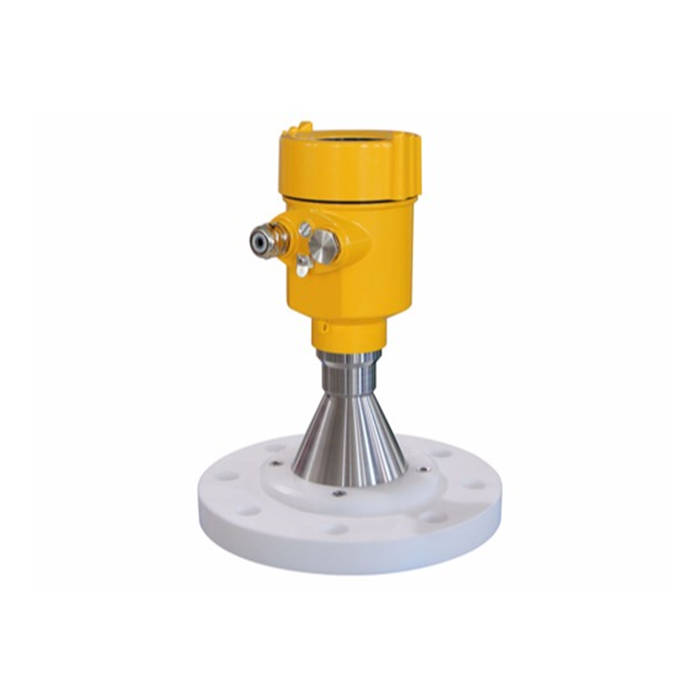
In addition to buildup, long-term inspection should include mechanical damage, deformation and corrosion of the antenna and process connection. This is especially important in chemical applications.
PTFE or PFA encapsulation for cracks or deformation
Metal antennas for visible corrosion
Flanged or threaded connections for looseness
Process seals for signs of leakage
If corrosion or material damage is found, the compatibility of the wetted materials should be reviewed against the process medium, concentration, temperature and pressure.
10. Does a Radar Level Transmitter Need Periodic Calibration?
Radar determines distance electronically and does not rely on a continuously moving mechanical measuring mechanism. For general process measurement, routine maintenance therefore usually focuses on condition checks and measurement verification rather than repeatedly readjusting the range on a fixed schedule.
The displayed level can be compared with a known process level, another reliable reference or plant operating data. The 4–20mA or digital output should also be checked against the local indication.
Applications subject to metrology requirements, safety-instrumented functions or company quality procedures should follow the specified verification, calibration or proof-test interval.
11. What Should Be Checked in the Power and Communication System?
If the local radar display is correct but the PLC, DCS or RTU value is abnormal, the electrical and communication system should be checked.
Supply voltage and terminal condition
Cable glands and wiring for moisture or damage
4–20mA output compared with local indication
RS485 address, baud rate and communication settings
Shielding, grounding and surge protection
PLC / DCS scaling and engineering-unit configuration
12. Does the Entire Tank Need to Be Cleaned Regularly for the Radar?
Tank cleaning should be based mainly on process, product and equipment-maintenance requirements. Under normal conditions, it is not necessary to clean the complete tank only for the radar level transmitter.
If heavy deposits gradually form on vessel walls, nozzles or internal structures and begin to generate significant fixed echoes inside the radar beam, the relevant deposits can be removed during planned shutdown maintenance. The echo condition should then be reviewed again.
13. Radar Level Transmitter Maintenance Checklist
| Inspection Item | What to Check |
|---|---|
| Instrument Status | Alarms, diagnostic codes and measurement trends |
| Antenna | Dust, crystallization, buildup, condensation and mechanical damage |
| Echo Condition | True level echo stability and any new fixed interference echoes |
| Sealing | Housing, cable glands, plugs and process connections |
| Output Signal | Consistency between local indication and 4–20mA, RS485 or other outputs |
| Parameter Backup | Tank height, range, damping, echo settings and communication parameters are recorded |
FAQ
Q1: Does a radar level transmitter need to be cleaned every month?
A1: No fixed cleaning interval applies to every installation. The frequency should be based on dust, buildup, crystallization and condensation conditions. Clean applications may require only periodic inspection.
Q2: Will a small amount of dust on the antenna affect measurement?
A2: Light deposits may not immediately affect measurement. As buildup increases, echo strength can gradually decrease, so signal quality and measurement trends can be used to decide when cleaning is required.
Q3: Does a radar level transmitter require periodic calibration?
A3: General process applications normally rely on condition monitoring and measurement verification. Calibration or proof testing should follow project requirements where metrology, safety or quality procedures specify an interval.
Q4: Should the instrument be replaced immediately if the radar reading starts jumping?
A4: Antenna contamination, filling streams, changing process surfaces, fixed false echoes and configuration should be checked first. The echo curve can help identify the source of the problem.
Q5: What should be checked first if water enters the radar transmitter housing?
A5: Check cable glands, housing seals, unused cable-entry plugs and cable routing to identify the ingress path. Restore the sealing condition and verify display, output and communication before returning the instrument to normal service.
Q6: Does the radar need to be recommissioned after changing the process medium?
A6: A different medium may change dielectric properties, surface behavior and echo strength. The actual reading and echo curve should be reviewed, and medium, range and echo-processing settings should be confirmed again where necessary.
Conclusion
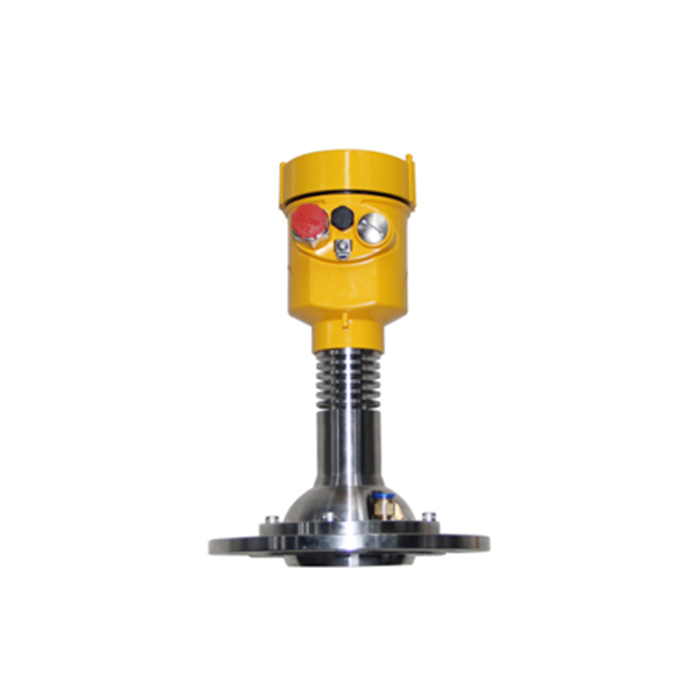
Radar level transmitter maintenance is mainly about keeping the antenna, measurement path, seals and electrical connections in good condition and using echo diagnostics to identify process changes early. Under normal conditions, frequent disassembly and repeated range adjustment are unnecessary.
Dusty, crystallizing, sticky and condensation-prone applications should use inspection and cleaning intervals based on the actual buildup rate. Outdoor and chemical applications should also include water-ingress, corrosion, process-seal and material-condition checks. Saving a normal echo curve and key configuration parameters after commissioning can significantly improve later troubleshooting efficiency.
METRAVON radar level measurement products can be integrated with industrial systems using interfaces such as 4–20mA and RS485 Modbus RTU. Proper installation, condition-based inspection, parameter backup and maintenance based on actual process conditions help improve long-term measurement stability in tanks and bulk-solid silos.