Chinese
 Spanish
 Russian
 Portuguese
 French
 German
 Indonesian
 Thai
Thai Vietnamese
 Arabic
 Italian
 Turkish
 Polish
 Japanese
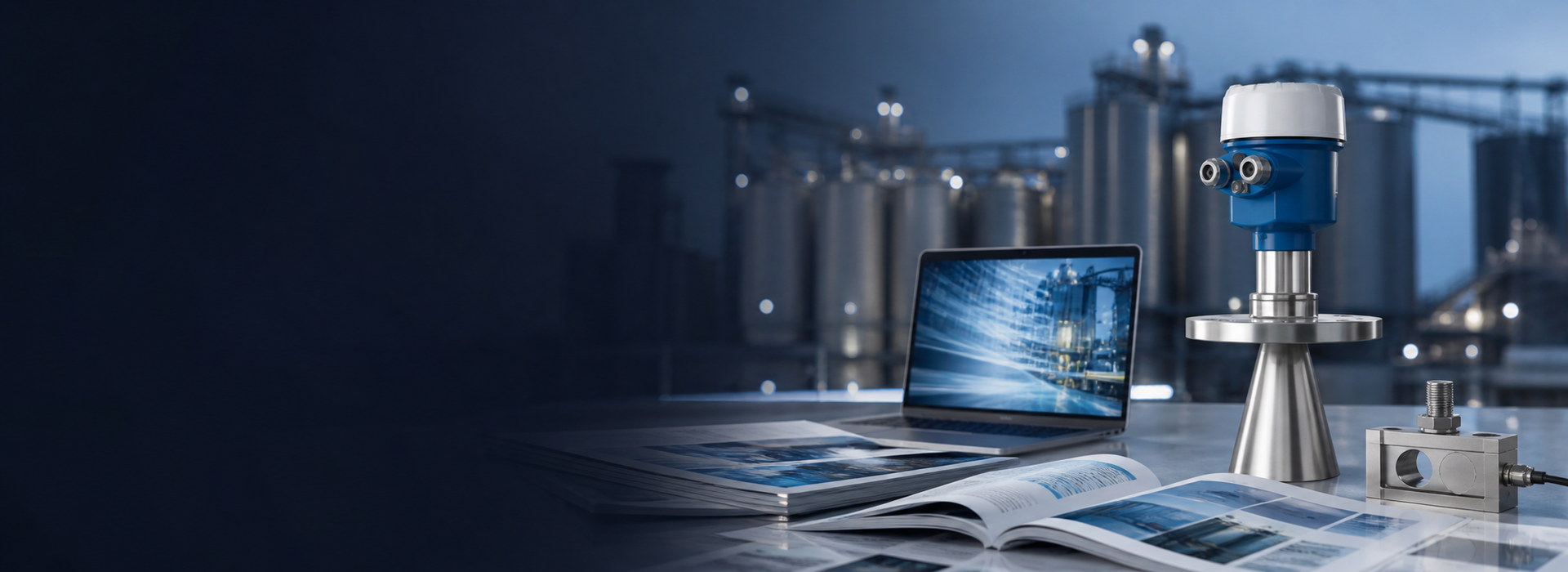
Radar level sensors are widely used in water basins, storage tanks, process vessels, wastewater systems, and bulk solids silos. The correct instrument cannot be selected from frequency, measuring range, or price alone. The most important factors are product properties, reflection strength, measuring distance, process temperature and pressure, vessel geometry, internal obstructions, and available mounting connections.
1. Start with Four Key Selection Conditions
1. Process Medium
Water, oil, acid, alkali, solvent, slurry, powder, or granules? The medium affects echo strength, antenna materials, and whether an immersed probe is appropriate.
2. Measuring Distance
Determine the maximum actual distance from the antenna reference point to the lowest level, and verify the maximum level against the instrument's near-field limitation.
3. Process Conditions
Confirm temperature, pressure, vacuum, vapor, foam, dust, agitation, and surface turbulence.
4. Installation Conditions
Check nozzle size, nozzle height, vessel diameter, internal structures, and whether an immersed probe is acceptable.
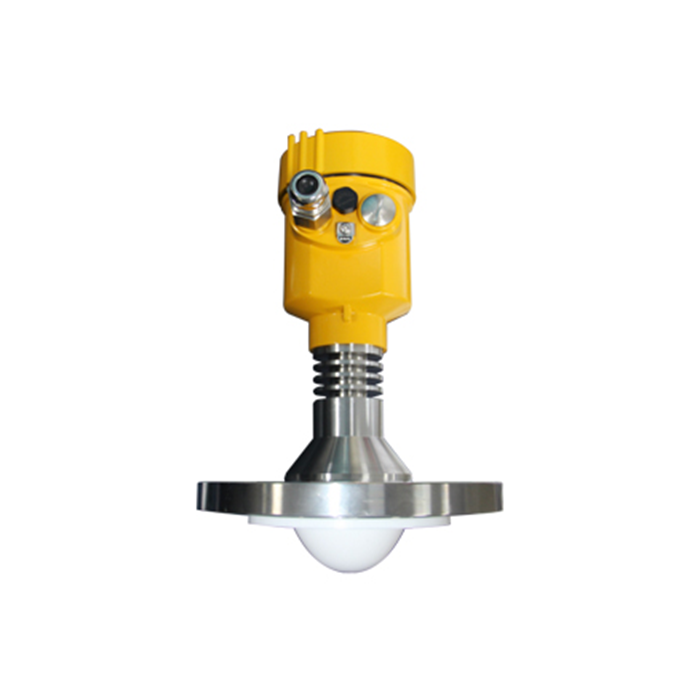
2. Why Are Media Properties the First Selection Step?
Radar level measurement depends on electromagnetic energy reflected from the product surface. The relative dielectric constant, surface condition, and physical form of the product therefore influence echo strength. In general, higher dielectric materials provide stronger reflections, while hydrocarbons and other low-dielectric liquids require more attention to antenna design, measuring range, and signal margin.
Water and Aqueous Solutions
Normally provide strong radar reflections and are generally straightforward applications for non-contact radar.
Oils and Hydrocarbons
Typically have a lower dielectric constant, so maximum range, antenna design, and available echo margin should be checked.
Viscous or Coating Products
Where heavy buildup is likely on an immersed probe, non-contact radar is often attractive.
Corrosive Media
Antenna, process connection, flange lining, and sealing materials must all be checked for chemical compatibility.
Important:There is no universal dielectric-constant threshold that determines whether every radar sensor will work. Minimum measurable dielectric conditions depend on frequency, antenna, range, probe design, and signal-processing capability.
3. Pulse Radar, FMCW Radar or Guided Wave Radar?
| Technology | Main Characteristics | Typical Applications |
|---|---|---|
| Pulse Radar | Transmits microwave pulses and determines distance from signal travel time. A mature non-contact level technology. | Conventional liquid tanks, water basins, and general process level measurement. |
| FMCW Radar | Continuously sweeps frequency and determines distance from the frequency difference between transmitted and received signals. Modern 80GHz designs can provide narrow beams. | Complex vessels, confined installations, long ranges, bulk solids, and high-performance process measurement. |
| Guided Wave Radar | Radar pulses travel along a rod, cable, or coaxial probe that is in contact with the process medium. | Low-dielectric liquids, bypass chambers, small vessels, and liquid-liquid interface measurement. |
None of these technologies is universally superior. FMCW, particularly approximately 80GHz free-space radar, is increasingly used for non-contact measurement, while guided wave radar retains important advantages in interface measurement, confined chambers, and selected low-dielectric applications.
4. Why Is 80GHz Radar Useful in Complex Vessels?
Narrow Beam
Helps avoid vessel walls, reinforcement structures, pipes, supports, and some agitator components.
Compact Antennas
Good beam focusing can be achieved with relatively small process connections.
Bulk Solids
Useful for cement, grain, mineral powder, plastic pellets, and other materials with sloped product surfaces.
Non-Contact Design
Avoids an immersed probe that could become heavily coated by viscous or crystallizing products.
The main advantage of 80GHz is its short wavelength and narrow beam capability, rather than a general claim of greater penetration. Foam, severe condensation, low-dielectric products, and other difficult conditions still require application-specific evaluation.
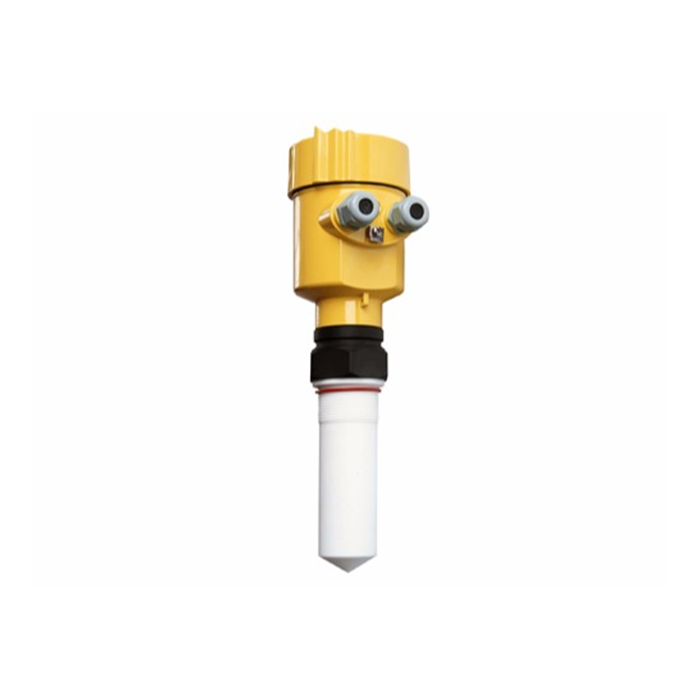
5. How Should Range, Near-Field Distance and Accuracy Be Selected?
Maximum Measuring Distance
Use the actual maximum distance from the antenna reference point to the lowest liquid or solids level, not only the nominal vessel height.
Near-Field Limitation
Different radar sensors have different minimum measurable distances. Values such as 0.08 m or 0.3 m should not be applied universally.
Measurement Accuracy
General process control, batching, and inventory or custody-related applications have different accuracy requirements and should use the appropriate instrument class.
A fixed 10% range margin is not a universal requirement. Selection should instead account for the actual mounting point, maximum and minimum level, abnormal operating conditions, and available signal margin.
6. Installation Position Can Be More Important Than Nominal Accuracy
Many field problems are caused by installation rather than instrument accuracy. A high-accuracy radar can still produce unstable readings if its beam directly strikes an inlet stream, beam, pipe, or agitator.
Avoid Filling Streams
Do not aim the radar directly into falling liquid or bulk material.
Avoid Internal Obstructions
Check the beam path for beams, pipes, heating coils, supports, and agitators.
Check the Mounting Nozzle
Nozzle diameter and height must match the antenna requirements to avoid strong false echoes.
Check Antenna Direction
Liquid applications normally target the surface, while solids require consideration of filling position and material slope.
No universal wall distance:A fixed requirement such as 200 mm or 300 mm from the vessel wall is not applicable to every radar sensor. Frequency, antenna size, vessel diameter, and beam angle determine the acceptable mounting position.
7. How to Select Radar for High Temperature, Pressure and Corrosive Media
High Temperature
Confirm process and ambient temperatures together with antenna, seal, and electronics temperature ratings.
High Pressure or Vacuum
Check process connection, flange, seal design, and pressure rating rather than relying only on the radar measuring principle.
Corrosive Media
Select PTFE, PFA, 316L, or other compatible materials according to the actual chemical process.
Hazardous Areas
Explosion-protection certification must match the project and hazardous-area classification. IP enclosure rating is not a substitute for Ex certification.
8. Radar Level Sensors for Water and Wastewater Applications
Water basins, wastewater tanks, stormwater systems, wet wells, and pumping stations are common applications for non-contact radar. Unlike submerged pressure sensors, radar does not remain in continuous contact with the water. Unlike ultrasonic measurement, radar uses electromagnetic waves and does not require temperature compensation for changes in gas-phase sound velocity.
Wastewater Treatment
Wastewater basins, settling tanks, lift stations, and wet-well level control.
Stormwater Monitoring
Stormwater basins, culverts, underground structures, and urban flood monitoring points.
Hydrology
Rivers, channels, reservoirs, and other non-contact water-level monitoring applications.
Industrial Water
Cooling-water basins, fire-water tanks, process-water tanks, and storage facilities.
The radar should have a clear view of the water surface and should be positioned away from strong inlet flow, waterfalls, protruding concrete structures, and other fixed obstructions. Outdoor installations should also consider weather protection, mounting stability, surge protection, and cable protection.
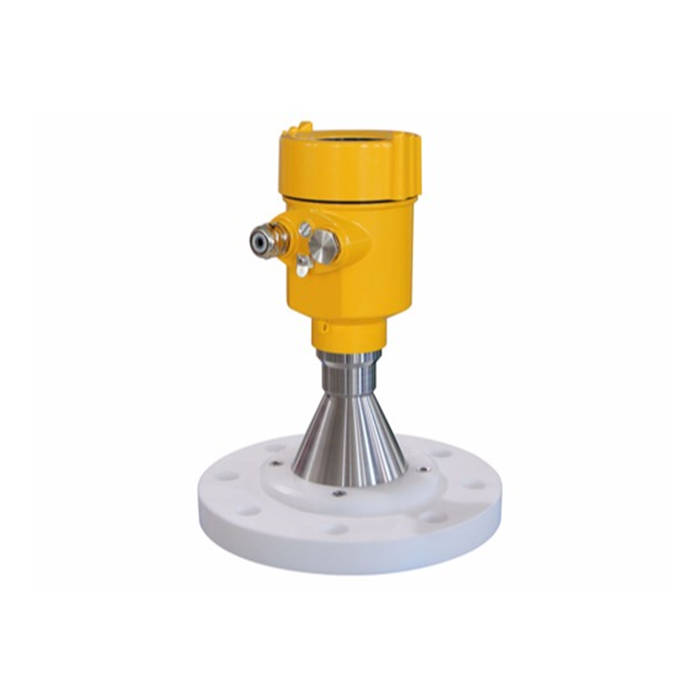
9. Which Output Signal Should Be Selected?
4–20 mA
Common for PLC, DCS, and RTU analog inputs in industrial process systems.
4–20 mA + HART
Adds parameter configuration, diagnostics, and selected remote maintenance functions.
RS485 Modbus
Useful for data loggers, IoT gateways, and multi-sensor digital monitoring systems.
Other Industrial Networks
Large process projects should match the communication protocol to the plant control architecture.
10. Quick Radar Selection Guide
| Application | Technology Normally Evaluated First |
|---|---|
| Standard water or wastewater basin | Non-contact pulse or FMCW radar |
| Narrow vessel with internal obstructions | 80GHz narrow-beam FMCW radar |
| Cement, grain, or mineral powder silo | 80GHz non-contact radar |
| Viscous, crystallizing, or strongly coating liquid | Normally evaluate non-contact radar first |
| Low-dielectric liquid | Both free-space and guided wave radar can be evaluated; confirm actual echo margin |
| Oil-water interface | Guided wave radar |
| Narrow bypass chamber | Guided wave radar |
11. What Information Is Required Before Purchasing a Radar Level Sensor?
Product
Medium name
Liquid or solid
Viscosity
Corrosiveness
Coating or crystallization tendency
Vessel
Height
Diameter
Nozzle size
Nozzle height
Internal structures
Process Conditions
Temperature
Pressure
Vacuum
Foam
Vapor
Dust
Electrical and Project Requirements
Power supply
4–20 mA/HART or RS485
Accuracy requirement
Hazardous-area requirement
Tank photos or drawings
FAQ: Radar Level Sensor Selection
1. What dielectric constant is required for non-contact radar?
There is no universal threshold for all radar instruments. Lower dielectric products generally provide weaker reflections, so range, antenna design, radar frequency, and instrument sensitivity must be considered. Guided wave radar can also be evaluated for very low-dielectric products.
2. Should an 80GHz radar always be used for a water basin?
Not necessarily. 80GHz is particularly useful where the installation space is restricted or a narrow beam is needed to avoid basin structures. Other suitable non-contact radar technologies can also be used for conventional open-water applications.
3. Which radar is suitable for a tank with an agitator?
First determine whether the mounting position can keep the radar beam away from the agitator shaft and blades. 80GHz narrow-beam radar can reduce interference, while guided wave radar may also be considered in selected confined vessels.
4. What is the typical blind zone of a radar level sensor?
There is no universal value. Pulse radar, FMCW radar, and guided wave radar have different near-field limitations. The maximum level should always be checked against the specification of the selected model.
5. Is FMCW radar always more accurate than pulse radar?
Final accuracy cannot be determined from the ranging principle alone. FMCW offers strong distance resolution and signal-processing capability, but actual accuracy also depends on the antenna, electronics, algorithm, range, and installation quality.
6. How should radar be selected for corrosive media?
Non-contact measurement is often attractive, but PTFE, PFA, 316L, or other materials should be selected according to the actual chemical compatibility requirements. Seals, temperature, and pressure ratings must also be checked.
7. Does a radar level sensor require frequent calibration?
Radar normally does not require frequent liquid-standard calibration like an analytical sensor, but the empty distance, measuring range, and output settings must be configured correctly. Critical process or metering applications should be periodically verified according to the project quality system.
8. What is the most common radar selection mistake?
Selecting only by maximum range and price while ignoring the process medium, mounting nozzle, internal obstructions, maximum level, and antenna beam path is a common cause of false echoes and unstable field performance.
9. Is radar suitable for urban flood monitoring?
Yes. Non-contact radar can be used in culverts, underground spaces, stormwater infrastructure, and low-lying flood monitoring points. Mounting, environmental protection, surge protection, communication, and measuring range must also be considered.
10. What information does METRAVON require for radar selection?
Please provide the medium name, maximum measuring distance, maximum level, temperature, pressure, tank or basin dimensions, mounting connection, internal structures, output requirements, hazardous-area requirements, and site photos.
Conclusion
Selecting the right radar level sensor is not simply a choice between 26GHz and 80GHz or between pulse and FMCW. The starting point should be the process medium, measuring range, temperature and pressure, vessel geometry, installation conditions, and control-system requirements.
For conventional water basins, tanks, and general non-contact applications, pulse or FMCW radar can be selected according to range and mounting conditions. For complex vessels, confined spaces, and bulk solids silos, 80GHz narrow-beam FMCW radar is often worth evaluating. For low-dielectric liquids, interface measurement, and selected bypass-chamber applications, guided wave radar can provide additional advantages.
METRAVON recommends completing a process and installation review before the final quotation rather than selecting a sensor from maximum range alone. Complete vessel, medium, and mounting information can significantly reduce commissioning problems and the risk of replacing the instrument after installation.