Chinese
 Spanish
 Russian
 Portuguese
 French
 German
 Indonesian
 Thai
Thai Vietnamese
 Arabic
 Italian
 Turkish
 Polish
 Japanese
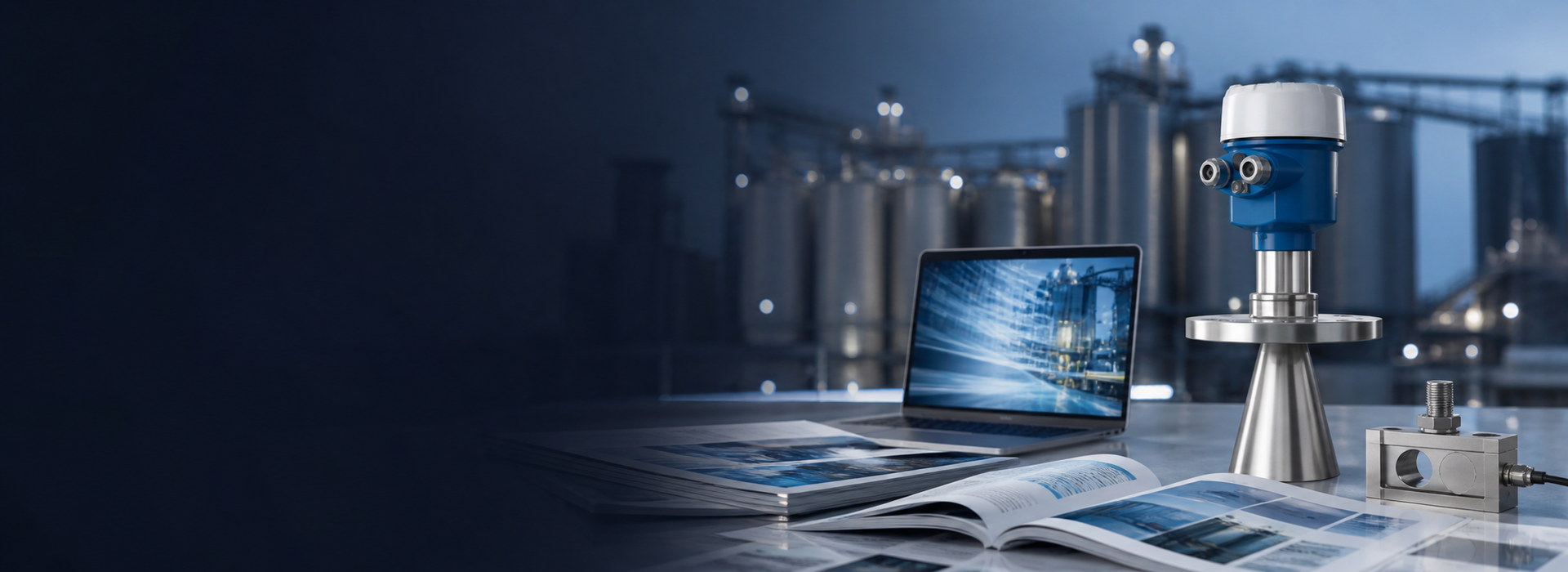
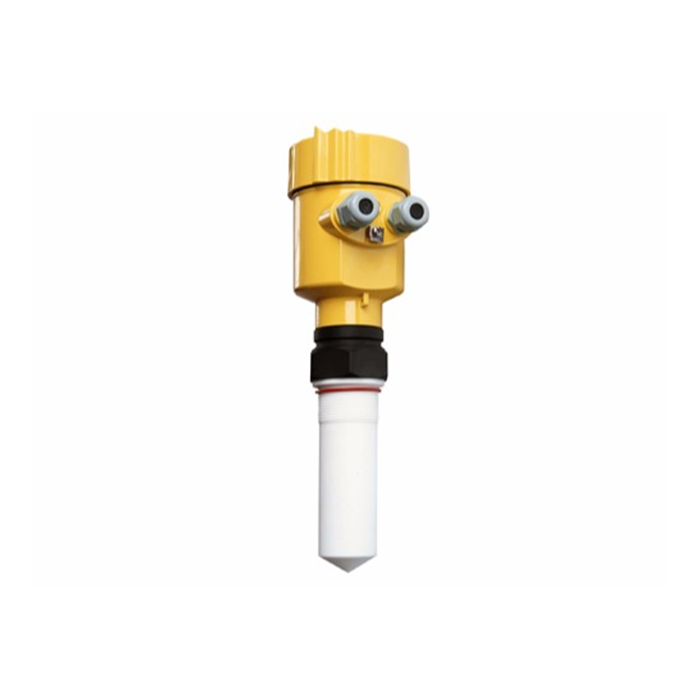
FMCW free-space radar and guided wave radar are both widely used for continuous industrial level measurement, but their signal propagation methods are fundamentally different.FMCW radar transmits frequency-modulated electromagnetic waves through free space without contacting the process medium, while guided wave radar directs microwave pulses along a rod, cable, or coaxial probe.Selection should therefore be based on media properties, dielectric constant, vessel geometry, foam, buildup, measuring range, and interface measurement requirements rather than frequency alone.
1. Main Difference Between FMCW Radar and Guided Wave Radar
FMCW Free-Space Radar
Signal path: Antenna → Free space → Product surface → Reflected echo
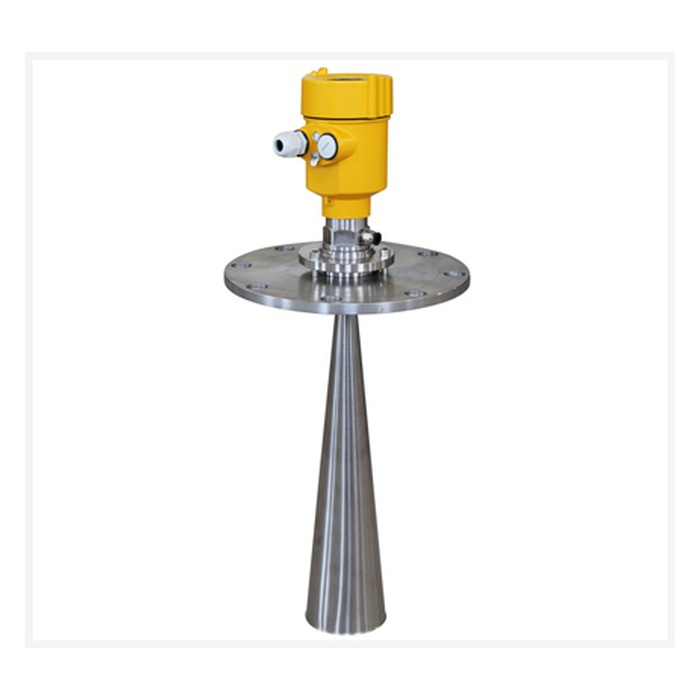
A non-contact measurement technology. Modern 80GHz FMCW instruments can provide narrow beam focusing for liquids, powders, granules, and vessels with complex internal structures.
Guided Wave Radar (GWR)
Signal path: Transmitter → Rod/cable/coaxial probe → Product surface → Returned echo
A contact measurement technology normally based on time-domain reflectometry, suitable for liquid level, selected solids applications, and liquid-liquid interface measurement.
2. How Does FMCW Radar Level Measurement Work?
FMCW stands for Frequency Modulated Continuous Wave. The instrument continuously transmits a radar signal whose frequency changes with time. The reflected signal returns to the antenna after a propagation delay. Because the transmitted frequency is continuously changing, a frequency difference Δf exists between the current transmitted signal and the delayed received signal. The electronics analyze this difference to determine the distance to the product surface.
Important:FMCW is a ranging principle, not a frequency band. Many modern industrial radar instruments use approximately 80GHz FMCW technology, but FMCW itself can operate at different radar frequencies.
3. Why Is 80GHz FMCW Radar Widely Used?
Narrow Beam
High frequency combined with a suitable antenna can provide a narrow beam that helps avoid vessel walls, pipes, supports, and agitators.
Compact Process Connections
Good focusing can be achieved with relatively compact antennas, which is useful when tank-top space or nozzle size is limited.
Bulk Solids Measurement
Suitable for cement, mineral powder, grain, plastic pellets, and other bulk solids where narrow beam focusing reduces interference.
Non-Contact Design
No probe is immersed in the product, which is useful for corrosive, viscous, crystallizing, or coating media.
80GHz does not mean that every instrument has a fixed 3° beam angle or ±1mm accuracy. Beam angle, accuracy, range, process temperature, and pressure ratings depend on the specific antenna and instrument design.
4. How Does Guided Wave Radar Work?
Guided wave radar, also called GWR or TDR radar, launches high-frequency microwave pulses into a metal rod, cable, or coaxial probe. The pulse travels along the probe and is partially reflected when it reaches a point where the dielectric constant changes.
The instrument measures the travel time of the reflected pulse and calculates the distance from the process connection to the product surface. Because the microwave energy is guided along the probe, the measuring path is concentrated and can be less sensitive to vessel geometry, turbulence, and some foam conditions.
5. FMCW Free-Space Radar vs. Guided Wave Radar
| Comparison | FMCW Free-Space Radar | Guided Wave Radar |
|---|---|---|
| Measurement method | Non-contact | Contact |
| Measurement principle | Frequency-difference ranging | Time-domain reflectometry |
| Signal propagation | Through free space | Along a rod, cable, or coaxial probe |
| Contact with medium | No | Probe contacts the product |
| Low-dielectric media | Echo strength and range must be checked | Some designs offer strong performance on low-dielectric products |
| Foam | Application dependent | Often advantageous with light to moderate foam, but application confirmation is still required |
| Buildup | No immersed probe, although antenna condensation or contamination may still affect performance | Heavy coating on the probe may affect the echo |
| Internal obstructions | 80GHz narrow beams can reduce interference | Guided propagation normally reduces influence from surrounding structures |
| Interface measurement | Not normally the primary application | Strong advantage for suitable liquid-liquid interfaces |
| Bulk solids | Widely used, particularly with 80GHz solids radar | Possible with selected models, subject to probe loading and buildup |
6. When Should FMCW Free-Space Radar Be Evaluated First?
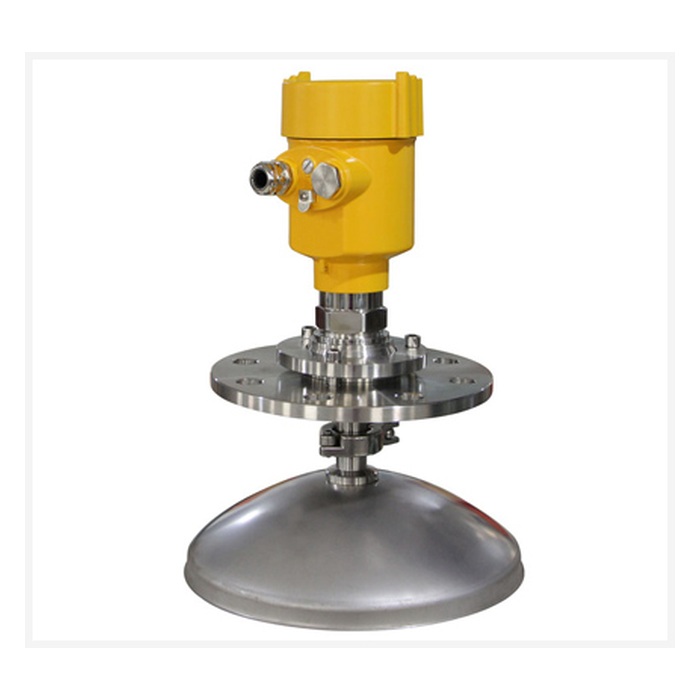
Viscous or Coating Media
Non-contact radar is attractive when a probe should not remain immersed in a medium that readily coats or crystallizes.
Bulk Solids
Cement, mineral powder, grain, fly ash, aggregates, and pellets are typical free-space radar applications.
Complex Vessel Internals
An 80GHz narrow beam is useful where supports, coils, pipes, or nearby vessel walls must be avoided.
Corrosive Products
Non-contact construction reduces immersed components, although antenna and process-connection material compatibility must still be checked.
7. When Should Guided Wave Radar Be Evaluated First?
Low-Dielectric Liquids
For certain hydrocarbons, oils, and organic solvents with weak reflections, high-sensitivity GWR with the correct probe can be considered.
Liquid-Liquid Interface
Oil/water and other stratified liquids with sufficient dielectric contrast are typical guided wave radar applications.
Narrow Chambers and Bypasses
Rod and coaxial probes can guide microwave energy through a confined measuring space.
Turbulence and Some Foam Applications
Guided propagation can provide stable echoes in many turbulent or foamy applications, although foam properties must still be considered.
8. FMCW or Guided Wave Radar for Foam?
Foam should not be classified simply as present or absent. Its effect depends on thickness, density, liquid content, and dielectric properties.
Guided wave radar can often continue along the probe and identify the liquid surface beneath light or moderate foam. However, very dense or high-dielectric foam may generate its own reflection, causing the instrument to detect the foam surface or another interface.
Free-space FMCW radar must also be evaluated according to the specific medium and foam structure. It is not technically correct to assume that 80GHz automatically provides greater penetration through all foam.
9. Why Is Guided Wave Radar Useful for Interface Measurement?
When a radar pulse reaches the surface of the upper liquid, part of the signal is reflected while the remaining energy continues down the probe. If a second liquid with a sufficiently different dielectric constant is present below, another reflection can occur at the liquid-liquid interface.
By identifying both echoes, the transmitter can determine the total level and the interface position. Oil/water and low-dielectric organic liquid/water systems are common examples.
Note:Not every two-liquid system is suitable for interface measurement. Upper-layer dielectric constant, dielectric contrast, emulsion thickness, and probe design all affect performance.
10. Quick Selection Guide
| Application | Technology Normally Evaluated First |
|---|---|
| Cement, grain, mineral powder, or other bulk solids | 80GHz FMCW free-space radar |
| Viscous or strongly coating liquid | FMCW free-space radar |
| Many internal obstructions | 80GHz narrow-beam radar or GWR depending on available installation space |
| Oil/water interface | Guided wave radar |
| Low-dielectric liquid | Both can be evaluated; echo margin and probe/antenna design are important |
| Heavy product buildup on immersed probes | Normally evaluate non-contact FMCW radar first |
| Narrow bypass chamber | Guided wave radar |
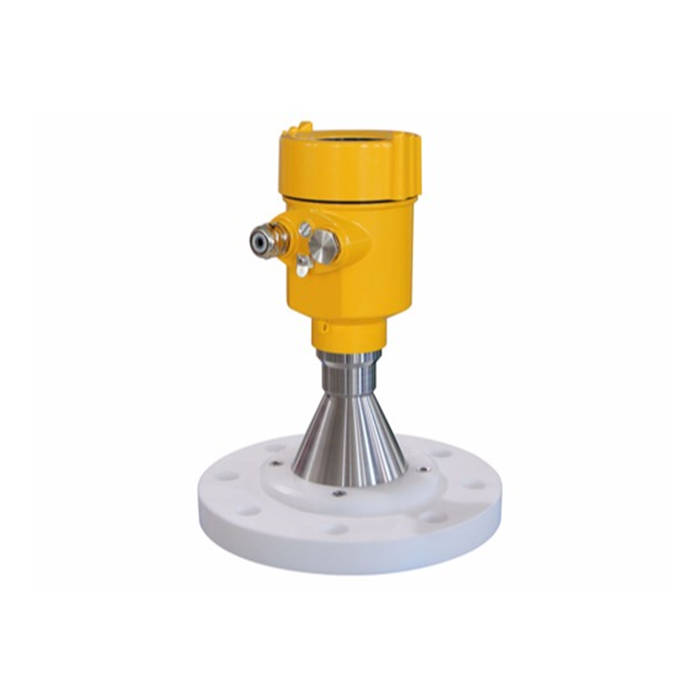
11. Information Required Before Selection
Medium
Product name
Liquid or solid
Dielectric properties
Viscosity
Crystallization or coating tendency
Vessel
Tank height
Diameter
Nozzle size
Internal structures
Agitator or bypass chamber
Process Conditions
Temperature
Pressure
Vapor
Foam
Dust
Surface turbulence
Measurement Requirements
Range
Accuracy
Interface measurement
4–20mA/HART or RS485
Hazardous-area requirements
FAQ
1. Is FMCW radar always 80GHz?
No. FMCW describes a frequency-modulated continuous-wave ranging principle, not a frequency band. Approximately 80GHz FMCW radar is widely used in modern industrial level measurement, but FMCW can operate at different frequencies.
2. What is the difference between FMCW and pulse radar?
Pulse radar normally determines distance from the round-trip travel time of radar pulses. FMCW continuously sweeps frequency and determines distance from the frequency difference between transmitted and received signals. Both can provide reliable industrial level measurement.
3. Does every guided wave radar require a metal launch plate?
No. Installation requirements depend on the probe, process connection, and transmitter design. A fixed-size metal plate should not be treated as a universal GWR requirement.
4. Can guided wave radar measure the liquid level beneath foam?
In many light to moderate foam applications it can, but performance depends on the dielectric properties and density of the foam. Dense foam may generate its own reflection.
5. Can 80GHz radar measure low-dielectric liquids?
It can be evaluated, but low dielectric constant normally produces a weaker surface reflection. Measuring range, antenna design, product conditions, and transmitter sensitivity must therefore be considered.
6. Is guided wave radar suitable for oil-water interface measurement?
Yes. Oil-water and other stratified liquids with sufficient dielectric contrast are common GWR interface applications. Thick emulsion layers can make interface detection more difficult.
7. Which radar is better for bulk solids?
Large cement, mineral powder, grain, and similar silos normally favor 80GHz free-space radar. GWR can be used in selected solids applications, but probe loading, abrasion, and buildup must be considered.
8. Which technology is better for high-viscosity liquids?
If the product is likely to create heavy buildup on an immersed probe, non-contact FMCW radar is normally evaluated first. Guided wave radar may still be appropriate where viscosity is moderate and interface measurement is required.
9. What information does METRAVON need to select FMCW or guided wave radar?
Please provide the medium, measuring range, dielectric properties, temperature, pressure, foam, buildup, vessel structure, nozzle size, and whether interface measurement is required.
Conclusion
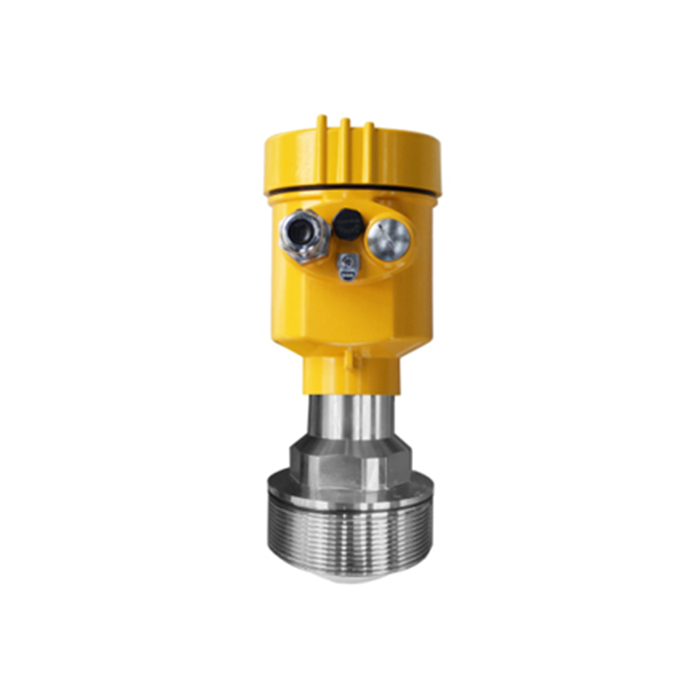
The main strengths of FMCW free-space radar are non-contact measurement, narrow beam focusing, long measuring range, and broad suitability for solids and complex vessels. Guided wave radar provides a defined microwave path along the probe and offers particular advantages for low-dielectric media, confined geometries, and liquid-liquid interface measurement.
The two technologies are complementary rather than direct replacements. 80GHz FMCW radar is often evaluated first for viscous or coating media, long ranges, and bulk solids, while guided wave radar is particularly useful for interface measurement, selected low-dielectric liquids, bypass chambers, and geometrically confined applications.
METRAVON recommends confirming the process medium, range, dielectric properties, temperature, pressure, foam, buildup, vessel internals, and available process connection before selecting the radar technology.