


 Chinese
 Spanish
 Russian
 Portuguese
 French
 German
 Indonesian
 Thai
 Vietnamese
 Arabic
 Italian
 Turkish
 Polish
 Japanese


A radar level meter acceptance record should let another technician reconstruct what was installed, what was tested and what remains unproven. A screen photograph showing a plausible number cannot answer those questions.
Agree the Evidence Before Commissioning Starts
Separate real-process tests from electronic simulation. A simulated output can demonstrate a receiver channel, scaling and an alarm action; it does not show that the radar identifies the liquid surface. If the vessel cannot reach the planned high level safely, record that limitation rather than describing the complete range as accepted.
Build a Radar Level Meter Acceptance Record Around Five Evidence Sets
| Record | Keep | Purpose |
|---|---|---|
| Identity | Tag, serial number, exact electronics, antenna and approved drawing revision. | Match later spare parts and documents to the installed version. |
| Geometry | Reference plane, nozzle dimensions, empty distance and measured operating limits. | Explain offsets and preserve the proven mounting arrangement. |
| Measurement | Reference method, actual level, process state and saved echo diagnostics. | Show whether the correct surface was tracked under each tested condition. |
| Signal path | Instrument variable, output, PLC input, scaling and display result. | Locate conversions and identify where an error first appears. |
| Exceptions | Untested conditions, deviations, temporary overrides and their disposition. | Prevent an incomplete test from becoming an unrestricted operating claim. |
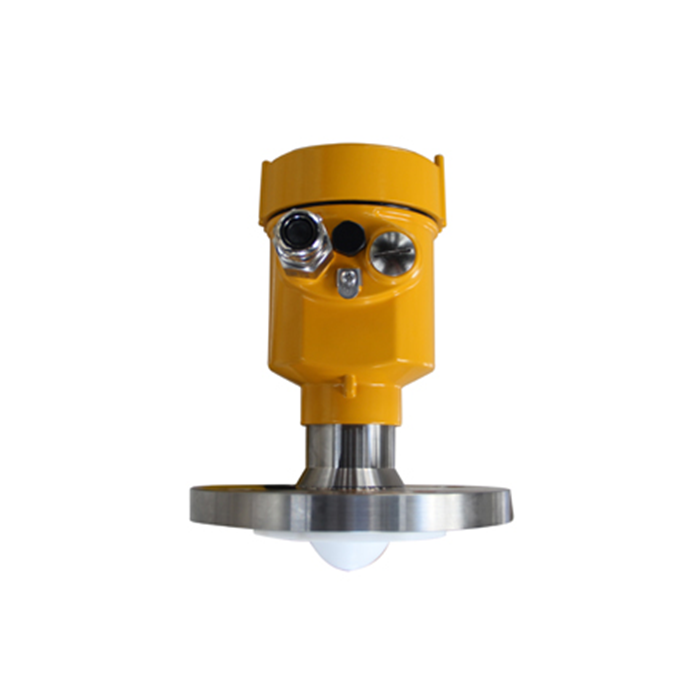
For a METRAVON MV-RD12 installation, record whether the delivered electronics are 4-20 mA/HART or the separately powered RS485 option. Listing both interfaces from a family page is not a description of the installed instrument. Attach the applicable terminal and communication documentation.
Record Results That Can Be Compared Later
For each measurement check, save the time, reference method, reference uncertainty where known, radar distance and the displayed engineering value. Describe filling, settling, mixing or cleaning conditions. A disagreement smaller than an uncertain reference does not establish the instrument's accuracy; agree the comparison method and acceptance criterion in advance.
Use the datum and range setup to document conversions. For serial integration, retain the tag mapping and receiver timeout behaviour. For analogue integration, retain applied test values and corresponding PLC raw values. Preserve units alongside numbers.
Close Out the Tests, Not Just the Form
Verify alarm and failure indication under the approved test plan, including any delay introduced by damping. Record which physical or simulated condition produced each response. Restore normal settings and account for bypasses before operations takes responsibility.
Store the as-left parameter export, configuration revision and diagnostic files with the asset. A later change should reference the previous version and its reason. If a missing high-level test is deferred, give it a defined operating restriction and owner rather than leaving an unsigned note in a commissioning folder.
Handover Questions
Q1. Is a factory calibration document enough for installed acceptance?
It supports the instrument's documented test condition, but does not verify the site's geometry, echo selection or downstream scaling. Retain it alongside the installation tests rather than replacing them.
Q2. Should an unchanged reading be treated as a successful communications test?
No. Demonstrate fresh data and the expected loss-of-update indication. A held value can look correct even when its source has stopped communicating.
Summary
Accept only the conditions supported by recorded evidence. Request an acceptance-scope review with the proposed reference method and test limits before arranging site commissioning.
