


 Chinese
 Spanish
 Russian
 Portuguese
 French
 German
 Indonesian
 Thai
 Vietnamese
 Arabic
 Italian
 Turkish
 Polish
 Japanese


A radar level meter maintenance interval should reflect observed deterioration and the consequence of losing the measurement. Non-contact operation removes an immersed probe from the process; it does not remove antenna deposits, seal damage, cable faults or changes to the installation.
Start With the Task, Not an Annual Calendar Entry
Separate visual inspection, antenna cleaning, functional checks and any required proof tests. Their intervals need not be identical. A clean housing does not prove the output and alarm chain, while a successful electronic simulation does not reveal a coated antenna.
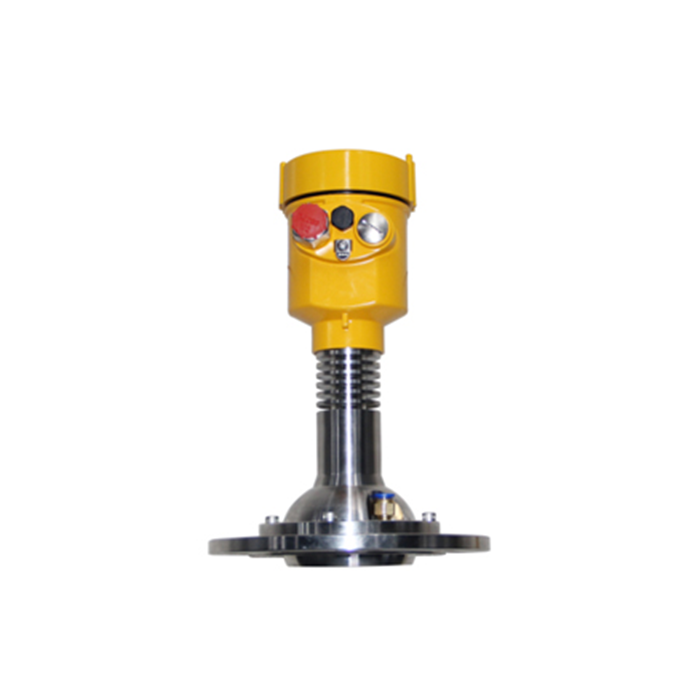
For the MV-RD21 bulk-solids radar, establish an accessible inspection method for the lens and mount. Record material, moisture and filling conditions alongside diagnostic observations. Comparing a quiet settled silo with a dusty filling period can otherwise make a normal process change look like progressive deterioration.
Adjust the Radar Level Meter Maintenance Interval From Evidence
| Finding | Action | Interval decision |
|---|---|---|
| Rapid deposits | Relate coating growth to lost-echo events and the installation position. | Shorten observation and address the cause rather than normalising repeated failure. |
| Water entry | Repair the identified path and assess affected electrical parts. | Reinspect after comparable exposure before returning to the old schedule. |
| Stable condition | Compare several inspections under representative service. | Consider a documented extension within equipment and site requirements. |
| Process change | Review new material, filling arrangement, temperature or internal structures. | Treat the previous interval as unproven for the changed duty. |
Use Diagnostics the Delivered Instrument Actually Provides
Save the available echo curve, selected distance and fault history as a baseline. Do not specify an automatic maintenance alarm based on a diagnostic register until its availability and meaning have been confirmed for the electronics. Where detailed trends are unavailable, structured inspection and operating-event records still provide useful evidence.
Inspect covers, glands, cable support and mount alignment without unnecessarily opening a sound process seal. Before cleaning, confirm the method is compatible with the lens, seal and contamination. Abrasive tools or an unsuitable solvent can turn a maintenance visit into damage.
Leave a Reusable As-Found and As-Left Record
Record what prompted the work, the condition before intervention and the result afterwards. Preserve settings unless a documented reason requires a change. If an antenna is removed, verify its restored orientation and reference before releasing the reading to operations.
Link repeat faults to the installation review rather than repeatedly resetting the instrument. A commissioning evidence record provides the baseline for that comparison. Protective functions must retain their separately specified testing requirements; a routine cleaning visit does not replace them.
Maintenance Questions
Q1. Does a stable display justify extending the interval?
Not alone. Verify that it represents fresh valid data, and review physical condition and faults during difficult operating periods. A retained value can look stable while the measurement is unavailable.
Q2. Should routine work include a factory reset?
No. Resetting can erase useful evidence and configuration. Back up and compare first, and repeat affected acceptance tests if a justified change is made.
Summary
Schedule each maintenance task from its risk and observed condition, with a reason for every interval change. Request a serviceability review with deposit photographs and operating records if cleaning or failures recur.
