


 Chinese
 Spanish
 Russian
 Portuguese
 French
 German
 Indonesian
 Thai
 Vietnamese
 Arabic
 Italian
 Turkish
 Polish
 Japanese

Surface velocity to mean velocity conversion is a site-calibration task. Radar observes motion over a region of the water surface, whereas discharge depends on the velocity distribution through the entire wetted cross-section. Multiplying every reading by a customary constant can produce a convincing trend with a persistent flow bias.
Surface Velocity to Mean Velocity: Define the Quantities
Let Vs be the radar surface-velocity reading, Aref the surveyed wetted area at the reference water level, and Qref an independently measured discharge. The corresponding section mean is Vmean = Qref / Aref. A candidate multiplier is k = Vmean / Vs, provided Vs is valid and sufficiently far from zero for the comparison to be meaningful.
This algebra defines a comparison; it does not prove that k stays constant as depth or gate position changes. A calibration may need a relationship that depends on operating conditions. Select its form from the field evidence and retain conditions under which the conversion is not valid.
Collect Paired Observations, Not Unrelated Spot Readings
| Record | Include | Purpose |
|---|---|---|
| Hydraulics | Level, gates, pumps, backwater and visible surface condition. | Identify changes in the velocity distribution or radar target. |
| Reference | Discharge method, wetted section and measurement uncertainty. | Establish what the calibration is being compared against. |
| Radar data | Velocity, status, aiming geometry and averaging period. | Use valid readings representative of the same measurement interval. |
| Validation | Independent observations not used to fit the relationship. | Test prediction rather than merely reproducing calibration points. |
Synchronize the time windows when comparing the radar with a traverse or another discharge reference. During a changing flow, a single radar snapshot may not represent the conditions averaged by the reference measurement. Record the clock basis and reject comparisons whose timing cannot be reconciled.
Keep the Sensor Limits Separate From the Conversion Error
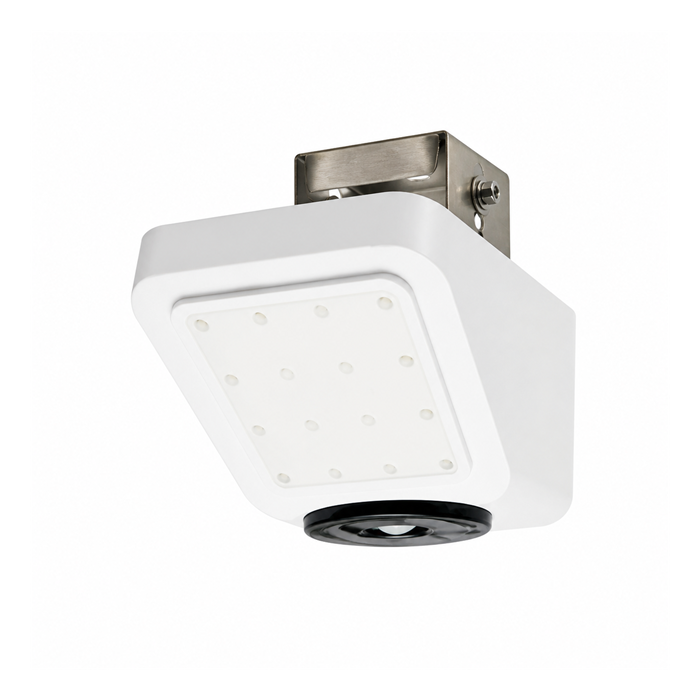
The MV-RD2480 publishes a surface-velocity range of 0.10-25 m/s. A conversion fitted to valid readings does not extend that measurement range. Verify the installed aiming arrangement and instrument settings before attributing a disagreement to the coefficient.
Assess the final discharge error as well as the velocity comparison. An incorrect area model can distort Qref / Aref and cause the conversion to absorb a geometry mistake. Review the survey and water-level datum first, then keep geometry revisions separate from velocity-calibration revisions.
Calibration Questions
Q1. Can a multiplier from another channel be reused?
It can be a hypothesis to test, not an accepted setting. Bed roughness, section shape, the sampled surface region and downstream controls affect the comparison. Use independent measurements at the new site before relying on the calculated discharge.
Q2. When should an established conversion be reviewed?
Review it after changes to the sensor position, channel bed, gate operation or hydraulic regime, and when reference checks show unexplained drift. Mark data outside the validated conditions rather than extrapolating silently through floods or backwater states.
Summary
A useful conversion has paired field observations, independent validation and stated limits. Send the section survey, radar mounting arrangement and available reference records with a flow-measurement enquiry; a generic surface-to-mean coefficient cannot replace that evidence.
