Chinese
 Spanish
 Russian
 Portuguese
 French
 German
 Indonesian
 Thai
Thai Vietnamese
 Arabic
 Italian
 Turkish
 Polish
 Japanese
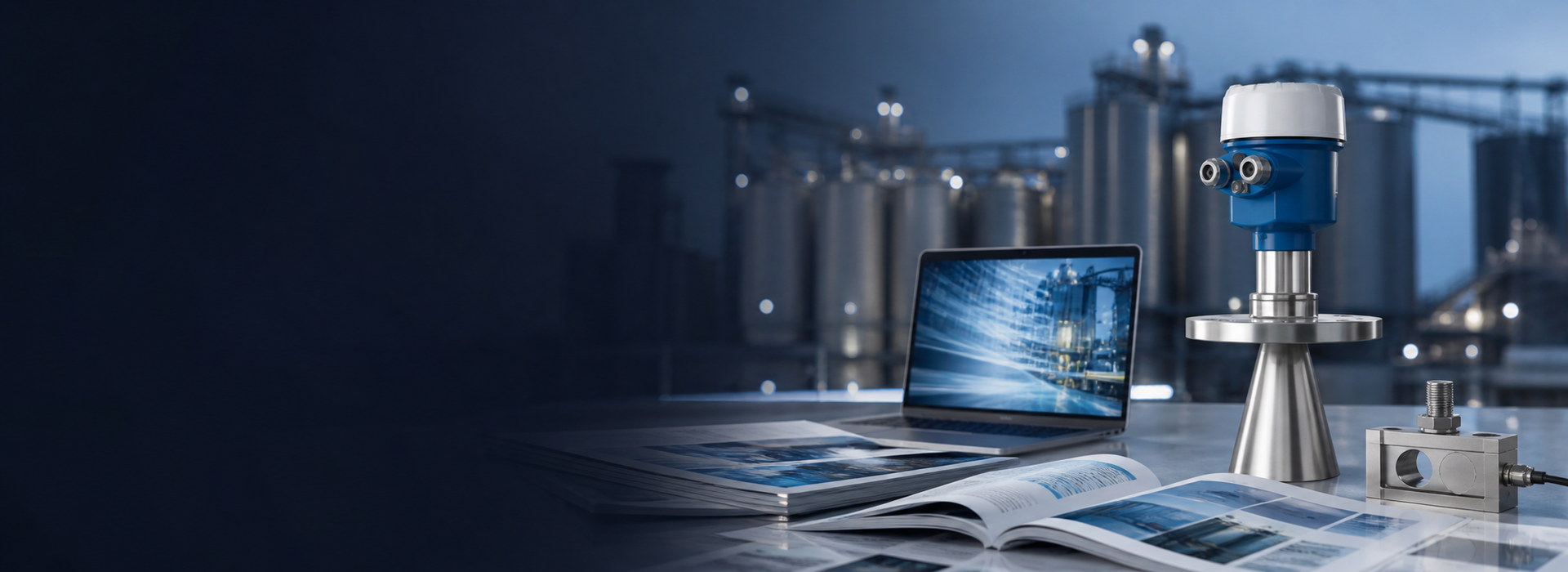
What Is an 80 GHz Radar Level Transmitter?
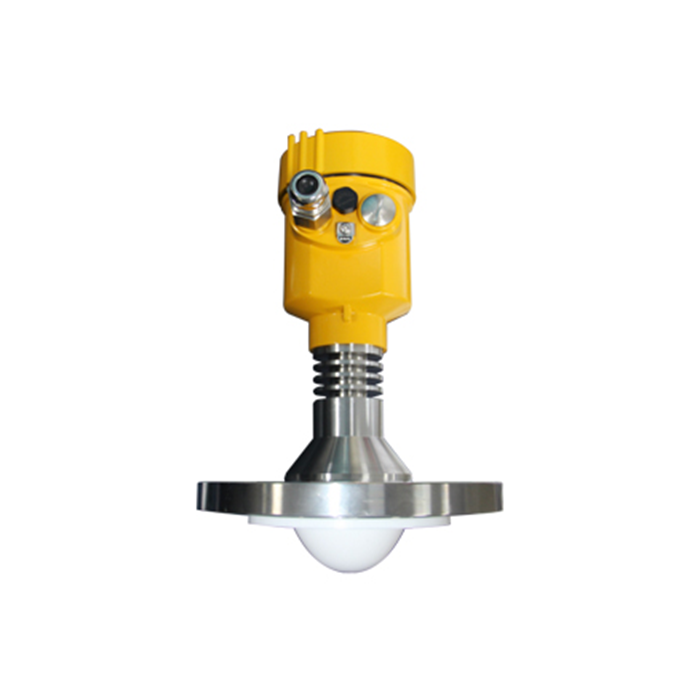
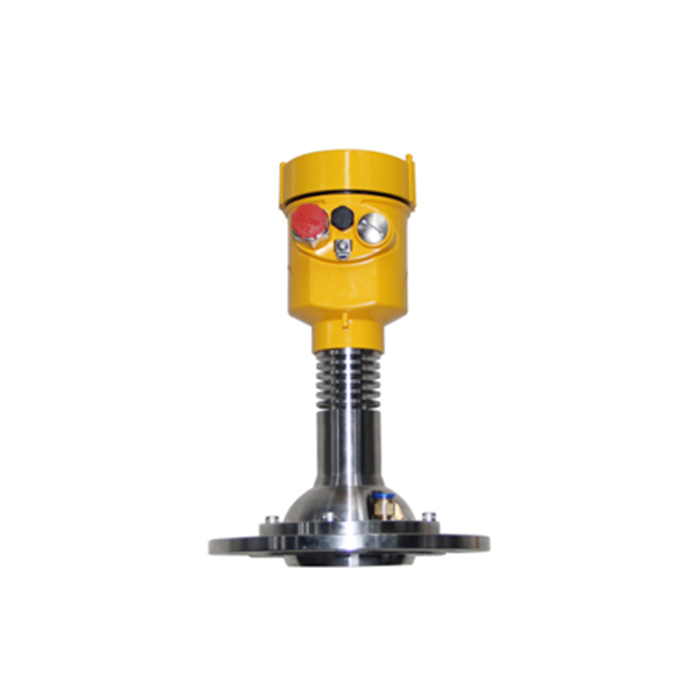
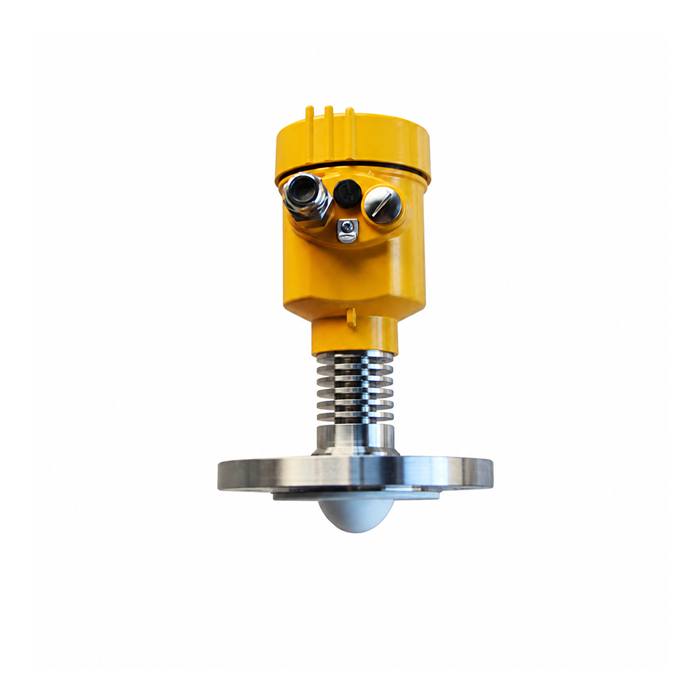
An 80 GHz radar level transmitter is an industrial instrument that uses approximately 80 GHz millimeter-wave signals for continuous non-contact level measurement.
The instrument is typically installed on the top of a storage tank, reactor, basin, or other vessel. The antenna transmits electromagnetic waves toward the liquid surface and receives the reflected radar signal. The internal signal processor calculates the distance between the sensor and the liquid surface based on the relationship between the transmitted and reflected signals, then converts this distance into the actual liquid level according to the tank height.
80 GHz belongs to the W-band radar range. Its wavelength is approximately 3.75mm. With an appropriate antenna design, it can form a highly concentrated radar beam, making it particularly suitable for:
Small-diameter tanks;
Tanks with complex internal structures;
Installations close to tank walls;
Small process connections;
Agitated tanks and reactors;
High-accuracy level measurement;
Powder and granular material level measurement.
Industrial 80 GHz radar instruments can achieve narrow beam angles of approximately 3°. A narrow beam helps reduce interference echoes caused by internal structures such as pipes, baffles, and supports. The actual beam angle should always be confirmed according to the technical specifications of the selected model.
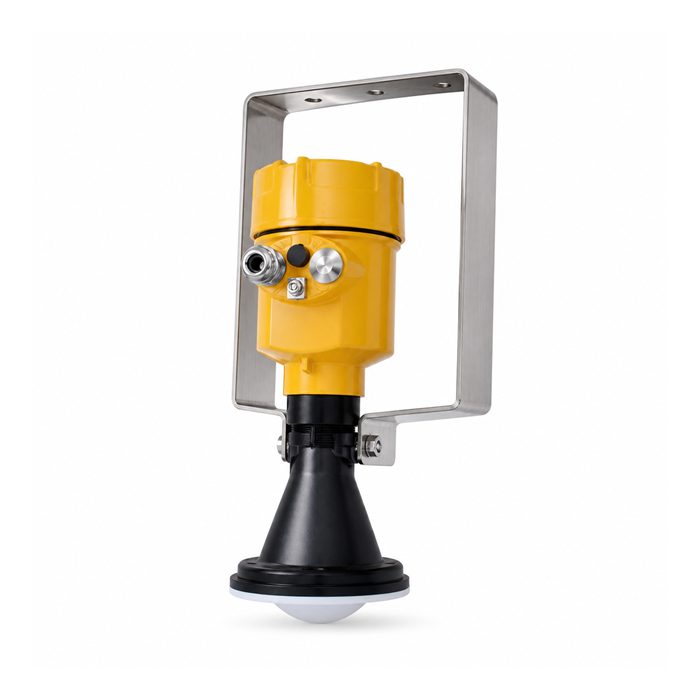
Working Principle of an 80 GHz Radar Level Transmitter
Most industrial 80 GHz radar level transmitters use FMCW, Frequency Modulated Continuous Wave technology.
The radar continuously transmits microwave signals whose frequency changes linearly over time.
When the transmitted signal reaches the liquid surface, part of the energy is reflected back toward the radar receiver. Because there is a time delay between signal transmission and echo reception, a frequency difference exists between the received echo and the current transmitted signal.
The transmitter calculates the target distance based on this frequency difference:
80 GHz FMCW radar → Frequency-modulated signal transmission → Liquid surface reflection → Echo reception → Frequency difference calculation → Distance measurement → Level conversion
If the tank reference height is E and the measured distance from the radar to the liquid surface is d, then:
Level H = E − d
This means that the radar directly measures the distance from the antenna to the liquid surface. The instrument then converts this distance into level height, percentage, volume, or another process variable according to the configured tank parameters.
Why Does an 80 GHz Radar Have a Narrower Beam?
The higher the radar frequency, the shorter the wavelength.
The wavelength of an 80 GHz signal is approximately:
λ ≈ 3.75mm
Under similar antenna-size conditions, a shorter wavelength makes it easier to form a narrower beam angle.
Therefore, compared with traditional lower-frequency radar, an 80 GHz radar can direct more microwave energy toward the measured liquid surface instead of simultaneously illuminating the tank wall, cross beams, pipes, and other internal structures.
This is one of the most important engineering advantages of 80 GHz radar technology.
Under similar antenna-size and design conditions, the shorter wavelength of 80 GHz radar generally makes it easier to achieve a narrower beam. However, when comparing radar products operating at different frequencies, antenna size, antenna structure, and installation conditions should also be considered rather than assigning a fixed beam angle based only on frequency.
Main Advantages of 80 GHz Radar Level Transmitters
1. Narrow Beam Reduces Internal Tank Interference
This is one of the most important advantages of 80 GHz radar.
Storage tanks often contain internal structures such as:
Agitators;
Heating coils;
Cross beams;
Ladders;
Filling pipes;
Reinforcing structures;
Tank wall welds.
These structures can reflect radar signals and create false echoes.
The relatively narrow beam of an 80 GHz radar reduces the probability of the radar signal striking these obstacles, making it particularly suitable for tanks with complex internal structures.
This advantage is especially important for small-diameter vessels and installations located close to the tank wall.
2. Smaller Antenna Size
80 GHz millimeter-wave technology can achieve good beam focusing with a relatively small antenna.
This allows smaller process connections to be used in applications with limited installation space.
This is particularly useful for:
Small chemical storage tanks;
Reactors;
IBC containers or process vessels;
Pharmaceutical equipment;
Food processing tanks;
Small top openings.
For example, some industrial 80 GHz radar products can use process connections as small as 3/4 inch while still maintaining a concentrated measurement beam.
3. High Distance Resolution and Millimeter-Level Accuracy
80 GHz radar is often combined with a relatively wide FMCW sweep bandwidth, which can provide high distance resolution.
High-performance industrial models can achieve millimeter-level measurement accuracy.
For example, some industrial 80 GHz radar instruments can achieve approximately ±1mm accuracy, while specialized instruments designed for inventory measurement or custody transfer may offer even higher accuracy.
However, it is important to understand:
“80 GHz” does not automatically mean ±1mm accuracy.
Actual measurement accuracy depends on:
Radar hardware;
FMCW bandwidth;
Antenna structure;
Signal-processing algorithm;
Installation conditions;
Instrument calibration.
High-performance industrial 80 GHz radar can achieve millimeter-level accuracy, and some models designed for metering applications may provide even higher accuracy. The actual accuracy must always be confirmed from the specific model datasheet, certification, and defined test conditions.
4. Better Suitability for Complex Tanks and Narrow Spaces
In complex tanks, one common challenge is:
The true liquid-surface echo and echoes from internal structures may exist at the same time.
The narrow beam of 80 GHz radar helps reduce the probability of receiving unwanted echoes from surrounding structures.
Therefore, 80 GHz radar is particularly suitable for applications involving:
Small tanks + Multiple internal obstacles + Small process connections + High accuracy requirements
5. Non-Contact Measurement Reduces Maintenance
80 GHz radar is a free-space, non-contact measurement technology.
Under normal installation conditions, the antenna does not need to be immersed in the liquid, unlike hydrostatic probes, floats, or other contact-type sensors.
This is beneficial for applications involving:
Corrosive liquids;
Wastewater;
Slurry;
Viscous liquids;
Hygienic process media.
Non-contact measurement can reduce contamination, corrosion, and mechanical wear caused by direct contact between the sensor and the process medium.
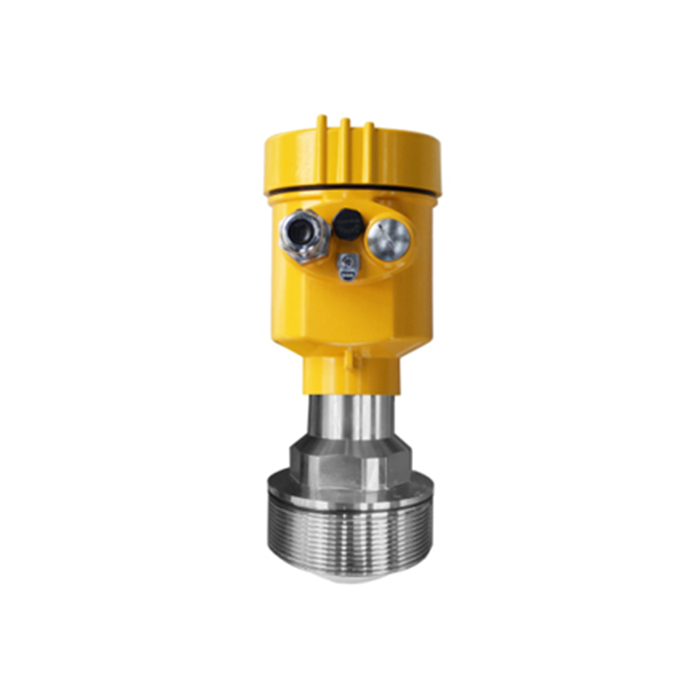
80 GHz Does Not Mean “Stronger Penetration”
This is a common misunderstanding when describing 80 GHz radar.
The main advantages of 80 GHz radar should be described as:
Narrow beam, high distance resolution, compact antenna size, and good adaptability to complex vessels.
It should not simply be described as:
“The higher the frequency, the stronger the ability to penetrate vapor and foam.”
In reality, foam itself may absorb or reflect microwave energy.
With thin or light foam, multiple radar frequencies may work normally. Lower-frequency radar may penetrate some types of foam more easily, while 80 GHz radar may be more likely to detect the foam surface. Foam thickness, bubble size, and moisture content can all affect the measurement result.
80 GHz radar is often suitable for small process connections and applications requiring narrow beams. However, in some applications involving vapor, foam, or strong condensation, 26 GHz radar or another measurement technology may be more suitable.
Therefore, applications involving heavy foam, strong condensation, or unusual vapor conditions should be evaluated according to the actual process rather than selecting the radar only according to frequency.
Main Technical Parameters of METRAVON 80 GHz Radar Level Transmitters
METRAVON 80 GHz radar level transmitters can be configured with different measurement ranges, process connections, and output interfaces according to the application. The following table shows the main engineering capabilities of the relevant product series:
| Parameter | 80 GHz Radar Level Transmitter |
|---|---|
| Measurement Technology | FMCW frequency-modulated continuous-wave radar |
| Operating Frequency | Approximately 80 GHz |
| Wavelength | Approximately 3.75mm |
| Measurement Method | Non-contact continuous measurement |
| Measurement Range | Approximately 0.3-120m, depending on model |
| Minimum Beam Angle | Approximately 3° |
| Minimum Dielectric Constant | Approximately 1.4, depending on model and process conditions |
| Maximum Process Temperature | Models available for process temperatures up to approximately 200°C |
| Maximum Process Pressure | Models available for process pressures up to approximately 40bar |
| Output Signal | 4–20 mA/HART, RS485, and other interfaces depending on model |
| Digital Communication | Selected models support RS485 Modbus RTU |
| Installation | Threaded, flange, and other process connections |
| Ingress Protection | Depends on the specific model |
| Power Supply | Depends on 2-wire, 4-wire, and specific model configuration |
| Antenna / Process Materials | Selected according to the process medium and specific model |
| Explosion Protection | Depends on specific model and project requirements |
Note: Different 80 GHz radar products can vary significantly in measurement range, accuracy, process temperature, and pressure capability. Model selection must therefore be based on the specific product datasheet rather than treating “80 GHz” itself as a fixed performance specification.
Measurement ranges also vary significantly among 80 GHz radar products. The effective range depends on whether the medium is liquid or solid, antenna structure, installation method, and actual process conditions. Therefore, one specific range value should not be treated as a universal standard for all 80 GHz radar instruments.
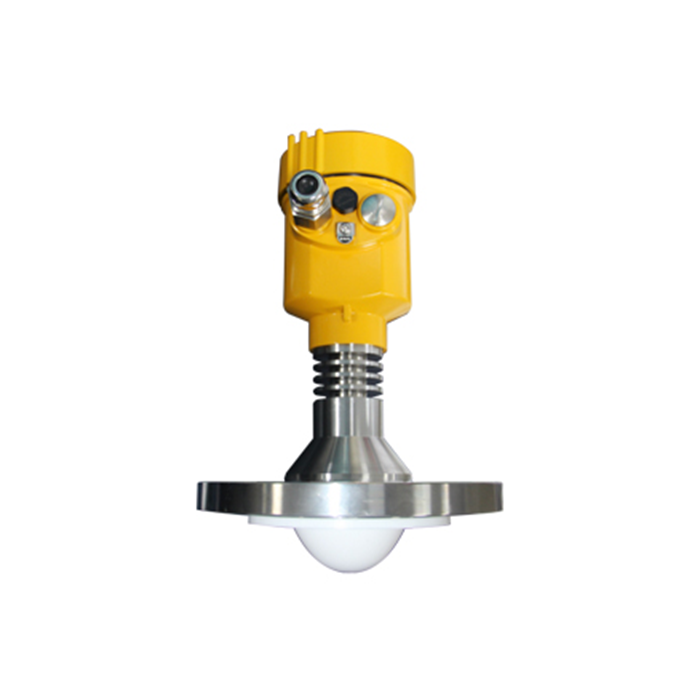
Position of an 80 GHz Radar Level Transmitter in an Industrial System
An 80 GHz radar level transmitter is normally located at the field measurement layer of an industrial automation system.
A typical architecture is:
80 GHz radar level transmitter → PLC / RTU / Data logger → Gateway → SCADA / IoT platform
Different communication interfaces can be selected according to the project requirements.
4–20 mA
Suitable for:
PLC systems;
DCS systems;
Traditional industrial process control systems.
4–20 mA + HART
In addition to the analog level signal, HART can support:
Parameter configuration;
Instrument diagnostics;
Status reading;
Device maintenance.
2-wire 4–20 mA/HART is one common interface configuration for industrial radar instruments. However, not every 80 GHz radar uses the same output configuration, so the specific interface must be confirmed according to the selected model.
RS485 Modbus RTU
For IoT and remote monitoring projects, a radar model supporting RS485 Modbus RTU can be selected.
A typical architecture is:
80 GHz radar level transmitter → RS485 Modbus RTU → Data logger → 4G / Ethernet → MQTT / HTTP → Cloud platform
This architecture is suitable for centralized monitoring of multiple storage tanks, water basins, or distributed measurement sites.
Typical Applications of 80 GHz Radar Level Transmitters
1. Chemical Storage Tank Level Monitoring
Site Challenges:
The tank may contain corrosive media, vapor, agitation equipment, and complex internal structures.
System Integration:
Select the appropriate process connection and antenna material according to the medium and connect the radar to a PLC or DCS through 4–20 mA/HART.
User Value:
Provide continuous non-contact level measurement while reducing corrosion and maintenance associated with contact-type sensors.
2. Reactors and Agitated Tanks
Site Challenges:
Agitator blades, heating coils, and rapidly changing liquid surfaces may generate multiple radar echoes.
System Integration:
Use the narrow beam of 80 GHz radar to avoid agitator shafts, heating coils, and other internal structures, and further optimize measurement through false-echo mapping.
User Value:
Obtain a clearer liquid-surface echo in limited installation spaces and improve the stability of continuous process monitoring.
3. Water Treatment and Wastewater Level Monitoring
Site Challenges:
High humidity, corrosive gases, sludge, and outdoor environments can increase the maintenance requirements of traditional contact-type sensors.
System Integration:
Install the 80 GHz radar above the basin and connect it to an RTU or IoT data logger through RS485 Modbus RTU.
User Value:
Provide remote level monitoring and high/low-level alarms for wastewater basins, water tanks, and pump stations.
4. Food and Pharmaceutical Storage Tanks
Site Challenges:
Direct contact with the product may need to be minimized, while small process connections and complex cleaning requirements may also be present.
System Integration:
Select process connections and materials suitable for hygienic applications and use non-contact continuous level measurement.
User Value:
Reduce moving mechanical components and direct media contact while improving maintenance convenience.
5. Industrial IoT Remote Level Monitoring
Site Challenges:
Multiple measurement points may be distributed across different plants or unattended locations and require centralized management.
System Integration:
Use:
80 GHz radar → RS485 data logger → 4G gateway → MQTT / HTTP server
for remote data acquisition.
User Value:
Enable real-time level monitoring, historical trends, alarm information, and centralized multi-site management.
What Information Is Required When Selecting an 80 GHz Radar Level Transmitter?
Before purchasing an 80 GHz radar level transmitter, the following engineering information should be provided:
Medium: water, oil, chemical liquid, slurry, or another liquid;
Measurement range: minimum and maximum level distance;
Tank dimensions: tank height and diameter;
Process temperature;
Process pressure;
Dielectric constant or medium name;
Whether foam, vapor, condensation, or agitation is present;
Whether heating coils, beams, or other internal obstacles are present;
Required threaded or flange connection size;
Whether 4–20 mA/HART or RS485 Modbus RTU is required;
Whether explosion protection is required;
Whether the transmitter will connect to a PLC, RTU, or IoT cloud platform.
For complex applications, tank drawings and site photos should also be provided.
Installation Considerations for 80 GHz Radar Level Transmitters
Although 80 GHz radar has a narrow beam, the installation position still has a direct impact on measurement stability.
Avoid Installing Directly Above the Filling Inlet
Incoming liquid can create strong surface movement and dynamic interference echoes.
Avoid Agitators and Internal Structures
Even with a narrow 80 GHz beam, the measurement path should preferably be free from obvious obstacles.
Ensure the Radar Is Properly Directed Toward the Liquid Surface
For liquid applications, the antenna should normally be directed approximately perpendicular to the liquid surface.
Check the Nozzle Structure
If the radar is installed through a long metallic nozzle, the nozzle diameter and length should be checked according to the instrument requirements to avoid excessive interference reflections from the nozzle itself.
Configure Empty Distance and Full Calibration Correctly
After installation, the following parameters should be configured:
Empty distance;
Full calibration;
Maximum and minimum level;
Damping time;
Medium type;
False echo suppression.
FAQ: Common Questions About 80 GHz Radar Level Transmitters
Q1: What Is the Accuracy of an 80 GHz Radar Level Transmitter?
High-performance industrial 80 GHz radar can achieve millimeter-level measurement accuracy, while some metering-grade products may achieve even higher accuracy.
However, a single accuracy value should not be treated as a fixed specification for all 80 GHz radar instruments. Actual accuracy should be confirmed according to the specific model datasheet and defined test conditions.
Q2: Can an 80 GHz Radar Level Transmitter Measure Wastewater?
Yes.
Because it uses non-contact measurement, it is suitable for wastewater basins, water treatment tanks, and pump station level monitoring.
Q3: Can an 80 GHz Radar Measure the Liquid Level Under Foam?
This depends on the type of foam.
Thin foam may have limited influence under some conditions. However, thick foam with high moisture content may attenuate the radar signal or produce a strong surface reflection.
In some cases, an 80 GHz radar may measure the foam surface rather than the actual liquid level below it. Therefore, foam properties and site conditions should be evaluated before final model selection.
Q4: Is 80 GHz Radar Better Than 26 GHz Radar?
Not necessarily.
80 GHz radar has clear advantages in narrow beam angle, small process connections, and complex vessel structures.
However, in some applications involving vapor, foam, or strong condensation, 26 GHz radar or another measurement technology may be more suitable.
Selection should be based on the medium, vessel structure, and actual process conditions.
Q5: Can an 80 GHz Radar Measure Corrosive Liquids?
Yes, but the antenna, process connection, and sealing materials must be selected according to the chemical properties, temperature, and pressure of the medium.
Possible materials may include PTFE, PEEK, stainless steel, or other compatible materials.
Material compatibility should always be confirmed according to the medium and the specific product model.
Q6: Can an 80 GHz Radar Connect Directly to a PLC?
Yes.
Depending on the output configuration, the radar can connect to the appropriate PLC module through 4–20 mA, HART, or RS485 Modbus RTU.
Q7: Can an RS485 Radar Transmit Data Directly to MQTT?
Normally, no.
RS485 Modbus RTU is a field communication interface. An RTU or industrial IoT gateway is usually required to convert Modbus RTU into MQTT, HTTP, TCP, or another network protocol.
Q8: Does 80 GHz Radar Always Have a Longer Measurement Range Than 26 GHz Radar?
No.
The maximum measurement range depends on the antenna, transmitting and receiving system, reflective properties of the medium, signal-processing algorithm, and overall product design.
Measurement range should not be determined by operating frequency alone.
Conclusion: The Real Advantages of 80 GHz Radar Are Narrow Beam and High Distance Resolution
The core value of an 80 GHz radar level transmitter is not simply that “higher frequency means better performance.”
Its main engineering advantages come from the use of millimeter-wave FMCW technology to provide:
A narrower radar beam;
A smaller antenna;
Higher distance resolution;
Better adaptability to complex vessel structures.
For small-diameter tanks, reactors, vessels with complex internal structures, high-accuracy level measurement, and industrial IoT monitoring projects, 80 GHz radar is often worth evaluating first.
However, for applications involving heavy foam, strong condensation, unusual vapor conditions, high temperature and pressure, or special chemical media, 80 GHz, 26 GHz, and other level measurement technologies should be compared according to the actual process conditions rather than selecting only by radar frequency.
METRAVON can configure 80 GHz radar level monitoring solutions according to the project's medium, measurement range, temperature, pressure, tank dimensions, process connection, and communication protocol, and integrate them with PLCs, RTUs, RS485 Modbus data loggers, 4G industrial gateways, and IoT platforms.