


 Chinese
 Spanish
 Russian
 Portuguese
 French
 German
 Indonesian
 Thai
 Vietnamese
 Arabic
 Italian
 Turkish
 Polish
 Japanese

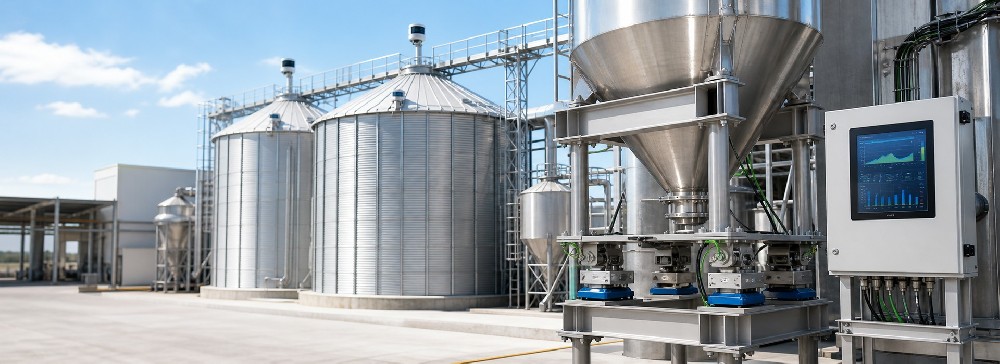

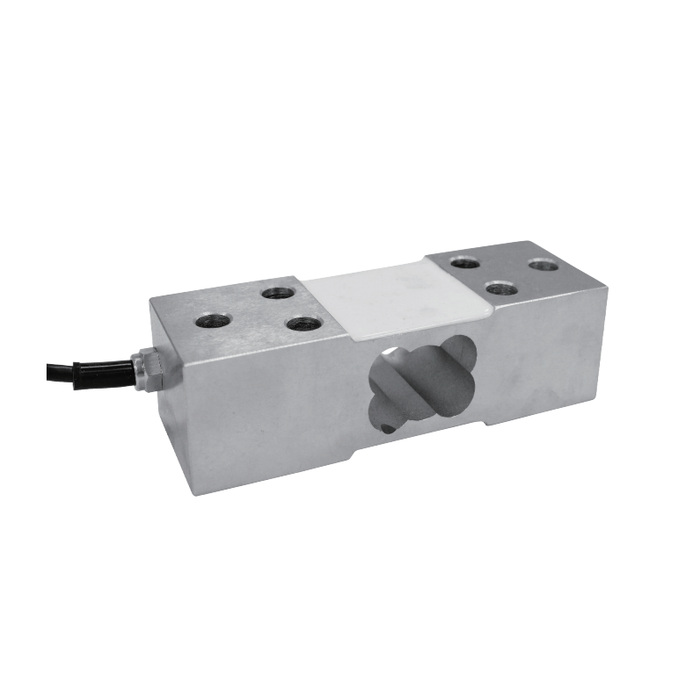
METRAVON MV-LC0222 is a single-point load cell with 50, 100, 200, 300 and 500 kg rating options. It is intended for platform weighing arrangements with a defined fixed end and loaded end. The selected capacity, mounting structure and indicator must be specified together; the product rating does not set the finished scale capacity or division value by itself.
Mounting the MV-LC0222 single-point load cell
The body envelope is 145 mm long, 50 mm wide and 40 mm high. Compare the full attachment pattern, support faces and loading-end clearance with the existing scale. Do not infer interchangeability from a nominal 500 kg rating or a similar rectangular outline. Include the scale base, load receptor and any spacers in the drawing review.
What the narrow sensitivity tolerance does and does not mean
The rated output is listed as 2.0 +/-0.002 mV/V in both available language editions. At 10 V excitation, that corresponds to a nominal full-scale output of 20 mV, with 19.98-20.02 mV from the sensitivity tolerance alone. It is not a statement of scale resolution or total installed error. Use the individual sensor information and reference weights to establish the actual scale factor.
Plan for the listed 5 m cable
A four-core, 5 m cable is specified for the 50-500 kg range. Lay out the route to the indicator before selecting its location, and keep the cable clear of platform travel and sharp edges. Cutting, extending or replacing bridge cable can change the excitation and signal conditions. Agree any cable change before calibration instead of assuming the original settings remain valid.
| Item | Value | Use / fit |
|---|---|---|
| Rated choices | 50, 100, 200, 300, 500 kg | Include the receptor and product load in the mechanical assessment. |
| Catalogue total error | +/-0.02% FS | A load-cell specification, not acceptance of the complete scale. |
| Input / output resistance | 380 +/-10 / 351 +/-2 ohms | Match the indicator excitation and differential input. |
| Excitation range | 4-12 V DC; maximum 15 V DC | Record the actual excitation used during calibration. |
| Creep over 30 minutes | +/-0.016% FS | Assess weighing cycles that hold material on the platform. |
| Cable | Four-core; 5 m listed | Specify the required cable route and any approved modification. |
| Construction / protection | Material option; IP67 | Identify the material supplied rather than assuming stainless steel. |
Accept the platform, not just the centre reading
After installation, check zero, several known loads, unloading and repeated placement. Apply the same reference load at the agreed platform positions to identify mounting or eccentric-loading problems. The permissible platform dimensions are not stated in the available sheet; obtain that limit for the selected assembly before approving a large tray or an overhanging product load.
MV-LC0223 uses a shorter outline and different capacity steps; compare its mounting and cable requirements before considering a substitution.
Replacement and quotation questions
Q1. Can the bridge be connected directly to a 4-20 mA input?
No. This configuration produces an unamplified mV/V signal. Use a compatible weighing indicator or bridge conditioner; if a current output is needed, specify that function on the separate reading device and calibrate the full measurement chain.
Q2. Will matching 2 mV/V preserve the old calibration?
Not by itself. The actual sensitivity, cable conditions, mounting and dead load can differ. Check unloaded indication and reference-weight readings after replacement before returning the scale to production.
Q3. What makes a quotation ready for approval?
The quote should identify the selected rating, material, cable length, attachment drawing and receiving instrument. Provide the tray dimensions, gross load and required weighing performance so any unresolved platform or calibration limits are addressed before ordering.
