


 Chinese
 Spanish
 Russian
 Portuguese
 French
 German
 Indonesian
 Thai
 Vietnamese
 Arabic
 Italian
 Turkish
 Polish
 Japanese


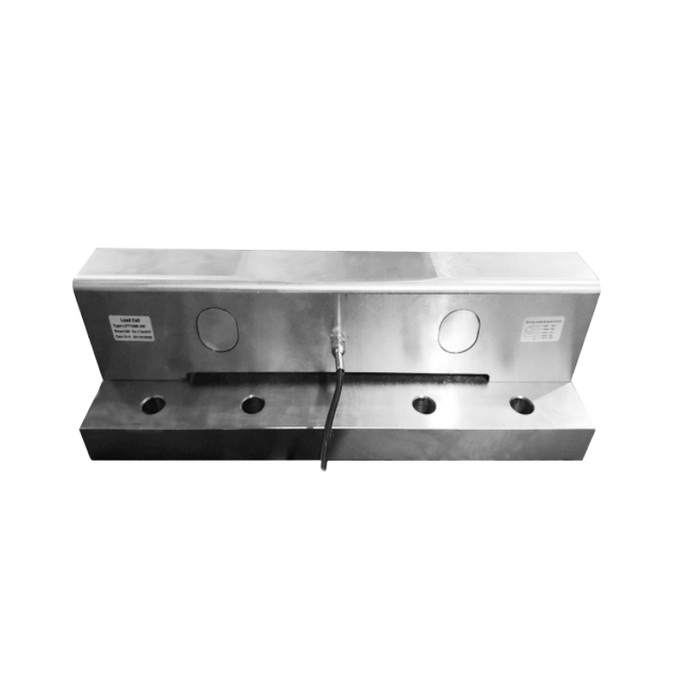
METRAVON MV-LC0210 is a beam load cell for static weighing, with 10, 20, 30 and 40 t rating options. Listed applications include static ladle weighing, rail scales and hook-scale assemblies. These applications require different support and load-introduction arrangements; the application name alone is not an installation specification or a lifting-system approval.
Static weighing near a hot process still needs a temperature review
The documented working range is -10 to +40 deg C. A ladle application does not mean that the sensor can be exposed directly to molten metal or unrestricted radiant heat. Provide the temperature expected at the sensing body and cable, including soak time and nearby hot surfaces. Review any thermal isolation or shielding as part of the project rather than treating the process temperature as the allowable sensor temperature.
Do not transfer 3 mV/V channel settings to this model
Rated output is 1.0 +/-0.005 mV/V. With 10 V excitation, nominal full-rated signal is about 10 mV, not the approximately 30 mV produced by the 3 mV/V models on the adjacent product pages. The input resistance is 700 +/-10 ohms and output resistance is 700 +/-2 ohms. Verify gain, zero adjustment and reference-load calibration for this specific bridge before relying on the indication.
| Item | Value | Use / fit |
|---|---|---|
| Capacity choices | 10, 20, 30, 40 t | Specify the rating and maximum load at the actual measuring position. |
| Nominal sensitivity | 1.0 +/-0.005 mV/V | Do not retain a 3 mV/V channel scale without recalibration. |
| Excitation | 4-12 V DC; maximum 15 V DC | Use the bridge-reader input and supply specifications. |
| Nonlinearity | +/-0.1% FS | Not a combined installed-system accuracy statement. |
| Creep, 30 minutes | +/-0.05% FS | Match the acceptance hold to the process requirement. |
| Working temperature | -10 to +40 deg C | Check the temperature at the sensor, not just ambient away from the process. |
| Construction / protection | Alloy steel or stainless steel; IP67 | Identify the selected material and cable arrangement on the order. |
Send the base and loading arrangement for review
The outline distinguishes a 501 mm base length from a 499 mm upper-body length and shows a 150 mm overall height. These dimensions do not define the complete load path or confirm an existing installation. Provide the supporting structure, load-bearing contacts, fastening and restraints together. For a proposed hook-scale assembly, obtain a separate mechanical and safety assessment of how load is carried; do not suspend a load from an arbitrary housing feature.
Agree acceptance for the actual operating mode
The nonlinearity entry is +/-0.1% FS, while creep is +/-0.05% FS over 30 minutes. Those are separate characteristics. Define the working load points, hold duration, zero-return checks and reference-loading method for the completed assembly. A static check does not establish moving-rail weighing performance or suitability for a changing suspended load. Confirm the cable, material and reading instrument in the quotation.
Static weighing project questions
Q1. Is MV-LC0210 rated for the ladle's process temperature?
No high-temperature rating is documented. Its working range is -10 to +40 deg C at the sensor. Provide the support design and expected thermal exposure so conditions at the body and cable can be assessed. A ladle application listing does not establish that the installed sensor has sufficient heat protection.
Q2. Is it electrically interchangeable with a 3 mV/V shear beam?
The nominal output and output-resistance specifications differ, so the measuring channel needs a separate check. Confirm the reader's gain and input range for the 1 mV/V signal, review the mounting, and calibrate the approved assembly with reference loads.
Q3. What information is needed for a static-weighing quotation?
Send the assembly and loading drawings, selected capacity, temperatures at the sensor and cable, intended material, instrument details and acceptance method. State whether the load is settled during measurement or changes position, so the operating mode is reviewed explicitly.
