


 Chinese
 Spanish
 Russian
 Portuguese
 French
 German
 Indonesian
 Thai
 Vietnamese
 Arabic
 Italian
 Turkish
 Polish
 Japanese

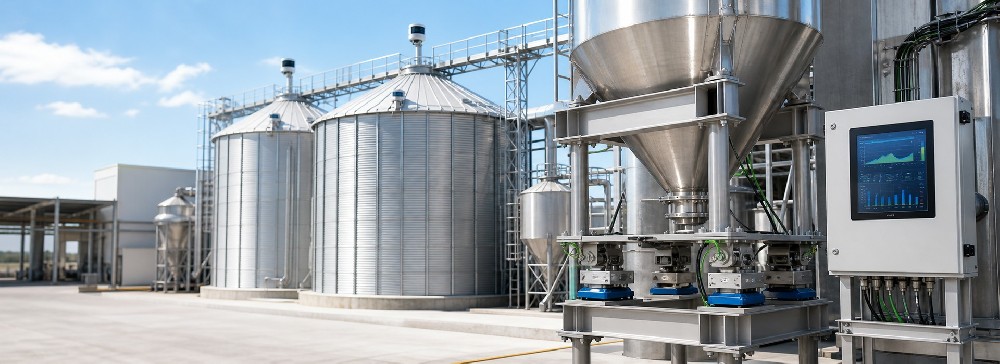

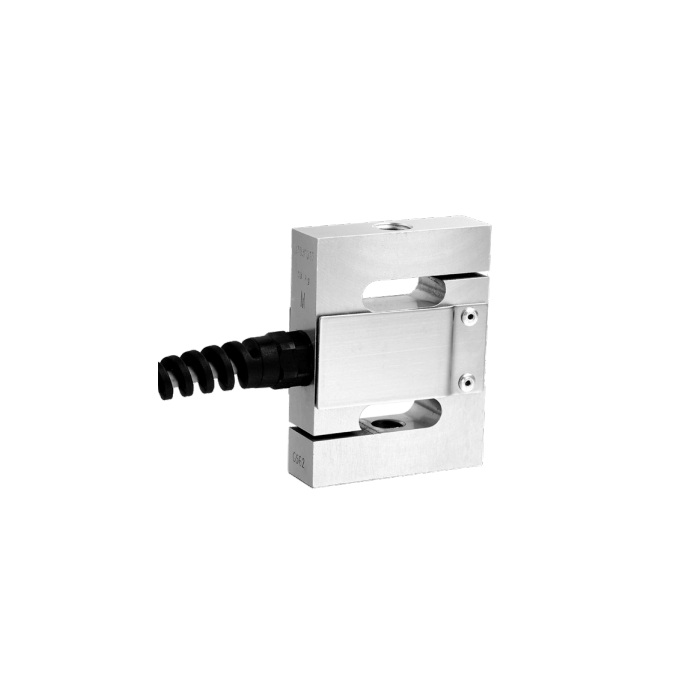
METRAVON MV-LC0197 is an S-type load cell with 50, 100, 150, 200, 300, 500, 750 and 1000 kg ratings for hanging scales and tensile tests. Material depends on capacity: the 50-300 kg group is aluminum alloy, while 500-1000 kg uses alloy steel. State the required rating and material together rather than ordering from the shared product photograph.
Check peak force against the 120% safe-overload entry
The listed safe overload is 120% FS and ultimate overload is 150% FS. Those values are lower than the entries for MV-LC0196 and should not be transferred between models. Include fixture weight, tension adjustment and possible force peaks when selecting a rating. If loading can be abrupt or cyclic, describe the cycle for review; the data does not supply a general impact or fatigue allowance.
Fit the S-type load cell without bending the body
The drawing shows a 62.1 mm by 80 mm outline, 18 mm body thickness and two M12 threaded connections. The available drawing does not identify the M12 pitch, so obtain the selected connection details before buying mating rod ends. Keep both attachment axes aligned and allow space for the side cable exit. A matching nominal thread diameter does not confirm engagement, clearance or the strength of the adjoining parts.
Confirm material, reader input and the acceptance test
The sensor has a four-core 3 m cable, rated output of 2.0 +/-0.002 mV/V and input resistance of 400 +/-20 ohms. The output resistance is 350 +/-3 ohms. Match these to the indicator or amplifier and calibrate with the final attachments installed. Check several reference loads within the required working interval, unload return and repeatability. The listed C3 classification is not approval of the completed hanging scale.
| Item | Value | Use / fit |
|---|---|---|
| Capacity ratings | 50, 100, 150, 200, 300, 500, 750, 1000 kg | Quote one discrete rating, not a continuously adjustable range. |
| Body outline | 62.1 x 80 x 18 mm | Include thread engagement and attachment clearance in the fit check. |
| 50-300 kg material | Aluminum alloy | The lower-rating material is not stainless steel. |
| 500-1000 kg material | Alloy steel | Confirm the required protection for the site environment. |
| Standard cable | Four-core, 3 m | Place and secure the reader connection without pulling on the sensor. |
| Creep, 30 minutes | +/-0.02% FS | Include a hold check when the load remains applied. |
| Excitation / temperature | 4-12 V DC / -30 to +70 deg C | Maximum excitation is 15 V DC; IP67 is listed. |
MV-LC0196 is another threaded S-type option, but its capacity-specific dimensions and overload data need a separate fit review.
Capacity, material and ordering questions
Q1. Can a 500 kg order be supplied as the same aluminum version as 300 kg?
The documented material groups place 500 kg in alloy steel, not aluminum alloy. If a project requires a particular material at a different rating, obtain a written, model-specific offer before treating it as available. Do not transfer the lower-capacity material description to the complete range.
Q2. Why not choose 1000 kg for every small tensile test?
At a fixed applied force, a higher-capacity sensor develops a smaller fraction of its full-scale signal. The reader must still resolve the smallest force that matters to the test. Balance the expected peak force with usable low-end measurement, then verify both using reference loads.
Q3. What determines the quoted scope?
Identify the rating, installed thread details, reader and cable route. State whether the request covers only the sensor or also attachments, an indicator and calibration documentation. These items affect the scope; no fixed price or inclusion of pictured fittings is implied.
