Chinese
 Spanish
 Russian
 Portuguese
 French
 German
 Indonesian
 Thai
 Vietnamese
 Arabic
 Italian
 Turkish
 Polish
 Japanese

Vacuum Column Level Measurement: Sumps and Guided Wave Radar
Reduced pressure changes boiling conditions and can produce a boiling, foaming sump with a load-dependent apparent level. Differential-pressure systems also depend on process density, reference-leg condition and pressure compensation. Select the instrument for the actual control objective, pressure range and surface conditions.
The physics that drives instrument choice
Lower pressure can promote boiling and flashing at the operating temperature. Wet or dry foam may produce different radar returns; vapour velocity and entrainment can affect the installation. In a DP system, vapour density and the hydrostatic head of a liquid-filled reference leg are separate terms. A small vapour-density correction does not reduce wet-leg head or its sensitivity to temperature.
Guided wave radar in the sump: the usual answer, with conditions
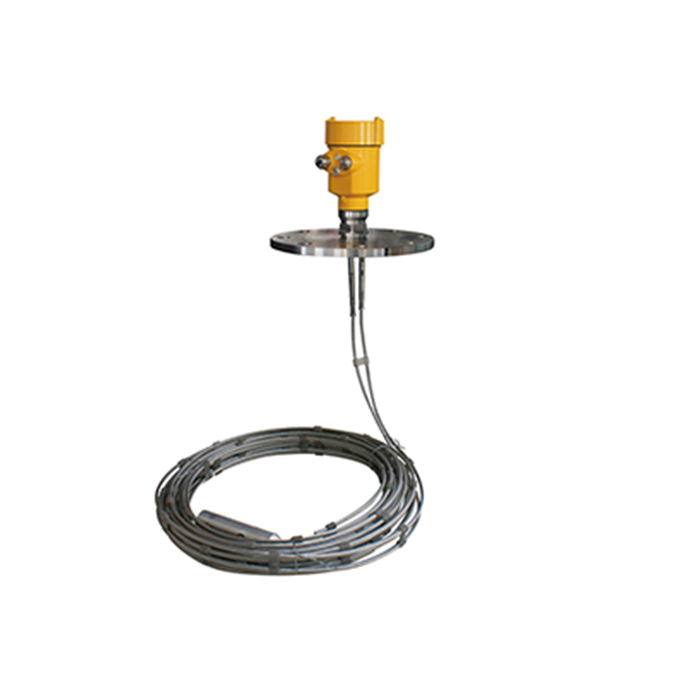
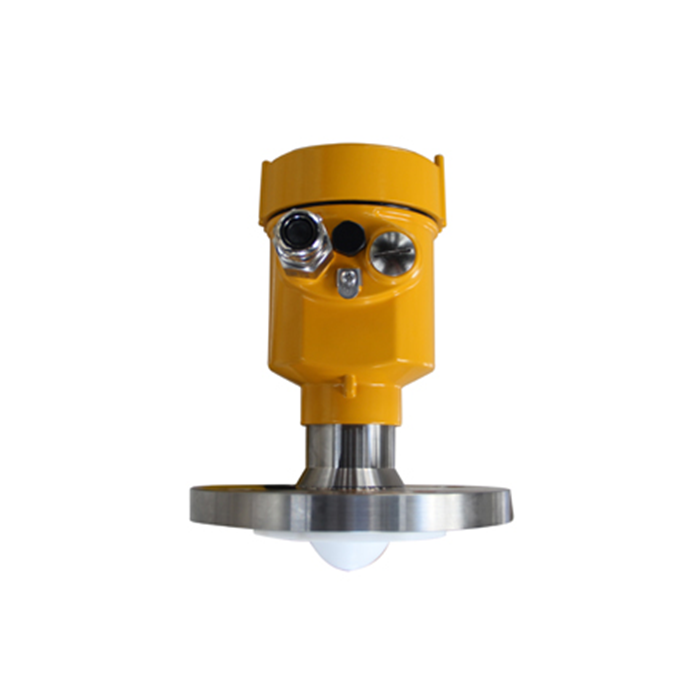
Guided-wave radar can provide a suitable short-span measurement in some vacuum sumps, without a DP reference leg. Its field still interacts with the medium around the probe, so foam and vapour effects do not disappear. Assess guided-wave and free-space radar against actual foam, boiling, deposits, vessel internals and pressure-temperature ratings.
Conditions that must be checked rather than assumed:
| Condition | Question to answer | Consequence if ignored |
|---|---|---|
| Probe mechanical | Can the probe survive vapor velocity and any entrained droplets at flood conditions? | Probe deflection, false echoes, mechanical failure |
| Foam behavior | Is the foam wet (conductive-looking) or dry? | Wrong surface picked; interface-like double echoes |
| Boiling on the probe | Does the mixture flash along the probe in deep vacuum? | False reflections above the true level |
| Minimum distance | Does the required low level sit above the probe bottom dead zone? | Lost measurement exactly where control needs it |
Probe length must cover the full control range plus the bottom dead zone, and the support method must handle vibration. In deep vacuum the flashing check deserves a real conversation with the process designer, because some vacuum systems boil continuously at the probe surface.
Differential pressure: legitimate, with honest error accounting
DP remains a legitimate vacuum column level measurement when the fluid is clean and the legs can be kept full. The error accounting looks like this:
Process fluid density changes with temperature and composition; level is inferred as ΔP/(ρ·g), so a small 2% error in the actual-to-configured density ratio gives approximately 2% error at the current liquid height; it is not automatically 2% of span.
The wet-leg density can change with temperature, composition or partial loss of fill. Use the approved reference-leg design and verified fluid properties; insulation alone does not hold a constant temperature, and circulation is not suitable for every installation.
At low vapor densities the DP vapor-space correction is small — often negligible — but "small" must be written down, not assumed.
Worked sump. A 1.0 m span at an assumed product density of 950 kg/m³ corresponds to about 9.32 kPa. Suppose a 3 m reference leg contains fluid whose verified density changes from 1,050 to 1,044.75 kg/m³. Its head changes by 5.25 × 9.81 × 3, about 154.5 Pa: approximately 1.66% of span. This example assumes the density change rather than assigning a universal thermal expansion coefficient to glycol mixtures. Evaluate vapour effects separately using the actual pressure, temperature and composition.
Where to measure: sump level is a means, not an end
Column sump level exists to protect the pump and to set column mass balance. If the real control objective is pump protection, a properly located low-low switch may carry more safety value than a continuous transmitter whose number nobody trusts. If the objective is mass balance, the continuous measurement must be validated against flows during normal operation — a boiling sump reading that drifts with column load will quietly corrupt the balance.
Define the objective first; it determines both the instrument and its maintenance routine.
Questions from vacuum service
Q1. Why not free-space radar at the top of the column?
Foam, internal spray, and demister elements break the path, and the vapor above a vacuum sump is rarely clean. Free-space radar works in some reboiler drums; for column sumps it is usually second choice to GWR.
Q2. Does the probe need a stilling well?
The probe guides the radar signal; it is not a stilling element and does not suppress boiling or slosh. A chamber or well may be considered for a specific instrument, with adequate communication, usable probe range, clearances and mechanical support.
Q3. How often should the DP wet leg be checked?
On a schedule tied to the leg fluid's stability — and after any upset that could have boiled or diluted it. A leg that has been flashed dry is a guaranteed wrong reading with a plausible number.