


 Chinese
 Spanish
 Russian
 Portuguese
 French
 German
 Indonesian
 Thai
 Vietnamese
 Arabic
 Italian
 Turkish
 Polish
 Japanese

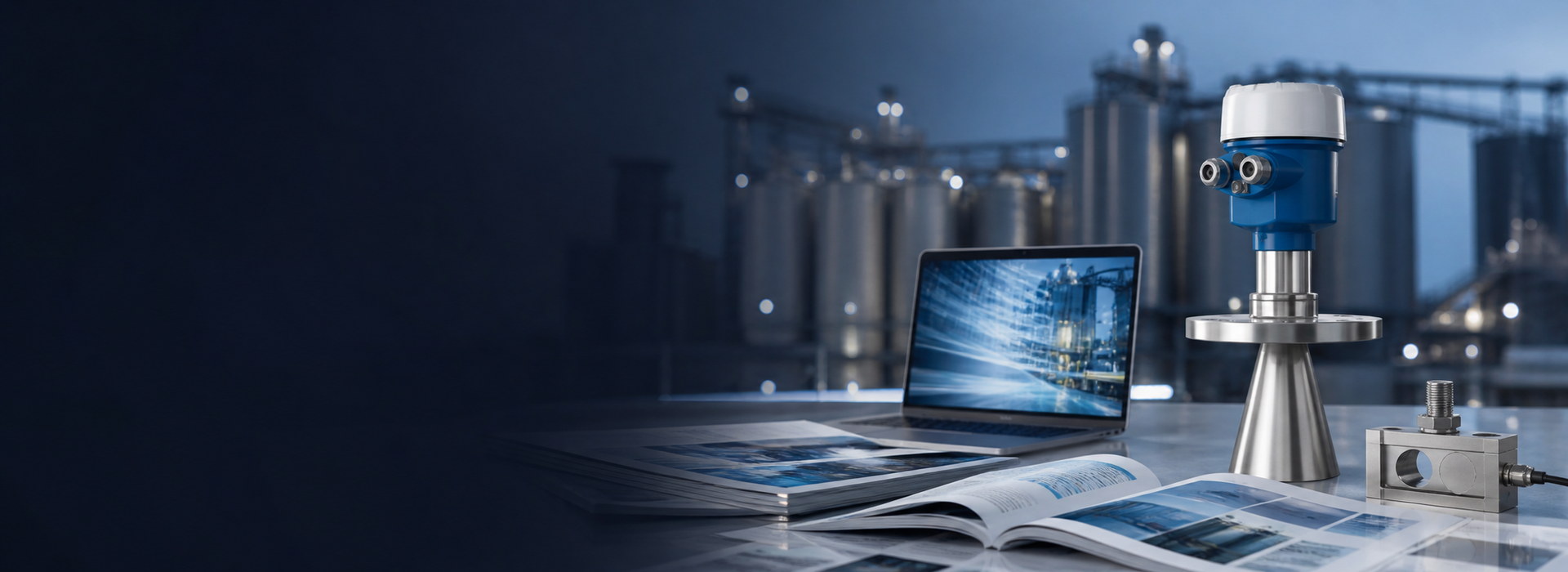
Level Measurement in Boiling Tanks: Baffles, Standpipes and Averaging
Level measurement in boiling tanks is unstable because the surface itself is unstable. Vapor bubbles burst through it, jets from heating coils push it around, and a swell of 50–100 mm peak-to-peak is common in hard-boiling service. No transmitter can extract a calm truth from a violent surface without help. The engineering choices are: calm a small patch of the surface mechanically, or average the violent one long enough for control to work.
Calming arrangements must leave the measuring path open
A solid horizontal plate directly between a radar antenna and the liquid can block the wanted echo. Do not place a plate across the beam to create a supposed quiet pocket. A process-designed baffle may reduce disturbances beside the measurement zone, or an approved stilling chamber may provide a calmer surface while leaving a suitable path to the liquid.
Review the calming arrangement with the process and instrument designers:
Keep solid plates, heating coils and supports outside the required measuring path, including the lowest operating level.
Check the exact nozzle, chamber and antenna arrangement against the manufacturer’s installation limits; a fixed reflector is not harmless merely because it is beyond the near zone.
Provide adequate liquid and vapour communication so the measuring chamber follows the vessel without flashing, blockage or excessive delay.
Worked clearance. With an assumed full beam angle of 6° and a liquid surface 5 m from the antenna, the nominal beam diameter is 2 × 5 × tan(3°), approximately 0.52 m. A solid 0.6 m plate across that path would intercept the beam rather than make it measure a calm pocket. A pipe-guided installation requires its own manufacturer-approved geometry; this free-space calculation does not qualify one.
A stilling pipe or external chamber is an alternative only when the instrument supports it and the process connections provide representative liquid and pressure communication. Review boiling, density and temperature differences, flashing, cleaning and response delay. A chamber can read differently from the aerated vessel even when its liquid surface is calm.
Averaging: match the window to the physics, not to habit
Averaging can reduce random scatter when samples are sufficiently independent. The reduction depends on the correlation time, sampling and filter type; a 10–20 second setting does not guarantee a particular millimetre accuracy. Measure both scatter and response delay under the actual operating conditions.
For periodic motion, compare sampling rate and filter response with the observed frequency. A moving average attenuates different periods by different amounts; a first-order transmitter damping setting is not the same filter. Increasing damping can hide dynamics or delay alarms, so verify the complete response rather than choosing a window by habit.
Damping arithmetic. If independent samples have a standard deviation of 20 mm, their arithmetic mean has an expected standard deviation of 20/sqrt(N) mm: about 6.3 mm for 10 samples and 4.5 mm for 20. This calculation concerns standard deviation, not guaranteed peak limits, and fails when samples are correlated. Test the actual transmitter filter and sampling rate during changing boiling duty.
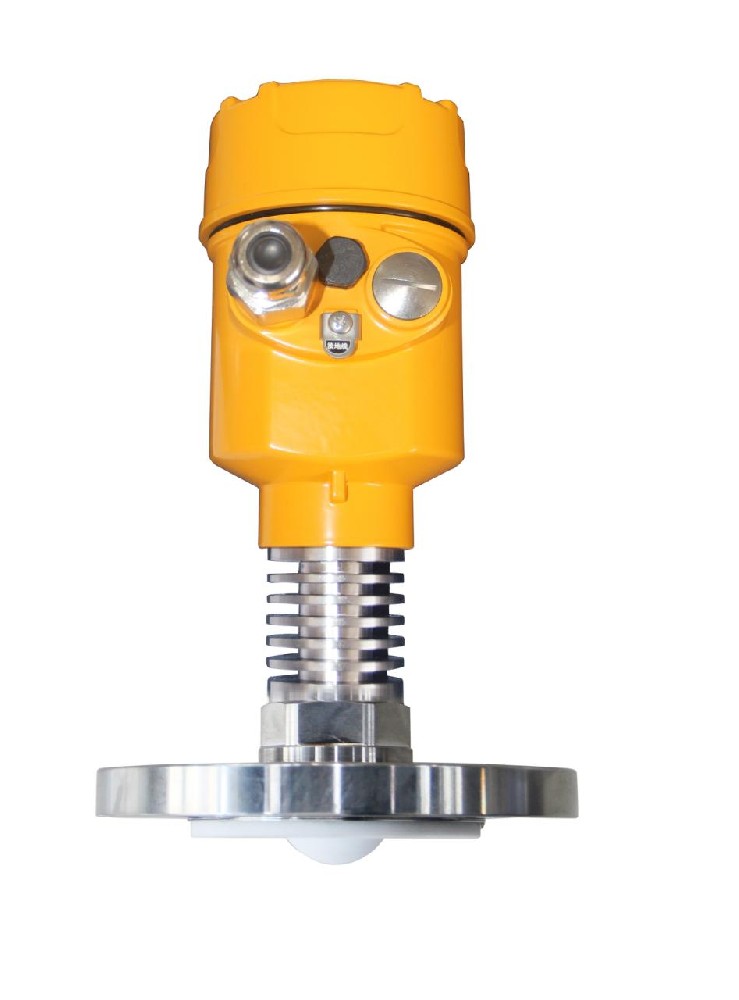
Where the reading sits in the process story
In a boiling tank the measured "level" is a biased number by design. During hard boiling the vapor holdup in the liquid raises the apparent level above the settled level by the swell height; during a boil-up after a feed step the level can jump several centimetres with no net volume change. Controls that treat the level as true inventory fight the bias.
Decide which level the loop needs: the swollen level (protects against carryover), or the settled equivalent (mass balance). If both are needed, two measurement philosophies — a fast damped value for protection and a separately validated settled-equivalent estimate for mass balance — are legitimate, provided each has its own documented meaning. Filtering alone cannot remove a systematic swell bias or establish mass inventory.
Acceptance testing in boiling service
Sign-off requires a dynamic test, not a still-water comparison:
Record the raw (undamped) value at normal boil for ten minutes and measure peak-to-peak scatter.
Apply the selected damping and re-measure.
Step the heating duty once and record the response and recovery time.
Verify the reading against a shut-down, settled dip at the same inventory.
A transmitter that agrees when settled but fluctuates during boiling needs assessment against the agreed dynamic criterion. An 80 mm swing may reflect real surface motion, tracking failure or both; it is not automatic evidence of acceptable performance.
Questions from boiling service
Q1. Is a guided wave probe simpler here?
It may be suitable, but guided-wave radar does not calm the liquid. Check foam, deposits, probe loading, vapour conditions and the measured surface during boiling. Choose it on application evidence rather than as a substitute for a sound installation.
Q2. Does pressure make boiling measurement harder?
Pressure changes the boiling point and the violence of the surface. Specify the full pressure range, because a surface calm at 1 bar may thrash at 0.3 bar.
Q3. Can the transmitter’s internal averaging replace the PLC filter?
It can if the combined control and alarm response meets the requirement. Avoid unexamined stacked filters, document their total delay and verify any protection path separately under the approved alarm or safety design.
