


 Chinese
 Spanish
 Russian
 Portuguese
 French
 German
 Indonesian
 Thai
 Vietnamese
 Arabic
 Italian
 Turkish
 Polish
 Japanese


Mine drainage level monitoring must distinguish loss of remote visibility from loss of local pumping control. Rainfall or process inflow can continue while a cellular link is unavailable. Keep the required pump sequence and protective response in the approved local control system, and design telemetry so an old reading cannot be mistaken for the current basin condition.
Separate three functions in the station design
The radar measures the water surface. The local controller applies the approved pumping logic. The acquisition and communications equipment records and reports the result. One device may support several functions in a particular design, but capability must be established for that exact hardware and firmware rather than inferred from an RTU label.
For an atmospheric basin, the METRAVON MV-RD13S is a bracket-mounted radar candidate. Survey its reference position, keep the path away from waterfalls and pump turbulence, and account for the highest water level. Sediment changes usable storage even when the surveyed water elevation remains correct.
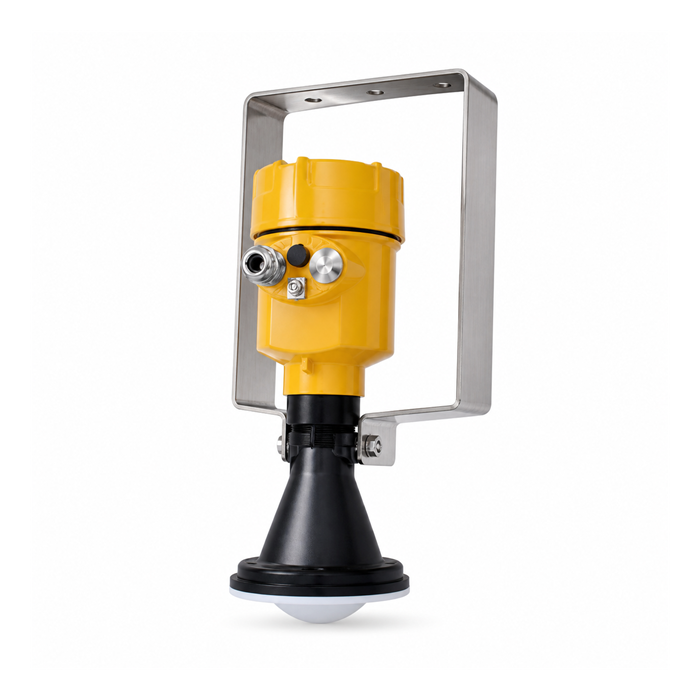
Specify mine drainage level monitoring through an outage
The TG501 acquisition RTU lists three analogue inputs, two digital inputs, one RS485 port and local storage with retransmission. Review the channel schedule against the required level and pump-status signals. Optional relay or pulse functions must be identified in the offer; this description does not qualify TG501 as the station's protective pump controller.
The listed 16 MB storage capacity does not define a number of outage days. Record size, interval and enabled channels determine retention. Agree on full-buffer handling, timestamps, power-loss behaviour and duplicate detection at the receiving platform, then test those settings for the required interruption duration.
| Failure | Local evidence | Remote evidence |
|---|---|---|
| Cellular link | Approved pump sequence continues without the link. | The display marks stale data and later separates recovered history from live values. |
| Level signal | The controller invokes its documented measurement-fault response. | The fault is visible instead of a plausible held level. |
| Duty pump | Feedback and level trend reveal unavailable drainage capacity. | Alarm records retain the original event time. |
| Power supply | The approved shutdown or backup sequence is demonstrated. | Recovery does not silently erase or duplicate accumulated records. |
Size the outdoor station, not just the sensor supply
TG501 has an IP30 housing and needs a suitable outdoor cabinet. Review condensation, surge protection, cable entries and access. For solar or backup operation, obtain the operating-current profile for the selected radar, controller and communications schedule; the modem and control loads belong in the same energy budget.
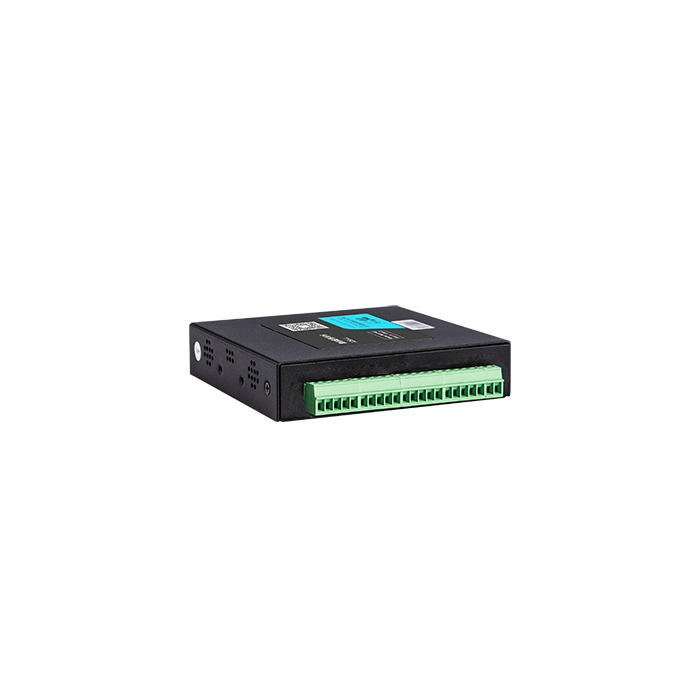
Choose analogue or RS485/Modbus RTU connections from the actual input circuits and register support. If several devices share a serial bus, check addressing and polling time. A port count alone does not prove the station can acquire every required signal at the intended interval.
Outage acceptance questions
Q1. Is a brief modem restart a sufficient test?
No. It shows only one reconnection event. Use the authorised procedure to test a representative outage, confirm local operation throughout, and verify record recovery and live status afterward.
Q2. Should delayed alarms appear as new events?
They should retain their original event time and be distinguishable from current alarms. Otherwise an operator may respond to a resolved condition or overlook the age of a still-unresolved one.
Q3. What must be agreed before remote restart is enabled?
The responsible controls engineer must define permissions, local overrides, interlocks and the conditions that allow restart. Restored connectivity alone does not prove that the basin or downstream discharge route is ready for pumping.
Summary
Send the basin elevations, local cause-and-effect design, signal list and required outage duration for a drainage monitoring configuration review. Select MV-RD13S and TG501 for their defined measurement and acquisition roles, without shifting unverified protective functions onto telemetry.
