


 Chinese
 Spanish
 Russian
 Portuguese
 French
 German
 Indonesian
 Thai
 Vietnamese
 Arabic
 Italian
 Turkish
 Polish
 Japanese


Port grain silo level measurement must account for what is still moving after a fill-stop command. Grain in conveyors, elevators and chutes can continue entering the selected silo while equipment slows or a route changes. A high-level setting based only on a percentage of silo height can therefore leave too little receiving space.
Port Grain Silo Level Measurement Starts With the Transfer Route
Draw the complete route from the unloading or transfer point to the destination silo. Identify which equipment stops, which sections run empty, and whether a diverter can send residual material elsewhere. For each accepted operating mode, establish the additional material expected to reach the silo after the decision to stop.
Use the largest credible arrival rate and measured sequence timing when assessing that allowance. Convert incoming mass to occupied volume only with a suitable bulk-density basis, then account for where the pile will grow. This is a route-specific calculation; it is not a universal setpoint supplied with the radar.
| Stage | Evidence | Decision |
|---|---|---|
| Select silo | Confirmed destination, material grade and available space. | Release the intended route rather than relying on a silo name in the HMI. |
| Receive | Valid surface trend and current route throughput. | Detect a developing high pile with time to stop the accepted sequence. |
| Stop | Equipment response and material remaining in transit. | Keep sufficient headspace for arrivals after the command. |
| Reconcile | Weighed receipts, dispatches and stock at a common cut-off. | Separate route timing differences from measurement differences. |
Choose a View That Survives Maximum-Rate Filling
A distributor or moving spout changes the pile location. Check every route that can feed the silo, not just the position used during installation. Protect the antenna from falling grain and rebound, and plot roof steelwork through the full measurement distance.
The METRAVON MV-RD21 uses a 76 mm PTFE lens and a nominal 3-degree beam for bulk solids. Its documented measuring-range configurations extend to 30 m or 150 m. A tall silo still requires an echo assessment at its longest distance and under the intended dusty filling conditions; the maximum range alone is not a performance guarantee for every grain.
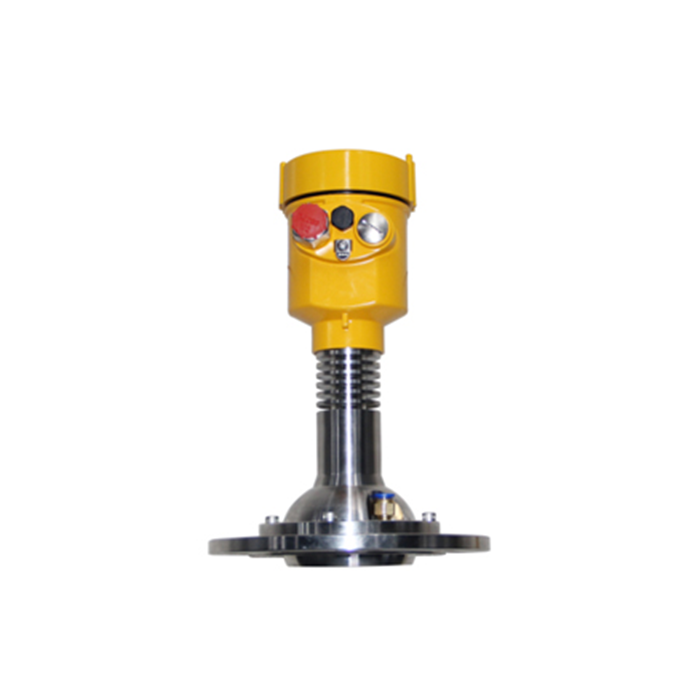
Review combustible-dust classification and required equipment documents with the terminal designer. Confirm the offered assembly and entry arrangements, including any special conditions of use. Neither an IP rating nor a successful radar trial establishes hazardous-area suitability.
Keep Commercial Weights Separate From Level-Based Stock
A single radar follows a local surface, not the mass passing through the terminal. For a stock estimate, retain the silo geometry, pile assumptions and density basis. For receipts and dispatches, retain the designated weighing records and their accepted use. Do not replace commercial weighing with radar-derived tonnes merely because both values appear on the same dashboard.
Use a common cut-off time when comparing stock movements. Include inter-silo transfers and material in transit rather than assigning the entire conveyor load to the destination prematurely. If the receiving route changes near the cut-off, preserve the event sequence so the apparent difference can be explained.
Terminal Acceptance Questions
Q1. How can the high-level sequence be tested without risking overfill?
Use an approved controlled test plan, including simulated inputs where necessary, to verify the control response and actual equipment stopping sequence. Separately establish the physical level reference and incoming-material allowance. Do not fill toward overflow simply to prove a shutdown; the site's protective arrangements must remain effective.
Q2. Can a configuration accepted for wheat be copied to another grain?
Only when the intended grade range has supporting evidence. Reflection, fines, moisture, pile shape and bulk density may differ. Keep the material identity with echo records and conversion settings so the terminal can distinguish instrument performance from an inappropriate stock model.
Q3. What should the enquiry include beyond silo height?
Include distributor positions, maximum arrival rates, stop and run-empty sequences, required dust-area documents, near and far measuring distances and the receiving PLC interface. State whether the offer is for operational level, an inventory estimate or part of a separately designed protective function.
Summary
At a grain terminal, available capacity depends on the pile and on material that has not yet arrived. Send the silo and transfer-route information for an MV-RD21 assessment. Verify the route response and retain commercial weighing as a distinct measurement task.
