


 Chinese
 Spanish
 Russian
 Portuguese
 French
 German
 Indonesian
 Thai
 Vietnamese
 Arabic
 Italian
 Turkish
 Polish
 Japanese


Plastic pellet silo level measurement and carbon-black bin measurement belong to the same material-handling line in some plants, but they should be specified as separate duties. The common need may be refill planning; the powder behaviour, deposit risk and dosing quantity can differ substantially. Similar silo drawings do not justify one unreviewed configuration for both materials.
Plastic Pellet Silo Level Measurement Versus an Additive Bin
For a bulk resin silo, establish available receiving capacity and the useful stock trend through pneumatic filling and extraction. In a smaller additive bin, establish whether the near-field limit, nozzle and moving powder surface leave enough measurable span. The amount required by a recipe is a separate question from either bin's surface height.
| Duty | Pellet silo | Carbon black |
|---|---|---|
| Filling | Observe the moving pile and the inlet trajectory. | Assess dust, coating and the actual powder return. |
| Refill | Allow space for the delivered load and line contents. | Keep the refill interval separate from the dosing result. |
| Maintenance | Inspect the opening and mounting after conveying cycles. | Review deposits and the approved cleaning or purge method. |
| Quantity | Validate any level-based stock estimate by resin grade. | Use the designated weighing system for recipe acceptance. |
The table describes different checks, not a claim that all pellets flow freely or all carbon-black grades behave alike. Provide the specific grade, fines, additives and conveying conditions. Do not equate bulk density with dielectric response when assessing a weak echo.
A Common Model Family Still Needs Two Application Reviews
The METRAVON MV-RD21 is a candidate for bulk-solids surface measurement. Its PTFE lens is 76 mm and the reference beam angle is 3 degrees. Check the model's near and far measuring limits against each vessel; the smaller additive bin may be constrained by minimum distance rather than maximum range.
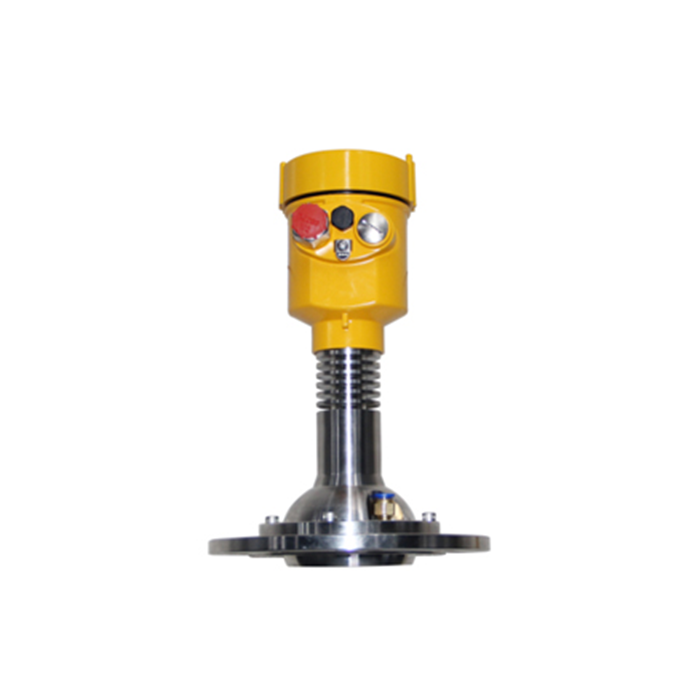
Plot the beam past filters and bracing without crossing the inlet stream. A deposited layer in a nozzle can become a fixed target, particularly when the usable distance span is short. Provide access for an approved inspection and do not add a purge without defining gas quality, pressure and its effect on the process.
Review electrostatic controls and any classified dust-area requirement for the specific material and installation. Radar measurement does not remove the conveying system's ignition or exposure risks. The order should identify the required certificate and construction; an enclosure rating is not a replacement for that evidence.
Compare Refilling and Dosing on One Timeline
Trend source-bin level, refill events and accepted weigh-hopper or loss-in-weight quantities with matching material codes and timestamps. If the level rises during a dosing run, the refill may explain why the apparent stock reduction is smaller than the delivered batch quantity. If the feeder reports no delivery while the upper surface remains high, investigate discharge rather than assuming the bin is empty.
Do not adjust radar calibration to force agreement with a small single batch. First confirm the distance target and the process events, then assess the stock conversion over suitable cycles. A local pile shift can be large compared with the surface-height change caused by a small additive dose.
Commissioning Questions
Q1. Can the same parameter file be copied between the two bins?
Only parameters supported by the actual instrument and application should be transferred. Empty distance, high-level position, fixed echoes and response requirements belong to the particular bin. Save the approved settings separately so maintenance does not overwrite one duty with the other's configuration.
Q2. Does a successful pellet trial prove carbon-black performance?
No. Test the intended carbon-black grade through filling, settling and discharge, and inspect deposits after an agreed early service period. A clean antenna and a quiet surface do not reproduce the full operating duty.
Q3. What belongs in a combined plant enquiry?
Use separate line items for each vessel, with its material, dimensions, signal requirement and quality restrictions. Identify the common controls work separately. This allows a coordinated offer without implying that one antenna configuration or stock conversion applies everywhere.
Summary
Keep pellet storage, additive refill and recipe dosing distinct while sharing useful process records. Request separate vessel assessments within one material-handling enquiry. The resulting specification should explain the function and acceptance conditions of each instrument.
