


 Chinese
 Spanish
 Russian
 Portuguese
 French
 German
 Indonesian
 Thai
 Vietnamese
 Arabic
 Italian
 Turkish
 Polish
 Japanese


Irrigation channel flow monitoring with radar combines a surface-velocity observation with water level and channel geometry. It does not directly measure the average velocity across the entire wetted section. A useful flow result therefore depends on a surveyed section and a site-validated conversion, as well as working sensors.
Keep measured inputs separate from calculated discharge
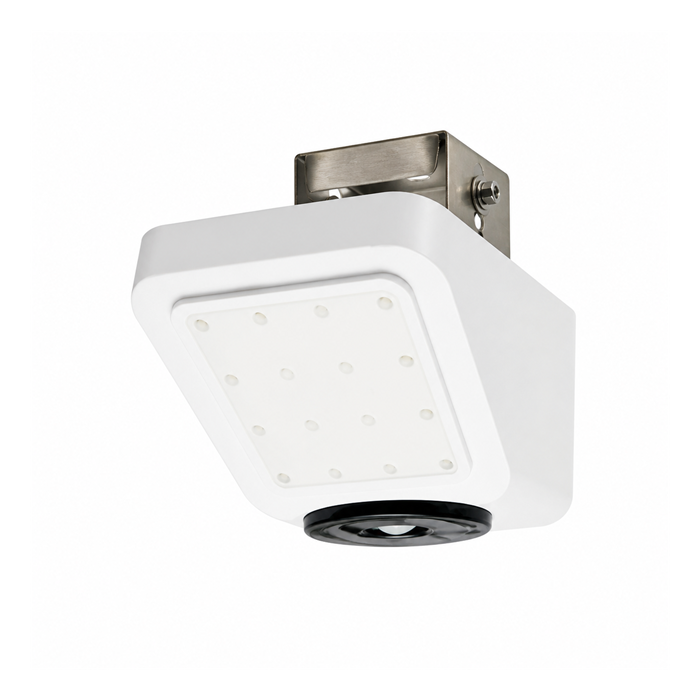
The METRAVON MV-RD2480 combines radar surface velocity and level measurement. Its product data lists a surface-velocity interval of 0.10-25 m/s, a level-distance interval of 0.1-35 m, and RS485 with Modbus RTU. These intervals are instrument references, not a guaranteed discharge range or complete station accuracy.
Discharge is wetted area multiplied by cross-sectional mean velocity: Q = A(h) x Vmean. Water level h determines area only when the section geometry and datum are known. The surface velocity observed by the radar must be related to Vmean using appropriate site reference measurements; a universal multiplier should not be assumed.
Choose a section for irrigation channel flow monitoring
Inspect the channel upstream and downstream of the proposed support. Bends, offtakes, gate jets, vegetation and local eddies can make a convenient bridge a poor measuring location. Follow the supplied alignment procedure for the velocity sensor and record its installed orientation.
Survey the section as built, including sediment, rather than entering nominal construction dimensions. Establish a permanent reference for water elevation and ensure the velocity target represents the section used in the calculation. A later bracket move changes the installation and calls for another alignment and reference check.
| Case | Risk to the result | Required review |
|---|---|---|
| Gate change | The same upstream level can occur at different flow rates. | Include the relevant backwater and gate conditions in validation. |
| Sediment | The area corresponding to water level changes. | Resurvey and update the section with an effective date. |
| Low flow | Surface tracking may fall outside the usable conditions. | Mark unsupported readings rather than treating them as proven zero flow. |
| Weed growth | Flow distribution and the observed target can change. | Inspect the reach and reassess the conversion when conditions differ. |
Commission volume delivery, not only a live number
Compare calculated discharge with an appropriate reference across the operating states that will be reported. Keep the reference method, gate positions, geometry version and accepted range with the station record. The purchasing specification should distinguish an operational trend from a measurement intended for billing or formal allocation.
At the RTU or data logger, retain level, surface velocity, calculated discharge, quality and acquisition time. Verify the MV-RD2480 firmware's register definitions and units instead of borrowing a map from another model. Integrate valid discharge over time to obtain volume; define how gaps, invalid inputs and duplicate uploads affect the total.
Questions about canal data
Q1. Can the level-to-flow curve from another canal be reused?
Not without demonstrating that the hydraulic relationship applies. Geometry, roughness and downstream controls can differ. A similar width does not establish an equivalent rating.
Q2. Does a steady velocity value remove the need for reference checks?
No. It may be a repeatable local surface observation while the relationship to mean velocity has changed. Inspect the reach and compare with reference measurements after dredging, gate work or persistent reconciliation differences.
Q3. What belongs in the enquiry package?
Include the surveyed section, operating levels, expected velocities, gate layout and photographs in both flow directions. State the intended use of reported flow and the available validation method, plus power and data-logger requirements.
Summary
A channel-flow project review should cover both MV-RD2480 installation and the site calculation. Preserve the raw observations so future geometry or hydraulic changes can be investigated without hiding them inside a single flow number.
