


 Chinese
 Spanish
 Russian
 Portuguese
 French
 German
 Indonesian
 Thai
 Vietnamese
 Arabic
 Italian
 Turkish
 Polish
 Japanese


METRAVON Radar Level Measurement for CIP Chemical Tanks: Application and Selection Guide
Clean-in-Place (CIP) systems are widely used in dairy, brewery, beverage, food and other hygienic processing lines. A typical system may include caustic tanks, acid tanks, recovery tanks, hot-water tanks and rinse-water tanks.
Continuous level data supports chemical inventory, refill control, recovery sequencing and high/low alarms. Radar is attractive because the measuring element does not need to remain submerged in the cleaning solution, but material compatibility and process-side exposure still require careful review.
What Makes CIP Chemical Tanks Different?
Acids, caustics and chlorine-containing cleaners can affect metals, seals and process-isolation materials differently.
Hot cleaning solutions may create higher process and vapor-space temperatures than normal storage conditions.
Surfactants, return flow and circulation can create foam that changes the radar echo.
Hot liquids can create vapor and condensation on the process-side antenna surface.
Why Consider Non-Contact Radar?
Free-space radar measures from the top of the tank without a probe immersed in the chemical. This can reduce direct chemical exposure of the measuring element, eliminate moving float mechanisms and reduce some buildup-related maintenance.
However, the antenna or lens, process-isolation surface, gasket and connection can still be exposed to vapor, splashing or condensate. “Non-contact” does not mean “chemically isolated from the process.”
The Exact Cleaning Chemical Matters
Do not specify only “acid” or “caustic.” For correct material selection, provide the chemical name, concentration, normal and maximum temperature, chlorine content if relevant, presence of surfactants, and whether crystallization or solids are expected.
PTFE, PFA and 316L Are Not Universally Interchangeable
PTFE, PFA, 316L and other engineering materials each have their own chemical compatibility limits. Review every process-exposed component, including the antenna or lens, process isolation, flange or thread, gasket and any wetted hardware.
A stainless-steel housing or process connection does not automatically mean the complete assembly is suitable for every CIP chemical.
Why 80GHz Radar Is Often Useful
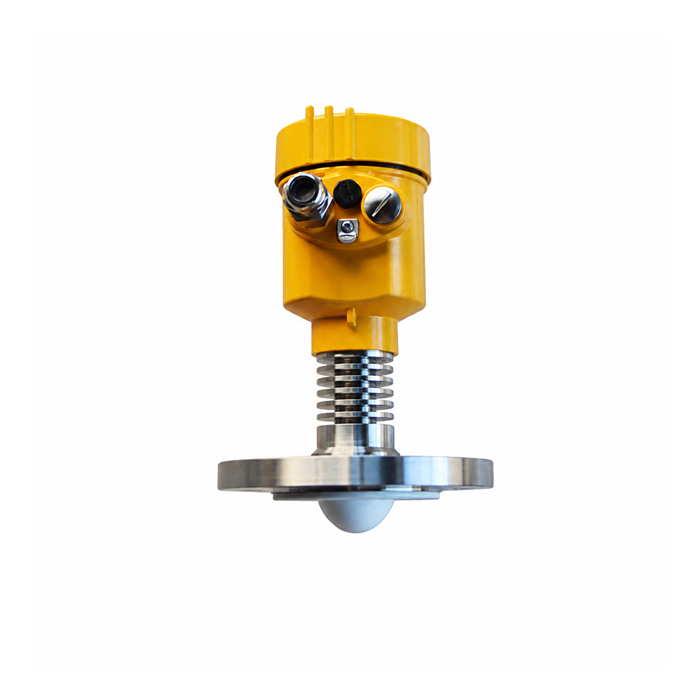
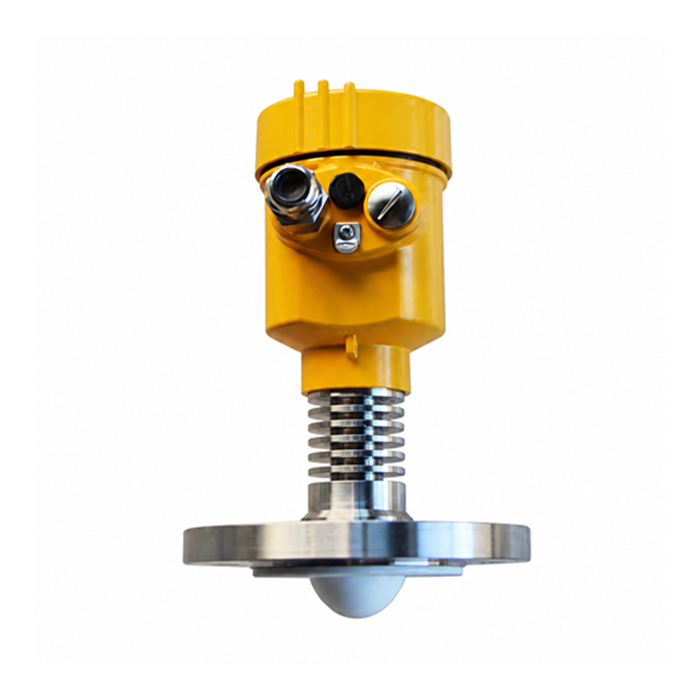
80GHz radar can combine a compact process connection with a narrow beam. In small CIP tanks, this can help avoid heating coils, internal pipes, thermowells and other structures while reducing wall reflections.
Its advantage is mainly beam control and target separation, not a universal guarantee of higher accuracy.
Foam Can Change What the Radar Sees
Depending on foam thickness, liquid content and dielectric properties, the radar may detect the foam surface, partly penetrate it, or lose some of the liquid-surface echo.
Before selection, define whether the control system needs the top of the foam or the true liquid level below it.
Vapor and Condensation Still Require Attention
Radar does not rely on sound speed in the vapor space, so normal temperature and vapor changes usually affect it less than ultrasonic measurement. Heavy condensation or liquid film on the antenna, however, can create near-field echoes or reduce signal quality.
Heating Coils, Return Pipes and Spray Devices Must Be Included in the Application Data
CIP tanks may contain heating coils, return pipes, temperature probes, agitators, supports and internal spray structures. Any of these can create fixed radar reflections.
A dimensioned tank sketch is often more useful for selection than a long generic specification sheet.
Keep the Main Beam Away from the Filling Stream
High-velocity filling can create splash, foam and rapid surface movement. The preferred mounting point normally keeps the main beam clear of the direct filling path while also avoiding coils and other internals.
Response Time Should Match the Control Objective
Fast update is useful for refill control, pump sequencing, batch control and interlocks. For inventory display alone, very fast response may provide little benefit. Check the transmitter response time, output update rate and PLC logic together.
Level Is Not the Same as Chemical Inventory Volume
Radar measures distance or level. Converting level into chemical volume requires tank geometry or a tank-capacity table, especially for dished bottoms, cones or irregular vessel shapes.
When Are Hygienic Requirements Relevant?
If the instrument connection falls within the hygienic process boundary, confirm the process-connection design, exposed materials, surface finish, drainability, CIP/SIP peak temperature and any required material documentation.
3-A, EHEDG or other hygienic certifications must be verified for the specific model and process connection; they cannot be inferred from 316L construction alone.
Is Hazardous-Area Certification Always Required?
No. It depends on the chemical, nearby process, ventilation and site area classification. If alcohol, solvent or another flammable atmosphere is present, specify the required hazardous-area certification during selection.
High-High Level Protection May Need an Independent Device
A continuous radar can provide high-level alarms, but critical overfill protection may require an independent high-high level switch or separate protection channel depending on the process risk assessment.
Typical CIP Applications
In dairy, brewery and beverage plants, radar can be used on caustic, acid, recovery and rinse-water tanks to support continuous level display, low-level refill warning, high-level alarms, circulation sequencing and inventory trending.
The main engineering concerns are normally chemical compatibility, temperature, foam, condensation and vessel internals rather than dust.
PLC and DCS Integration
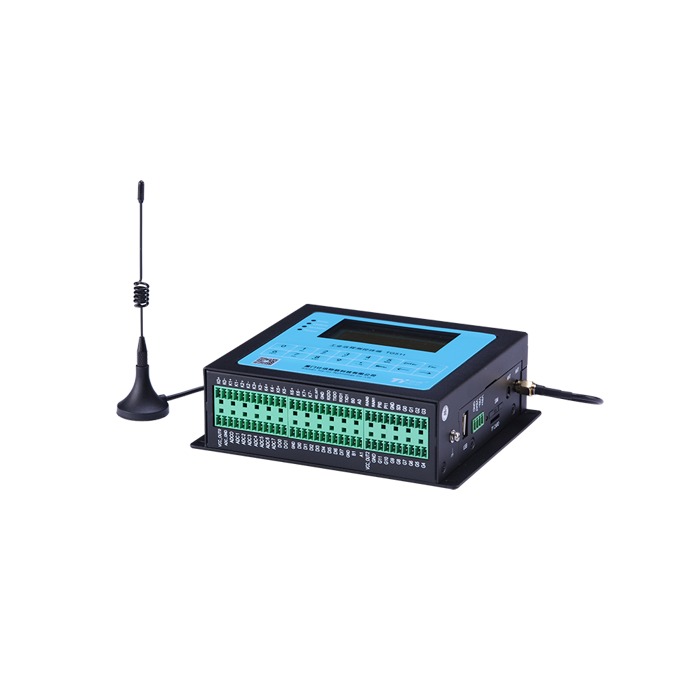
Depending on the instrument model, common outputs include 4-20 mA, 4-20 mA with HART, RS485/Modbus RTU and other industrial digital interfaces. Confirm the existing PLC/DCS input type, power supply, protocol and alarm logic before purchase.
Information Required for Selection
| Item | Information |
|---|---|
| Chemical | Name, concentration, chlorine content, surfactants |
| Temperature | Normal storage and maximum cleaning/circulation temperature |
| Pressure | Normal, positive/negative pressure and design limit |
| Tank | Height, diameter, bottom shape, maximum and minimum level |
| Internals | Coils, agitators, return pipes, thermowells, spray devices |
| Connection | Thread, flange or hygienic connection and size |
| Control interface | 4-20 mA, HART, RS485/Modbus or other interface |
| Certification | Hygienic, hazardous-area or project-specific requirements |
How to Read Technical Specifications
Do not treat a generic range, accuracy or temperature value as universal for all radar models. The actual measuring principle, frequency, range, accuracy, process temperature, exposed materials, output and certification must be confirmed from the selected datasheet.
CIP selection questions
Q1. Can one radar specification cover acid, caustic and rinse tanks?
Do not assume so. Compare the chemical, concentration, peak temperature, seals and process connection for each duty. A shared connection size or controller input can simplify the project, but does not prove that the same exposed construction or approval fits every CIP tank.
Q2. What should be tested during a hot return cycle?
Record the liquid reference, selected echo, foam and antenna condition while the return flow and temperature are representative. Check maximum-level clearance and the delay from the transmitter to the controller. A stable cold-water reading does not validate a hot, foaming cleaning cycle.
Q3. Does 316L construction establish hygienic suitability?
No. Check the complete connection, seal geometry, exposed finish, drainability and cleaning limits for the required hygienic boundary. Obtain any required documentation for the exact configuration; do not infer a certification or sterilization capability from one material designation.
Q4. Can level be used directly as chemical inventory?
Only after a valid level-to-volume conversion for the vessel shape. Confirm the zero reference, working limits and capacity table, including dished or conical sections. If the project also needs chemical strength or usable cleaning capacity, level alone does not supply concentration information.
Selection Summary for CIP Tanks
CIP tank selection starts with the chemical and cleaning cycle. Match the complete process-exposed construction to that duty, then verify foam, condensation, internals, controller response and the actual hygienic boundary.
Share the cleaning chemicals, maximum cycle temperature, tank drawing and control response requirements before selecting the assembly. Discuss a CIP tank configuration
