Chinese
 Spanish
 Russian
 Portuguese
 French
 German
 Indonesian
 Thai
Thai Vietnamese
 Arabic
 Italian
 Turkish
 Polish
 Japanese
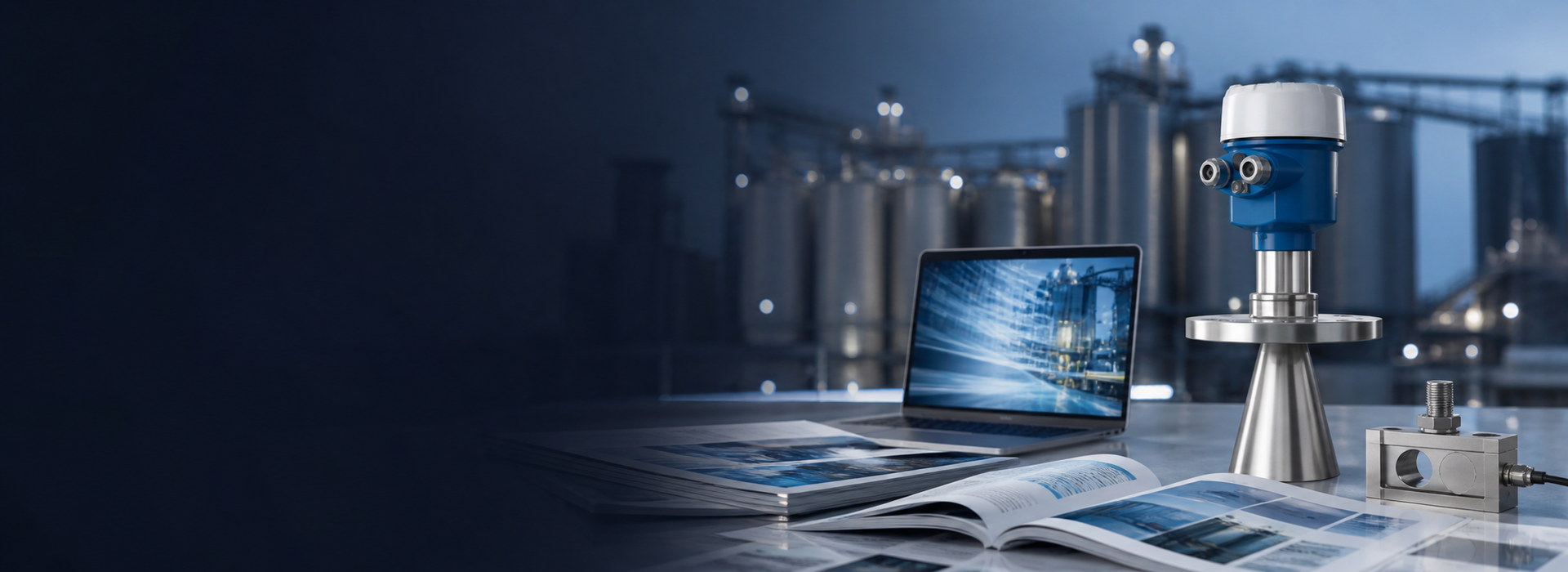
What Is a Radar Level Sensor Used For? Applications, Working Principle and Selection Guide
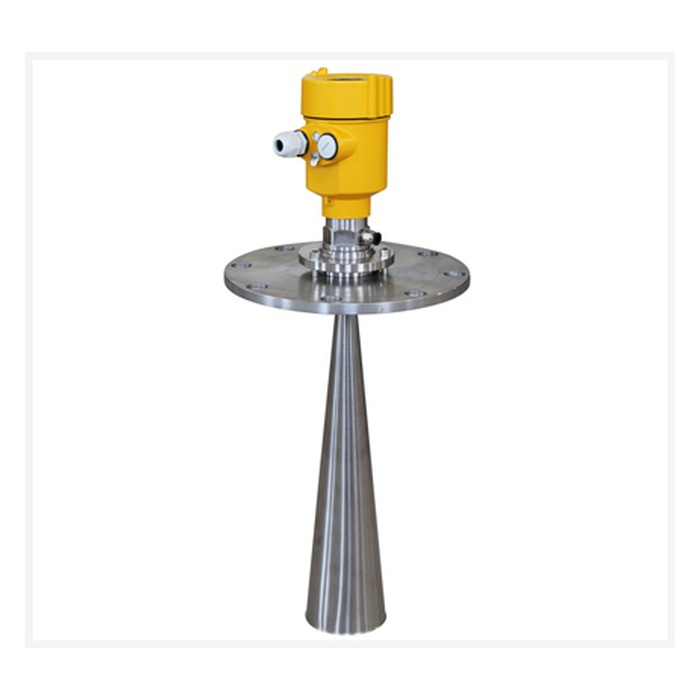
A radar level sensor is mainly used for continuous measurement of liquid level, bulk-solid level or water level. It is installed above a tank, reservoir, channel or silo and measures the distance between the sensor and the material surface. This distance is then converted into the actual level or remaining empty space.
Because non-contact radar normally does not need to remain immersed in the process medium, it is widely used in water treatment, chemical tanks, oil storage, slurry applications, powder and granular-material silos, and hydrological water-level monitoring.
1. What Does a Radar Level Sensor Actually Measure?
A radar level sensor directly measures the distance between the sensor and the material surface. The instrument then uses the installation reference or vessel dimensions to calculate liquid level, bulk-solid level or ullage.
Liquid Level
Water, wastewater, oils, acids, alkalis, solvents and other industrial liquids.
Slurry Level
Selected sludge, mineral slurry and process media containing suspended solids.
Bulk-Solid Level
Powders, granules, grain, cement, minerals and chemical raw materials.
Water Level
Reservoirs, rivers, channels, tanks and other hydrological monitoring applications.
Level = Reference Height − Distance From Sensor to Material Surface
2. How Does a Radar Level Sensor Work?
A non-contact radar sensor transmits electromagnetic waves toward the process surface. The waves are reflected by the liquid or solid surface and received again by the antenna.
The instrument calculates the distance by analyzing signal travel time or, in FMCW radar, the frequency difference between the transmitted signal and the returned echo.
Radar does not depend on the speed of sound in air, so it can operate in vacuum and is generally better suited than ultrasonic measurement to applications with stronger temperature variation, vapor or dust. The actual operating limits still depend on the selected radar model, antenna and process conditions.
3. What Media Can Radar Level Sensors Measure?
Radar can be applied to a wide range of media, although different applications may require different radar frequencies, antenna designs and process connections.
| Medium Type | Typical Applications |
|---|---|
| Water and Wastewater | Water tanks, basins, wastewater tanks, reservoirs and rivers |
| Oils and Fuels | Storage tanks, fuel tanks and selected process vessels |
| Chemical Liquids | Acids, alkalis, solvents and process liquids with suitable material compatibility |
| Slurries | Sludge, mineral slurry and selected suspended-solid liquids |
| Powders and Granules | Cement, grain, mineral powder, plastic pellets and chemical raw materials |
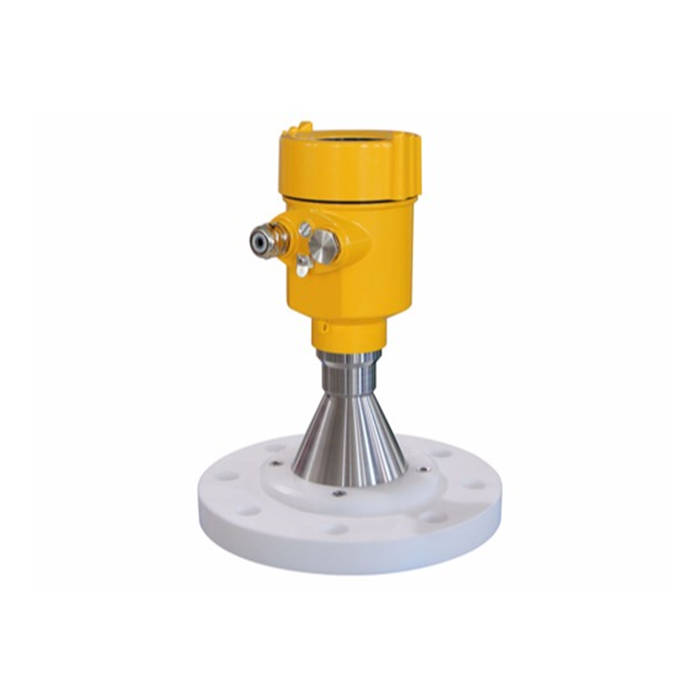
4. Where Are Radar Level Sensors Commonly Used?
Water and Wastewater Treatment
Continuous level monitoring in water tanks, wastewater basins, chemical dosing tanks and process-water vessels.
Chemical Processing
Acid and alkali tanks, solvent tanks, reactors and process vessels.
Oil and Storage
Continuous monitoring of oils, fuels and other liquid storage tanks.
Bulk-Solid Silos
Level measurement of cement, minerals, grain, pellets and chemical powders.
Hydrological Monitoring
Non-contact water-level measurement in rivers, reservoirs, channels and open water bodies.
5. Which Process Conditions Are Well Suited to Radar?
One of the main advantages of radar is its broad process applicability. Depending on the model, radar can be used in atmospheric, pressurized, vacuum, high-temperature, vapor-rich, dusty and corrosive environments.
The sensor should not remain immersed in the medium
Dust or bulk solids are present
Vapor or temperature variation is present
The vessel operates under vacuum or pressure
The process medium is corrosive
Long-range continuous level measurement is required
Demanding processes still require application-specific selection. Corrosive liquids require suitable antenna and process-seal materials, high-temperature or high-pressure applications require appropriate process ratings, and dusty or condensation-prone environments require suitable antenna construction and mounting.
6. What Does a Radar Level Sensor Not Measure Directly?
A standard radar level sensor is primarily designed to measure distance and level. It does not normally directly measure flow velocity, flow rate, temperature, pressure, concentration or water-quality parameters.
For example, a radar water-level sensor can measure the water level in a river or channel. If surface velocity is also required, a dedicated radar velocity sensor is normally needed. Flow calculation generally requires water level, velocity and channel or river cross-section data.
Similarly, industrial tanks requiring temperature, pressure, density or other process variables need additional dedicated sensors or a multi-parameter measurement system.
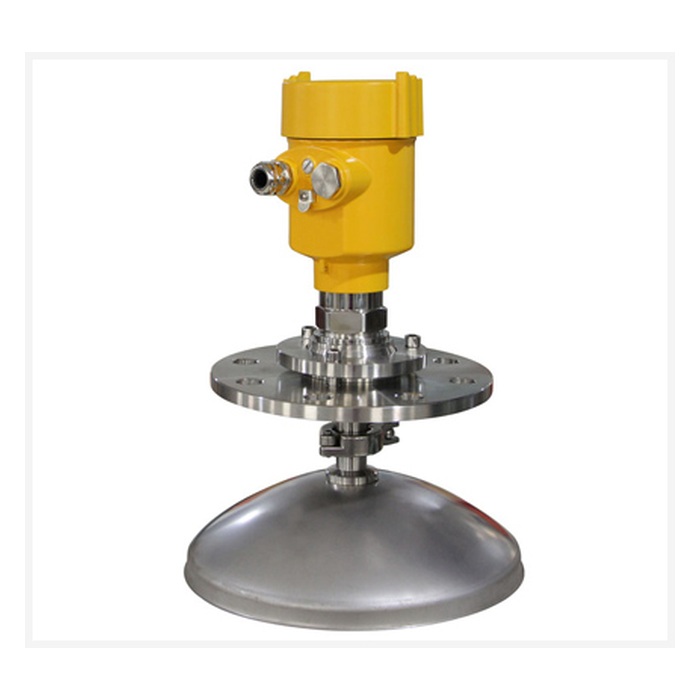
7. What Is the Difference Between Non-Contact Radar and Guided Wave Radar?
Radar level measurement mainly includes non-contact radar and guided wave radar. Non-contact radar transmits electromagnetic waves through free space inside the vessel and is suitable for most tank, water-level and bulk-solid applications.
Guided wave radar directs radar pulses along a metallic rod, cable or coaxial probe that enters the process medium. Selected guided wave radar instruments can also measure the interface between two immiscible liquids.
For most conventional liquid and bulk-solid applications, non-contact radar can be selected according to range, beam angle and process conditions. Guided wave radar can be considered for selected interface, bypass-chamber or probe-guided measurement applications.
8. Why Do Process-Medium Properties Matter?
The radar signal must generate a sufficient reflection from the material surface for stable level detection. The dielectric properties of the process medium influence echo strength.
Low-dielectric liquids normally produce weaker surface reflections, so signal quality becomes more important at long ranges or low liquid levels. Foam, condensation, dust, material-surface angle and antenna buildup can also influence the returned echo.
For this reason, simply stating “I need to measure level” is usually not enough for accurate instrument selection. Process-medium and installation information should also be provided.
9. What Information Is Required to Select a Radar Level Sensor?
At minimum, provide the process medium, maximum measuring distance, process temperature, process pressure and vessel geometry. These parameters directly affect the selection of radar frequency, antenna, range and process connection.
| Selection Parameter | Information to Confirm |
|---|---|
| Process Medium | Water, wastewater, oil, acid, alkali, solvent, slurry, powder or granules |
| Maximum Measuring Distance | Maximum distance from the sensor mounting point to the lowest expected level |
| Process Temperature | Normal and maximum operating temperature |
| Process Pressure | Atmospheric, positive pressure or vacuum |
| Process Condition | Foam, vapor, condensation, dust, agitation or surface movement |
| Vessel Geometry | Tank diameter, height, nozzle, beams, piping and agitators |
| Corrosiveness | Chemical name, concentration and wetted-material compatibility where applicable |
| Output Interface | 4–20mA, HART, RS485 Modbus RTU or another required interface |
FAQ
Q1: What is a radar level sensor used for?
A1: It is mainly used for continuous measurement of liquid level, water level or bulk-solid level by measuring the distance between the sensor and the material surface.
Q2: Can a radar level sensor measure water?
A2: Yes. Radar is widely used for water tanks, reservoirs, wastewater basins, rivers and other water-level monitoring applications.
Q3: Can a radar level sensor measure powders?
A3: Yes. High-frequency narrow-beam radar is widely used in powder and granular-material silos. Dust, range, material-surface angle and reflectivity should be considered during selection.
Q4: Can a radar water-level sensor also measure velocity?
A4: A standard radar water-level sensor mainly measures water level. Surface velocity normally requires a dedicated radar velocity sensor.
Q5: Can radar measure corrosive liquids?
A5: Yes, with a suitable corrosion-resistant antenna and process-seal configuration. Medium type, concentration, temperature and pressure should be confirmed to ensure material compatibility.
Q6: Can a radar level sensor measure flow rate directly?
A6: A standard radar level sensor directly measures level. Open-channel or river flow normally requires level, velocity and cross-section information.
Q7: What is the difference between radar level measurement and guided wave radar?
A7: Non-contact radar transmits electromagnetic waves through free space. Guided wave radar directs radar pulses along a rod, cable or coaxial probe that enters the process medium.
Q8: Can a radar level sensor connect to a PLC?
A8: Yes. Depending on the model, interfaces such as 4–20mA, HART and RS485 Modbus RTU can be used for integration with PLCs, DCS, RTUs and data-acquisition systems.
Conclusion
The main purpose of a radar level sensor is continuous measurement of liquid, bulk-solid or water level. It uses electromagnetic waves to determine the distance between the sensor and the material surface and is widely used in water treatment, chemical tanks, oil storage, slurries, hydrological monitoring and powder or granular-material silos.
Radar primarily measures distance and level and does not directly replace dedicated velocity, flow, temperature or pressure sensors. Accurate selection should consider the process medium, maximum measuring distance, temperature, pressure, foam, vapor, dust, corrosiveness and vessel geometry to determine the appropriate frequency, antenna and process connection.
METRAVON radar level sensors can be configured for different measuring ranges, process connections and industrial interfaces such as 4–20mA and RS485 Modbus RTU for continuous level measurement in storage tanks, water-monitoring systems and bulk-solid silos.