Chinese
 Spanish
 Russian
 Portuguese
 French
 German
 Indonesian
 Thai
Thai Vietnamese
 Arabic
 Italian
 Turkish
 Polish
 Japanese

selection summary
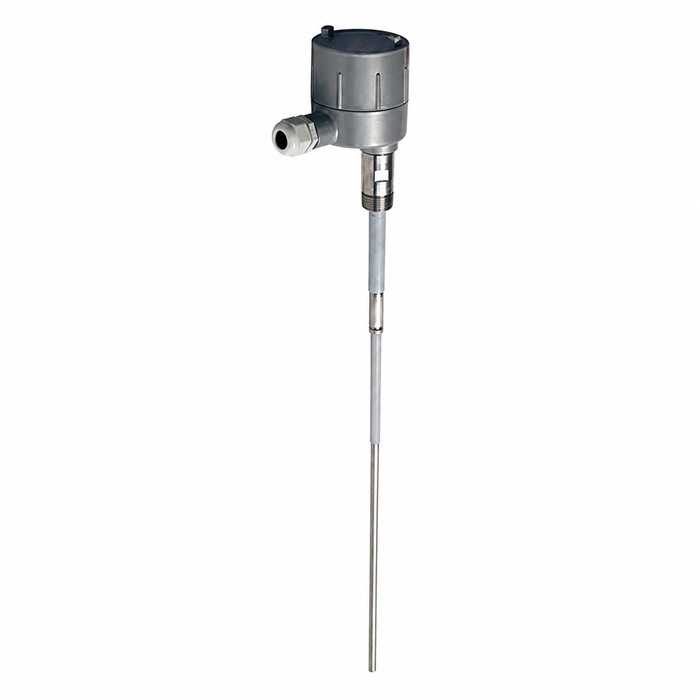
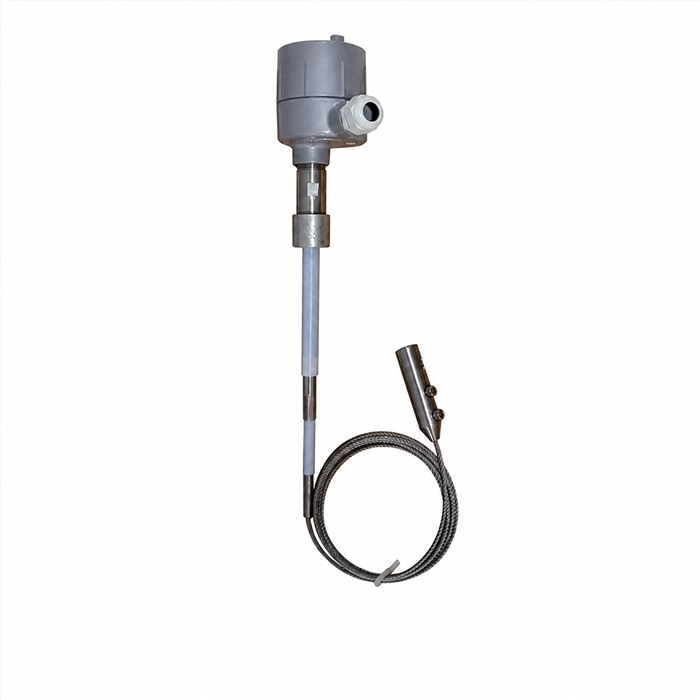
MV-SP601 is used for spot detection of liquid and solid materials, providing both pole and cable probes. The radio frequency conductor programme can be prioritized when the medium is adhesive, the dust is larger on the ground or requires a clear high/low alert; The length of the probe, material, temperature pressure, process connection, output and hazardous area requirements are still to be confirmed prior to ordering.
Product overview
MV-SP601 is an intelligent radio-frequency conductor position switch to detect the condition of the contents in the container and to output high or low alert signals. It applies to the full content of liquids, powders and particulate matter, missing materials, spill-proofing and equipment locks, and is particularly suitable for spot detection missions that require less adhesive effects.
The series does not break poles and cables into two duplicate models. In procurement, the location of the probe is selected according to the direction of the installation, the depth of detection and the mechanical load, and the power supply, output, process connection, liquid-linking material and safety requirements are combined into a complete order programme.
Measurement principles and adhesiveness
A radio frequency conductor is formed between the probe and the container as the medium changes. When materials come into contact with or leave the probe, the instrument identifies the conductor changes and switches the alert status. The adhesive treatment of electronic circuits is used to distinguish between the effects of real-to-face material and trace surface residues, thereby reducing the false alarm caused by the attached material.
The resistance to adhesion has a clear boundary: actions may still be affected if the probe is covered by a thick mass, the conductor plasma is formed into a continuous membrane layer, or the installation point is of long-term accumulation. Such conditions should adjust the location of the installation, the structure of the probe and the sensitivity, and be validated with actual material.
What about poles and cable scouts?
| A pole scout. | Suitable for side-loading, short-range spot detection and the installation of compact space containers; It is necessary to avoid feed shocks and warehousing areas. |
|---|---|
| Cable probe. | Warms suitable for top installation or detection; It is necessary to check length, pull, swing, bump and material impact. |
Typical use of scene
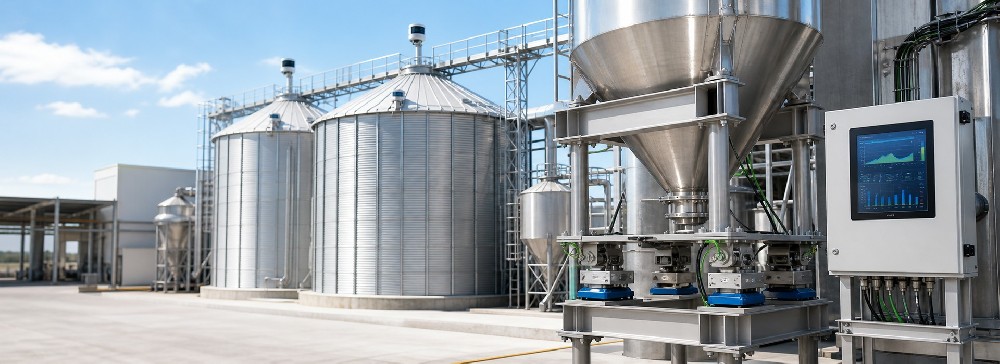
- High-level spill protection and low-level alerts for powder, granular silos.
- Point detection of plasma or adhesive media to reduce residue interference with switch status.
- Control of the chain of high dust silos, delivery systems and production line buffers.
- Process vessels where temperature, pressure or corrosive requirements exist, identified according to material and structure.
- Projects requiring access to PLC, DCS, acoustic alerts or input equipment are required.
Value applied to procurement and technicians
Technical parameters and order confirmation
| Model | MV-SP601 |
|---|---|
| Measurement principle | Radio-frequency conductor point detection |
| Test Task | Material yes/no, high or low alert |
| Spectrum | Bar, cable |
| Applicable media | Liquids, powder, particulates and media to assess adhesive effects |
| Anti-slave function | Electronic circuits are resistant to adhesive treatment and are used to reduce the impact of prosthesis of probe residues |
| Typical | heavy dust, sticky media; High temperature, high pressure, corrosive condition to be verified by material and structure |
| Power supply and output | Confirm by control system, contact logic and security status |
| process connection | Confirm by installation location, probe structure and container interface |
| Probe length | Confirmed by high and low position, container size and pole/cable configuration |
| Protection and blast prevention | Complete configuration and certification against environmental conditions and hazard areas |
Note: The information on the official network confirms the principles of measurement, adhesive resistance, pole/cable structures and high- and low-level warning uses; Numerical parameters not given are not replaced by industry-specific values and are implemented in the form of an optional confirmation.
Selection guide
- First determine the state, density or medium characteristics of the medium and describe adhesive, block, conductive, dust and corrosion.
- Clear detection missions are high-level spill protection, low-level missing material or double-point control, and post-alert equipment locking.
- (b) Priority comparison poles for flanking or short-range testing; Cables are compared when tops, depths or detections are deep, while nuclear shocks and swings are calibrated.
- Reconciling normal with limit temperature pressure, process connection, probe material, sealing and shell configuration as a combination.
- The hazard area project needs to provide information on the division of the area and the medium and check the complete type of explosion-proof certificate.
- Clear power supply, output contact points, frequent closures, contact capacity, power loss and control system interfaces.
Key points for installation and commissioning
- Avoiding feed streams, silo areas, mixers and material bridge positions, exposed the probe to a representative material state.
- Cable probes are required to check the swing space, pull and bottom gap to prevent a wall being touched or pulled by material.
- (b) Complete the grounding, shielding and cable sealing of containers as described; Control cables are installed separately from power cables.
- The output is tested in the air silos, on arrival and in power outages, recording sensitivity, delay and chain results.
- Following shipment, inspection attachments, insulation damage, cable entrances and movement records were included in periodic inspections.
FAQ
What media is MV-SP601 suitable for detection?
MV-SP601 is used for the detection of liquids or solids in containers, which can be detected at high or low levels. Powders, particles, slurry or media that can easily form adhesive layers at their head are the priority assessment of the radio frequency conductor programme. Whether or not to apply is still to be determined in conjunction with the adhesive properties, degree of adhesion, corrosiveness and location of installation.
What about pole and cable?
(a) When the space is compact, preference is usually given to a pole spotr when it is fitted, short distance tested or installed; Cable probes can be compared when roofing is installed, location is detected deep or long detection distances are required. Cable probes also check feed shocks, swings, bumps and pulls, and cannot be selected only by length.
How can a radio frequency conductor reduce alarms caused by adhesives?
The instrument determines the material state by detecting radio-frequency-conductor changes between the probe and the container, and uses adhesive circuits to distinguish the effects of changes in the real physical position from residues on the surface of the probe. Resisting adhesives are not the same as being completely unaffected by the adhesive, and serious blocks, conductive membranes or structural blocks still need to be optimized and physically tested.
Can MV-SP601 be a high and low alert?
Yes. MV-SP601 can alert for high- or low-level failure according to control tasks. High levels are often used to protect against spills, shut down or shut-down inputs, and low levels are often used to protect from missing materials, initiate recharge or pump valve chains. Specific contact logic, power outage and locking should be specified in the control rationale.
Can high temperature, pressure or corrosive conditions be directly selected?
These conditions can be assessed as the scope of the radio frequency conductor programme, but cannot be placed directly under product names alone. Temperature and pressure combinations, process connections, probe insulation materials, fluid metallic, sealed structures and shell configurations should be identified simultaneously; The hazard areas also need to check corresponding certificates and complete models.
What area should the installation be avoided?
The direct impact of the feed stream, long-term accumulation of the silos, the movement of the mixer and the material bridge area should be avoided. Side-to-side probes should be extended to representative material areas, and silo-top cables should be installed to avoid swinging the bumper wall. The presence of metal containers, the installation of short tubes and the cleanness of the perimeter of the probe also affect detection stability.
How should we debug an empty silo or a full silo?
The insulation of the wiring, the grounding and the probe are checked, and the switch action is observed in a state of unforeseeable and unforeseeable respectively. Sensitivity should be based on a stable distinction between the two states and should not simply be moved to the highest level. At least one low-level, high-level and power-disable chain test is performed before shipment and the final setting is recorded.
Is there direct access to PLC or DCS?
This needs to be confirmed by the final selection of the power supply and output modules. The request for quotations should clearly control the form of contact required by the system, the constant closure logic, the capacity of the contact point, the need for isolation, and the desired safety of the system in case of power failure and failure. Pages do not replace specific configurations with unrecognized generic output parameters.
What else do you need to know when dust is too much?
In addition to the principles of detection, the dustworks are concerned with shell seals, cable entrances, electrostatic fields and blast prevention requirements. The probe should not be located in a position of continuous brushing or easy formation of material arches. If the dust is explosive, the complete explosion-proof configuration should be verified by region level, dust group and surface temperature.
What information is required for the request for MV-SP601?
Please provide the name and status of the medium, adhesion or block, normal and unusual material level, location of installation and container size, process temperature and pressure, corrosivity, hazardous area, power supply and output requirements. At the same time, live photographs or structures are provided, along with an indication of whether the proposed pole or cable, the duration of the probe and the process connection will significantly reduce repeated confirmation.
Ordering instructions
When ordering, indicate the medium, adhesion or block, location of the test, pole or cable probe, duration of the probe, process connection, liquid material, temperature, pressure, hazardous area, power supply, output and power loss safety. Pages are for request for quotations and preliminary selection, with the final parameters being based on written confirmations of preference.