Chinese
 Spanish
 Russian
 Portuguese
 French
 German
 Indonesian
 Thai
Thai Vietnamese
 Arabic
 Italian
 Turkish
 Polish
 Japanese
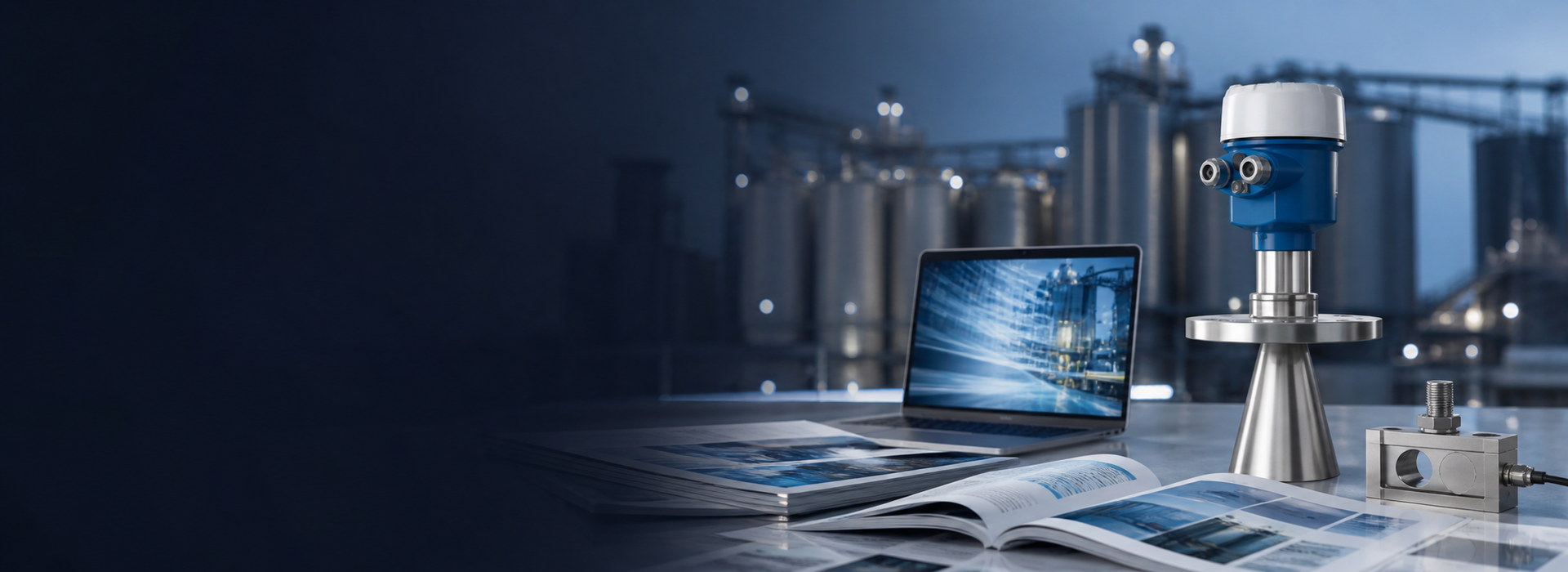
Radar Level Measurement in Large Bulk Solid Silos: Dust, Sloped Surfaces and 80GHz Selection
Level measurement in large bulk solid silos is usually more challenging than measurement in conventional liquid tanks. Dust, long measuring distances, sloped material surfaces, filling streams, material buildup and internal structural components can all affect measurement stability.
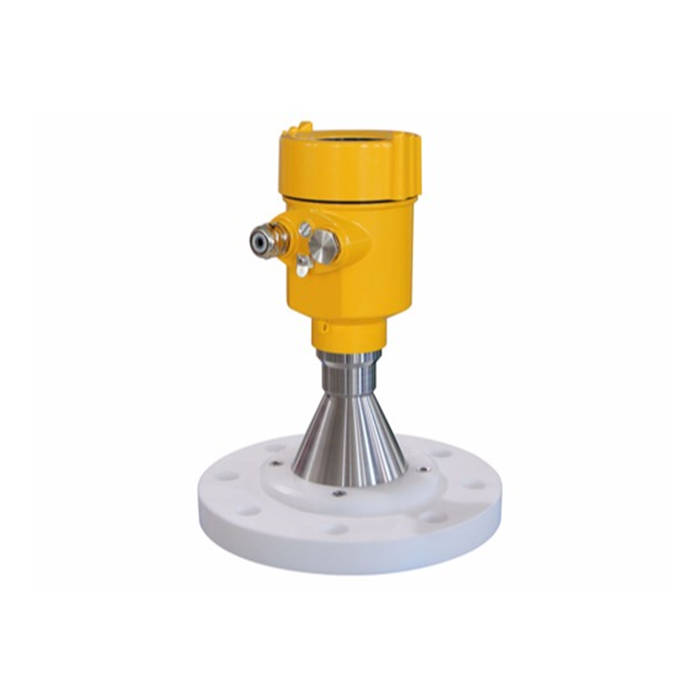
Non-contact radar level transmitters use electromagnetic waves to measure the position of the material surface without requiring a probe to remain buried in the product. They are therefore widely used for continuous level measurement of coal powder, cement, limestone, mineral powder, grain, plastic pellets and other bulk solids.
1. Why Is Level Measurement in Large Bulk Solid Silos More Difficult?
Liquid surfaces are normally relatively flat, while powders and granular materials form significant angles of repose and continuously change shape during filling, discharge and material collapse.
Heavy Dust
Filling operations can generate large amounts of airborne dust, affecting some level measurement technologies.
Sloped Material Surface
Bulk solids form conical or irregular surfaces, so echo direction and strength can change with material distribution.
Long Measuring Range
Large silos may require continuous measurement over several tens of meters.
Internal Structures
Beams, reinforcement, filling pipes and silo walls can generate fixed interference echoes.
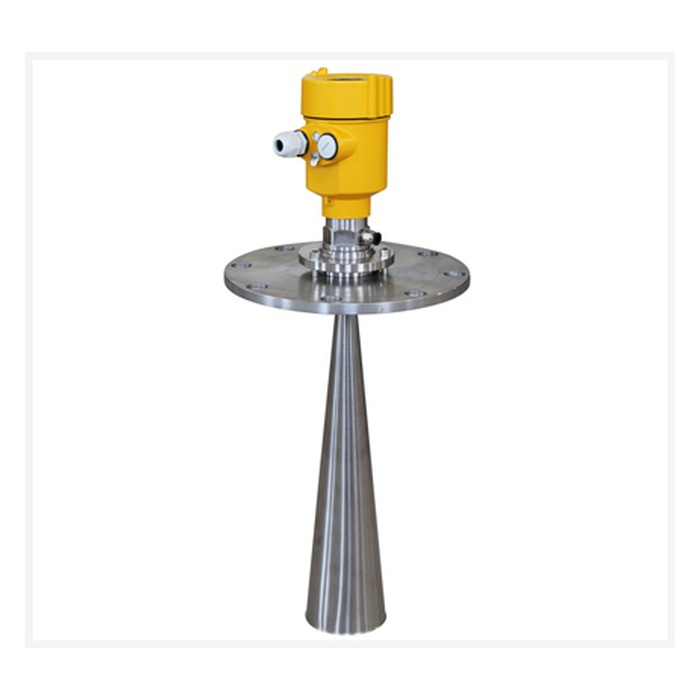
2. Why Is Radar Well Suited to Large Bulk Solid Silos?
Radar uses electromagnetic waves for non-contact measurement and does not require a mechanical probe to remain under continuous material pressure, friction or tensile load. This makes it suitable for large and tall silos with continuous filling and discharge.
In dusty environments, radar generally offers a wider application range than ultrasonic technology, which depends on sound propagation through air. For long-term operation in bulk solid silos, antenna buildup, material adhesion and mounting position are often more important concerns than airborne dust alone.
Non-contact continuous measurement
Suitable for long measuring distances
Applicable to high-dust silos
No continuously moving floats or weights
Supports industrial analog or digital outputs
Suitable for remote level and process monitoring
3. Why Is 80GHz Radar Commonly Used for Bulk Solids?
80GHz radar has a relatively short wavelength. With a similar antenna size, it can generally produce a narrower measurement beam, helping reduce interference from silo walls, structural beams, filling pipes and other fixed objects.
A narrow beam is especially useful in deep silos, narrow silos and vessels with complex internal structures because more of the measurement energy can be concentrated on the target material surface.
Selection should still consider particle size, dielectric properties, dust, maximum measuring distance and material-surface angle. 80GHz does not mean that every product has the same beam angle, range or accuracy; these specifications remain model-specific.
4. Where Should a Radar Level Transmitter Be Installed on a Silo?
The mounting position should be selected according to the filling method, discharge position, material-surface angle and silo geometry. The measurement area should represent the main material surface while avoiding direct filling streams and major fixed obstacles.
Avoid the Filling Stream
Continuous falling material can block the true surface and create strong dynamic reflections.
Reduce Wall Reflections
Select the mounting position according to beam angle so the main beam remains clear of the silo wall.
Avoid Beams and Supports
Internal metallic structures can generate strong fixed echoes.
Consider Surface Direction
Where required, an adjustable mounting arrangement can aim the beam toward a more representative material surface.
5. Why Can an Empty Silo Measure Correctly but Become Unstable After Filling?
When the silo is empty, the radar may receive a clear reflection from the silo bottom or other fixed structures. After material is added, the main measurement target becomes the bulk-solid surface.
Powders and granules normally form sloped and irregular surfaces, so echo direction, strength and position change as the level changes. A successful empty-silo test therefore does not fully represent measurement performance at medium or high fill levels.
During commissioning, it is useful to observe the echo condition at low, medium and high material levels and confirm that the instrument continues to track the true material surface rather than the silo wall, bottom or another fixed structure.
6. Does Dust Affect Radar Level Measurement?
Large powder silos can generate substantial airborne dust during filling. Industrial radar can normally maintain continuous measurement under these conditions and generally has a broader application range than ultrasonic measurement in high-dust environments.
For long-term operation, antenna dust buildup and material adhesion are often more important. A thick deposit on the antenna can weaken the useful echo. Severe buildup applications may therefore require a suitable antenna design, optimized mounting position or a purge arrangement.
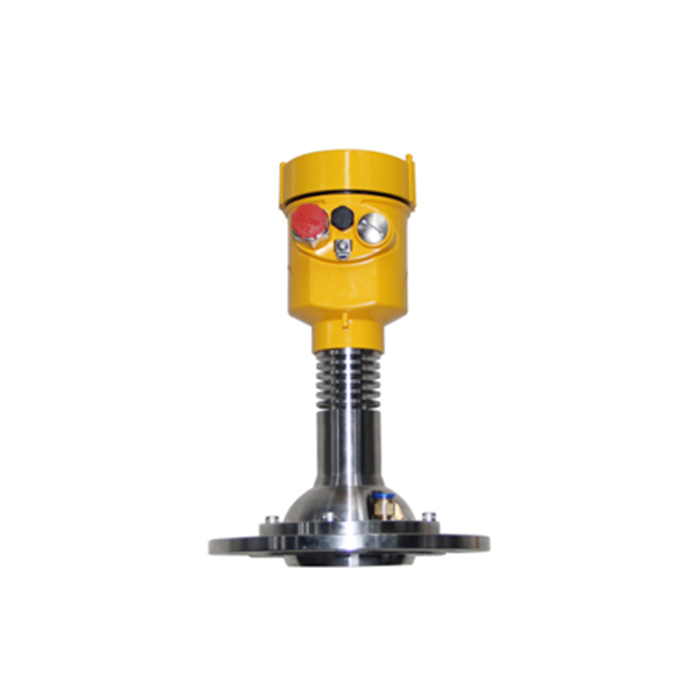
7. Does a Sloped Material Surface Affect Radar Measurement?
Bulk solids normally form conical, offset or irregular surfaces. Radar measures the material surface within the area covered by the beam, so the reading represents the level in that measurement zone rather than a perfectly horizontal average surface across the entire silo.
As material is filled, discharged or collapses, the surface height around the measurement point can change. The mounting position should therefore represent the process reasonably well, while damping and signal-processing parameters should match the actual rate of material movement.
8. Does One Radar Level Reading Equal the Actual Inventory?
It is important to distinguish between material level and inventory volume or mass.
A single radar level transmitter mainly measures the height of the material surface in one area. Liquid surfaces are generally flat, so liquid level can often be converted into volume relatively easily using tank geometry. Bulk solids may have an angle of repose, offset piles, cavities and irregular surfaces.
For this reason, inventory calculations based on only one measurement point may contain uncertainty in a large bulk solid silo. Where more accurate volume or mass inventory is required, multiple level measurement points can be combined with silo geometry, material-pile models, angle of repose and bulk-density data.
9. Which Bulk Solids Can Be Measured With Radar?
| Material | Important Conditions |
|---|---|
| Coal and Coal Powder | Dust, measuring range, changing surface and hazardous-area requirements |
| Cement and Limestone Powder | Heavy dust, antenna buildup and long measuring distance |
| Grain | Angle of repose, silo height and filling position |
| Mineral Powder and Ore | Particle size, irregular material surface and dust conditions |
| Plastic Pellets | Dielectric properties, sloped surface and static-electricity conditions |
| Chemical Powders | Material properties, dust, hazardous-area requirements and material compatibility |
10. What Information Is Required to Select Radar for a Large Silo?
Providing only the silo height is usually not enough to select the correct radar level transmitter. Material properties, silo geometry and actual filling and discharge conditions should also be considered.
| Selection Parameter | Information to Confirm |
|---|---|
| Material | Powder, granules, lumps and the specific bulk material |
| Maximum Measuring Distance | Maximum distance from the radar mounting point to the lowest expected material level |
| Silo Dimensions | Height, diameter, roof structure and hopper dimensions |
| Filling Position | Used to identify the filling stream and main material-pile area |
| Dust Conditions | Dust severity during normal operation and filling |
| Internal Structures | Beams, supports, filling pipes and other fixed obstacles |
| Process Temperature | Normal and maximum temperature inside the silo |
| Hazardous-Area Requirements | Combustible-dust applications should confirm area classification and required certification |
| Output Interface | 4–20mA, HART, RS485 Modbus RTU or another required interface |
11. Typical Application: Radar Level Measurement in a Limestone Powder Silo
Limestone powder, cement and similar materials can generate heavy dust during filling and usually form a significant angle of repose. In a tall powder silo, a non-contact radar can be installed at the top to continuously monitor the material surface.
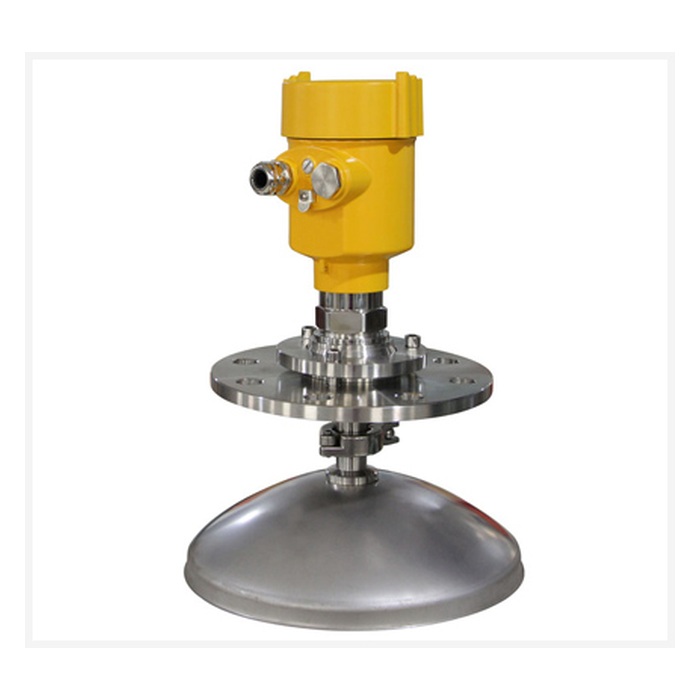
Selection should focus on silo height, diameter, filling position, internal structures and dust conditions. A narrow-beam high-frequency radar can reduce the influence of silo walls and fixed internal structures, while the mounting position should remain clear of the main filling stream.
After commissioning, the echo curve can be used to confirm the true material-surface signal. Damping and filtering can then be adjusted according to the actual rate of material movement. Stable tracking at low, medium and high fill levels generally indicates that the mounting position and configuration are suitable.
FAQ
Q1: Is radar suitable for large bulk solid silos?
A1: Yes. Non-contact radar is widely used for large powder and granular-material silos, especially for long-range, high-dust applications where the measurement device should not remain in contact with the material.
Q2: Does heavy dust affect a radar level transmitter?
A2: Industrial radar generally performs well in dusty environments. Long-term operation should focus on antenna buildup, material adhesion and the effect of mounting position on echo quality.
Q3: Why is 80GHz radar often used in large bulk solid silos?
A3: With a similar antenna size, 80GHz radar generally provides a narrower beam, helping avoid silo walls, beams and other internal structures while concentrating measurement on the target material surface.
Q4: Should radar be installed in the center of the silo?
A4: The mounting position should be selected according to the filling point, material-surface angle, silo geometry and beam characteristics. The goal is to obtain a representative true material echo while reducing interference from the filling stream and fixed structures.
Q5: Why can an empty silo test correctly but become unstable after filling?
A5: In an empty silo, the main echo may come from the bottom. After filling, the target becomes a sloped and continuously changing material surface. Echo curves, mounting direction, filling stream and signal-processing settings should be checked.
Q6: Can one radar transmitter calculate the exact inventory of an entire silo?
A6: Radar primarily measures material height in one area. Large bulk solid silos can have sloped and irregular surfaces, so higher-accuracy inventory calculations may also require silo geometry, bulk density, pile models or multiple measurement points.
Q7: Can a radar level transmitter connect to a PLC?
A7: Yes. Depending on the model, interfaces such as 4–20mA, HART and RS485 Modbus RTU can be used for integration with PLCs, DCS, RTUs and remote monitoring systems.
Conclusion
The main challenges of level measurement in large bulk solid silos are long measuring range, heavy dust, sloped material surfaces, filling streams and fixed internal structures. Non-contact radar does not require a mechanical measuring element to remain buried in the material and can be used for continuous measurement of coal powder, cement, limestone, mineral powder, grain and other bulk solids.
High-frequency radar such as 80GHz provides a relatively narrow beam and offers useful installation flexibility in large silos and vessels with complex internal structures. Selection should still consider material properties, maximum measuring distance, dust, filling position, angle of repose, silo geometry and hazardous-area requirements.
For higher-accuracy inventory management, single-point level measurement should be distinguished from total silo volume or mass calculation. METRAVON radar level measurement products can be configured according to silo range, material, dust conditions and automation-interface requirements, with support for 4–20mA and RS485 Modbus RTU for continuous level measurement, inventory trend monitoring, filling and discharge management, and process control.